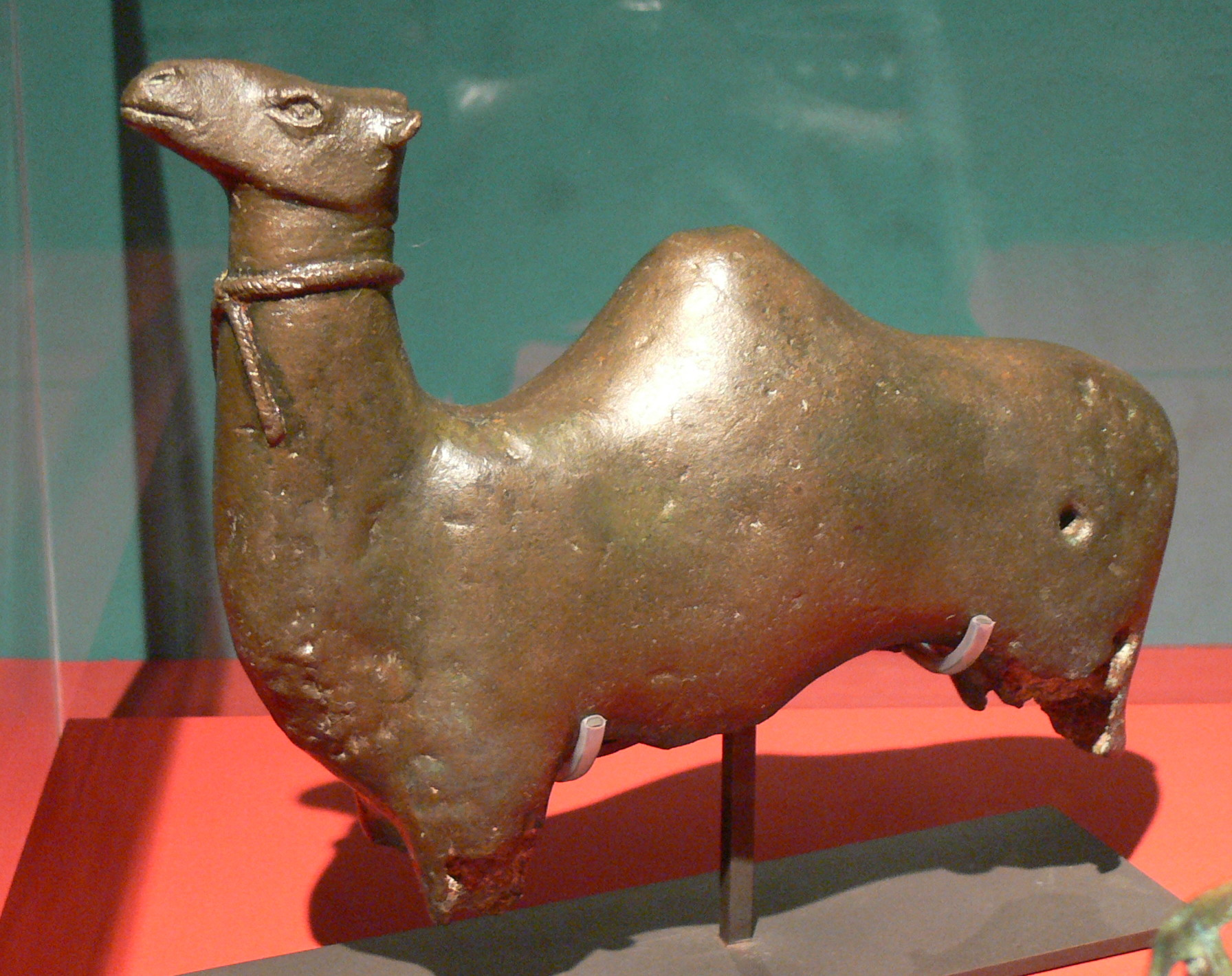
Qaryat al-Faw
Its inhabitants called it Dhat al-Jnan -- the City of Gardens. That name strains belief today, standing at the northwestern edge of the Rub' al Khali, the Empty Quarter, where Saudi Arabia's sand sea stretches to the horizon in every direction. But two thousand years ago, more than seventeen water wells sustained this city, canals fed its orchards, and trade caravans loaded with frankincense and spices paused here on the long route between southern Arabia and the kingdoms of the north. Qaryat al-Faw was the capital of the Kingdom of Kinda, and its ruins -- designated a UNESCO World Heritage Site in July 2024 -- are among the most revealing windows into pre-Islamic Arabian civilization ever uncovered.
A Kingdom at the Crossroads
Qaryat al-Faw flourished from the 3rd century BC to roughly 300 CE, positioned on the trade route connecting the incense-producing south of the Arabian Peninsula to its northeastern markets. The Kingdom of Kinda ruled from here, and the city bore a second name -- Qaryat al-Hamraa, the Red City -- likely drawn from the color of its sandstone or the ochre tones of its desert surroundings. Five temples have been excavated, each dedicated to different deities and dating to different periods. The chief god was Kahl, the tutelary deity of the Kinda and Madh'hij tribes, while the sun goddess Shams held her own sanctuary. The city was well planned, divided into distinct quarters: a royal palace complex, a sacred precinct of temples and tombs, residential neighborhoods, and a marketplace. Water arrived through engineered canals and cisterns, evidence of an infrastructure that had nothing medieval about it.
Roman Brushstrokes in the Desert
The most astonishing discovery at Qaryat al-Faw may be its frescoes. Fragments of mural paintings recovered from the Temple of Shams reveal a tradition of wall painting that scholars have directly compared to Roman art found at sites like El Djem in Tunisia. The most famous fragment, bearing the inscription 'zky' -- meaning "pious" or "blessed" -- dates to the first century CE, and its iconography suggests the artist may have trained in the painting workshops of Roman Egypt. The frescoes depict human figures, camel drivers, and mythological scenes framed within cartouches woven with grapevines and clusters. Their color palette is restrained but deliberate: white, ochre, red, and black, with the occasional rare use of blue. These are not crude provincial imitations. They demonstrate genuine command of naturalism and perspective, evidence that Qaryat al-Faw was connected to artistic traditions spanning the Mediterranean world.
Tombs of Kings and Warriors
Along the eastern edge of the city, tombs of noblemen and warriors line up like sentinels. The kings' burial ground sits apart, to the northwest, separated from the city it once governed. These tombs were built in stone chambers, some crowned with mausoleums or towers. Among the grave goods, excavators from King Saud University -- who worked the site from 1970 to 2003 -- found a bust of Artemis, the Greek goddess, further proof of the long commercial and cultural tendrils that reached this desert capital. The Namara inscription, one of the oldest surviving Arabic texts, records an expedition by Imru al-Qays ibn Amr into the region, where he reached Qaryat al-Faw and drove the ruling Madh'hij tribe from the city. Around 300 CE, the Kinda themselves abandoned it for Hadhramaut. Within a generation, the City of Gardens fell silent.
Rediscovery at the Edge of the Sand Sea
Oil prospectors from Saudi Aramco first noted the ruins in the 1940s. Three company staff visited in 1952 and wrote initial reports, but systematic archaeology did not begin until the 1970s, when King Saud University launched excavations that would continue for over three decades. They uncovered two major sectors: a residential quarter of houses, streets, squares, and a marketplace, and a sacred quarter of temples and royal tombs. The marketplace walls have eroded enough to bury nearly an entire story of what were once three- or four-level buildings. Remnants of grain storage and baking ovens are still visible. East of the city, a large jebel -- a rocky hill -- holds caves decorated with petroglyphs, suggesting human use of this landscape long before Kinda's merchants arrived.
A Heritage Recognized
On July 27, 2024, UNESCO inscribed the Cultural Landscape of Al-Faw Archaeological Area as Saudi Arabia's eighth World Heritage Site, recognizing its exceptional value to human heritage. The site, located roughly 700 kilometers southwest of Riyadh and 100 kilometers south of Wadi ad-Dawasir, is now fenced against looters and tended by a caretaker whose family has long ties to the area. Plans for a modern visitors center and preservation work have been authorized, though progress has been slow. For now, Qaryat al-Faw remains what it has been for seventeen centuries: a city reclaimed by the desert, its gardens gone but its stones still speaking of a time when Arabia's interior was anything but empty.
From the Air
Located at 19.78N, 45.15E in central Saudi Arabia, roughly 700 km southwest of Riyadh. The site sits on the northwestern edge of the Rub' al Khali (Empty Quarter). From altitude, look for the transition zone where rocky terrain meets the vast sand sea. Nearest significant airport is Wadi ad-Dawasir (OEWD), approximately 100 km to the north. Terrain is flat desert with a notable jebel (rocky hill) east of the archaeological site. Visibility is generally excellent but sandstorms can reduce it dramatically.