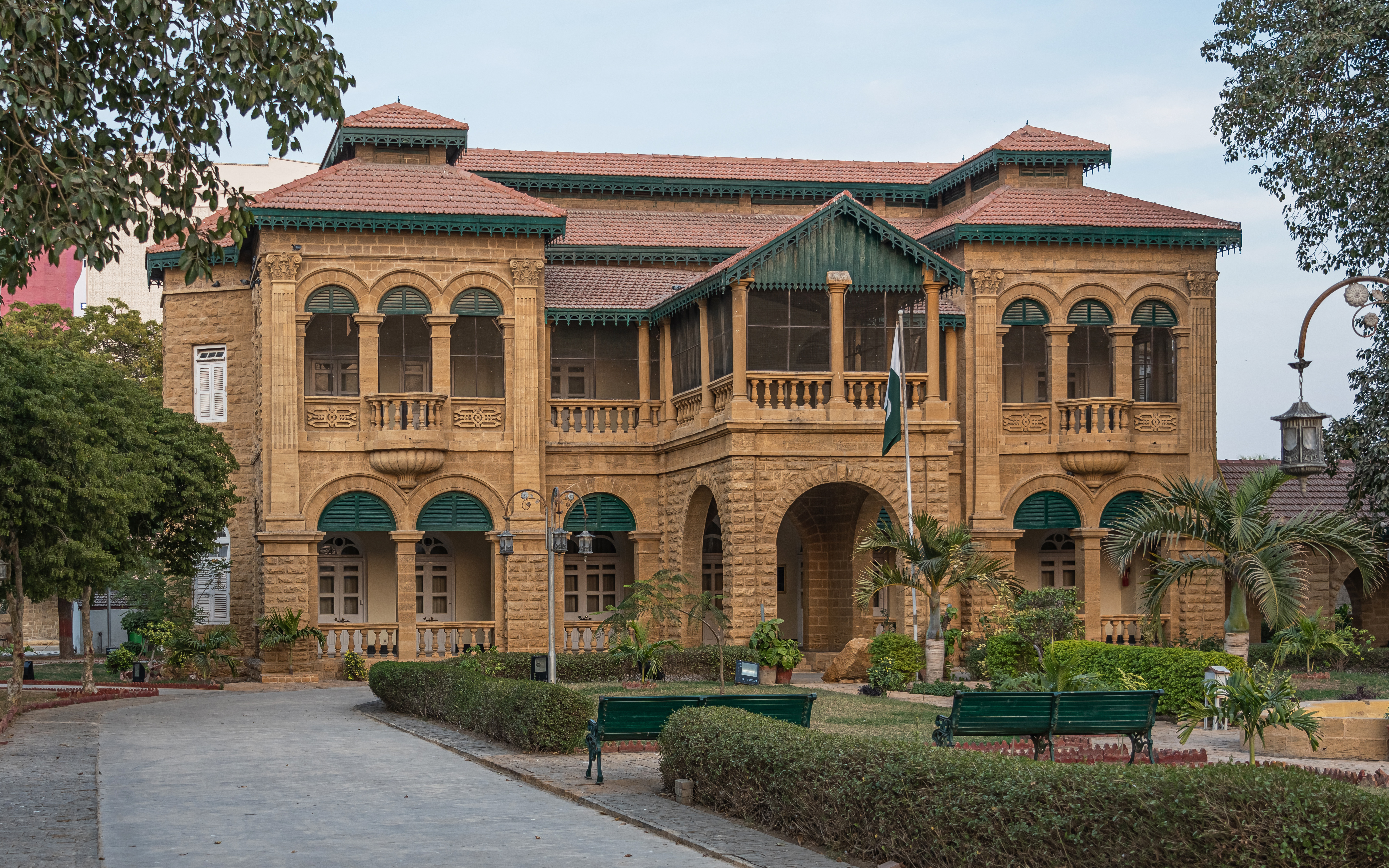
Quaid-e-Azam House
Muhammad Ali Jinnah purchased the house in 1943 for 115,000 Indian rupees. He was not yet the head of a nation -- Pakistan would not exist for another four years. But when the man who would be called Quaid-e-Azam, 'Great Leader,' moved into this elegant residence designed by British architect Moses Somake, he was already the driving force behind the movement that would partition British India. He lived here from 1944 until his death on 11 September 1948, just thirteen months after independence.
A Home Between Two Worlds
Also known as Flagstaff House, the residence sits in Karachi's landscape as a bridge between colonial architecture and national memory. Moses Somake, the British architect who designed it, created a house meant for comfort in Sindh's heat -- airy rooms, generous proportions, the kind of structure built to last. Jinnah's sister Fatima Jinnah continued living in the house after her brother's death, remaining there until 1964. For two decades, the house held the daily routines and private moments of the Jinnah family, even as the nation Jinnah created went through its turbulent early years.
From Private Residence to Public Shrine
The Pakistani government formally acquired the property in February 1985, transforming it from a private residence into a public monument dedicated to Jinnah's personal life. After extensive restoration work, it opened to the public on 25 November 1993 as the Quaid-e-Azam House Museum, inaugurated by the Governor of Sindh, Hakim Muhammad Saeed. The museum displays personal belongings, photographs, and documents that bring the founder's daily existence into focus. Unlike the grand Mazar-e-Quaid mausoleum where Jinnah is buried, this house offers something more intimate -- the rooms where decisions were made, letters written, and the future of a nation contemplated over cups of tea.
Jinnah's Karachi Geography
Quaid-e-Azam House is one point in a constellation of Jinnah-related sites across Karachi and beyond. Wazir Mansion in the Kharadar district marks his birthplace. In Mumbai, his former residence South Court still stands. In New Delhi, his house at 10 Aurangzeb Road serves as the Dutch Embassy. And in the remote hill station of Ziarat in Balochistan, the Quaid-e-Azam Residency marks where Jinnah spent his final days before succumbing to tuberculosis. Together, these buildings trace the arc of a life that moved between law offices, political rallies, and quiet domestic spaces, ultimately reshaping the map of South Asia.
From the Air
Located at 24.849N, 67.034E in central Karachi, Sindh, Pakistan. The house is in a relatively affluent area of the city. Nearest airport is Jinnah International Airport (OPKC), approximately 10 km to the northeast. The house is not easily distinguished from the air, but the surrounding neighborhood's colonial-era architecture and tree-lined streets set it apart from denser urban areas nearby.