Quebec City: The Walled City Where New France Never Quite Ended
Quebec City is the only walled city north of Mexico, its stone fortifications encircling a French colonial capital that never quite surrendered to the English who conquered it. Samuel de Champlain founded the settlement in 1608, choosing the high ground above the St. Lawrence where the river narrows (Quebec means 'where the river narrows' in Algonquin). The British took the city in 1759 after the Battle of the Plains of Abraham, but the French character proved unconquerable. The language, the culture, the Catholic heritage, the narrow cobblestone streets - all survived British rule and Canadian confederation to create something unique in North America: a European city transplanted and preserved, where French is the language of daily life and the past is visible in every stone wall.
The Walls
Quebec City's stone walls were built between 1608 and 1871, encircling the old city in 4.6 kilometers of fortification. The walls defended against English attack, American invasion (the 1775 siege failed), and threats that never materialized. Today they're a UNESCO World Heritage Site, the only fortified city walls remaining in North America. Walking the ramparts offers views of the St. Lawrence and the surrounding landscape that explains the military logic - whoever holds this high ground controls river traffic. The walls that once protected New France now define its heritage, the most visible symbol of Quebec City's exceptional character.
The Plains
On September 13, 1759, British General James Wolfe defeated French General Louis-Joseph de Montcalm on the Plains of Abraham, ending French rule in North America. Both commanders died in the battle; the strategic consequences echoed for centuries. The battlefield is now a park, the site of summer festivals and winter activities, but the historical weight remains. The conquest forced French Canadians to develop strategies for cultural survival - the Catholic Church, the French language, the distinct legal system - that preserved identity despite English domination. The battle was a military defeat; the culture that survived it was a kind of victory.
The Château
The Château Frontenac towers over Quebec City like a castle - which is what the Canadian Pacific Railway intended when they built this hotel in 1893. The copper-roofed landmark dominates the skyline, visible from everywhere in the old city, a deliberate statement of grandeur that made Quebec City a tourist destination. The Frontenac is among the world's most photographed hotels. Winston Churchill and Franklin Roosevelt met here during World War II to plan the D-Day invasion. The hotel represents the deliberate cultivation of Quebec City's romantic image - the European character commodified for tourism while remaining genuinely lived in.
The Language
Quebec City is 95% French-speaking - more homogeneous than Montreal, more clearly Francophone than anywhere else in North America. The language is Quebec French, distinct from Parisian French, with accents and expressions that mark its New World evolution. The language laws that protect French in Quebec are most completely implemented here, where English is the foreign tongue, where stopping at a bakery means ordering in French or miming your request. The linguistic character creates the atmosphere that tourists seek - the sense of being in Europe without crossing the Atlantic, the experience of French as living language rather than tourist performance.
Visiting Quebec City
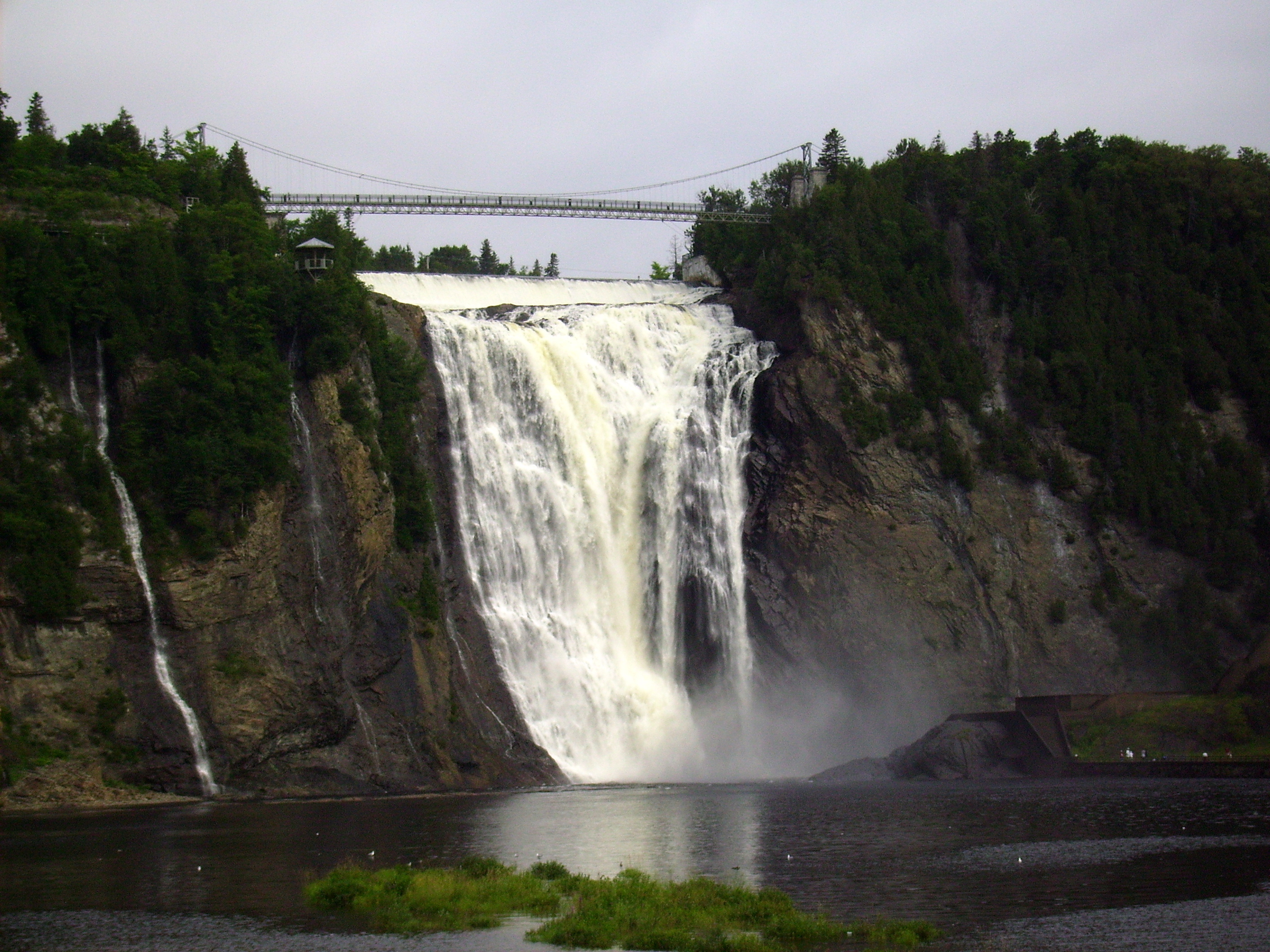
Quebec City is served by Jean Lesage International Airport (YQB). Old Quebec, inside the walls, is the essential experience - walk the ramparts, explore the narrow streets, visit the Citadelle. The Château Frontenac offers tours even if you're not a guest. Place Royale marks the site of Champlain's original settlement. The Petit Champlain neighborhood offers shops and restaurants. The Plains of Abraham provide parkland and historical context. The Montmorency Falls are higher than Niagara and 15 minutes from downtown. Winter brings the Carnival, the ice hotel, and brutal cold. Summer brings crowds and warmth. French helps; it's polite to try.
From the Air
Located at 46.81°N, 71.21°W on a promontory above the St. Lawrence River where it narrows dramatically. From altitude, Quebec City appears as a walled old city on high ground - the Château Frontenac distinctive, the fortifications visible, the St. Lawrence flowing past toward the Atlantic. The Plains of Abraham are visible as green space west of the walls. What appears from altitude as a fortified city is North America's only walled capital - where Champlain founded New France, where the British conquered but couldn't assimilate, and where the French language and culture endure.