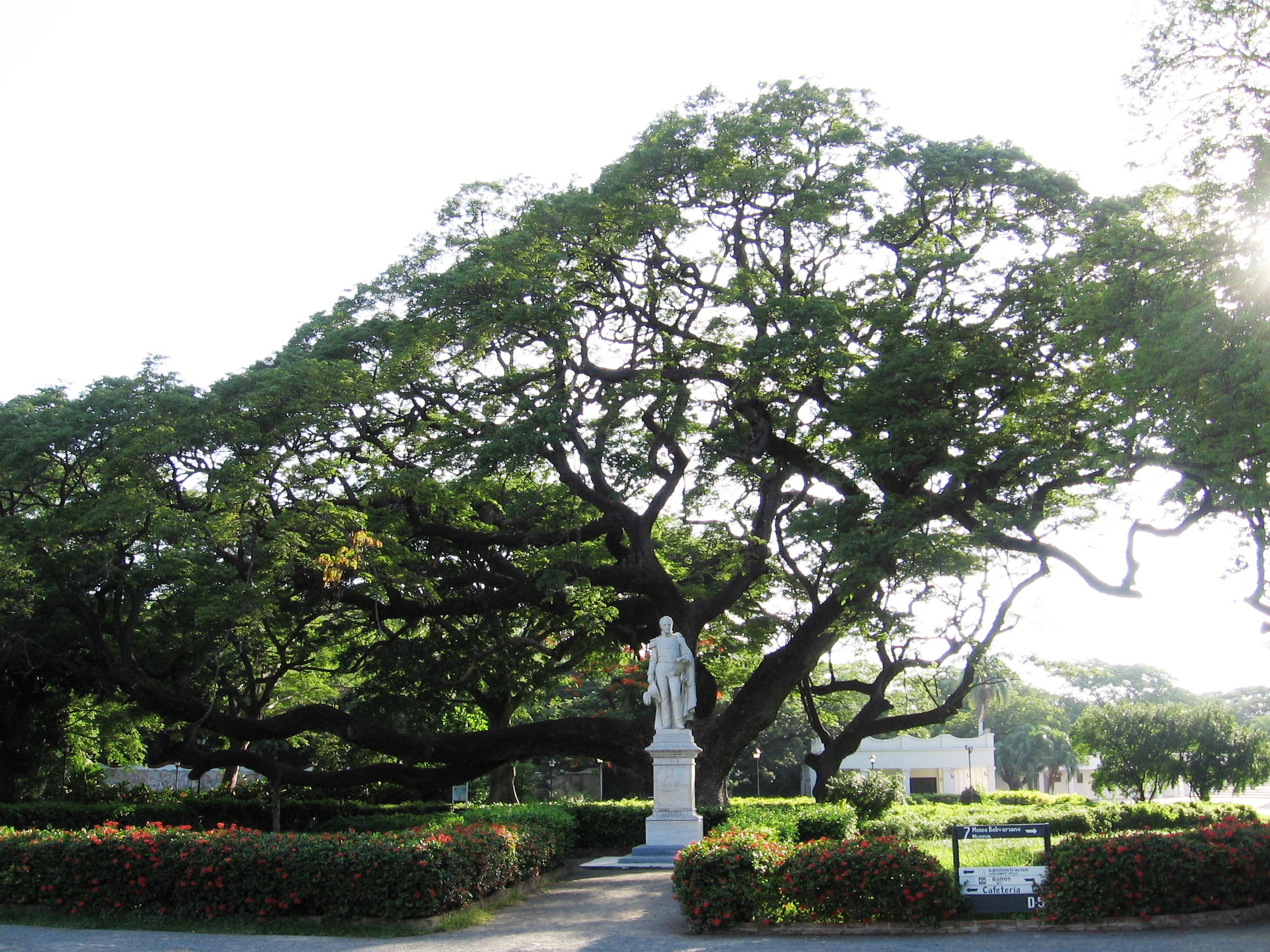
Quinta de San Pedro Alejandrino
"Colombians! My last wish is for the happiness of the patria. If my death contributes to the end of partisanship and the consolidation of the union, I shall be lowered in peace into my grave." Simon Bolivar dictated these words on December 10, 1830, from a hacienda outside Santa Marta. Seven days later, he was dead. The Quinta de San Pedro Alejandrino, a sugar estate built in 1608, became the place where the man who liberated six South American nations ran out of road, out of health, and out of time.
A Hacienda on the Edge of Empire
The Quinta was founded on February 2, 1608, by the priest Francisco de Godoy y Cortesia, who named it La Florida San Pedro Alejandrino. For over two centuries, it operated as a working agricultural estate near the Caribbean coast, producing rum, honey, and panela -- the unrefined cane sugar that remains a staple across Colombia. The hacienda sits in the corregimiento of Mamatoco, surrounded by the kind of old tropical trees that take centuries to grow and cast the deep, still shade that made colonial estates bearable in the Caribbean heat. By the time Bolivar arrived in 1830, the property was owned by a Spanish supporter of Colombian independence named Joaquin de Mier, who offered the ailing liberator a place to rest.
The Liberator's Last Journey
Bolivar arrived at the Quinta as a man in collapse. He had resigned the presidency of Gran Colombia, the union he had spent his life building, and was planning to sail for exile in Europe. His health had been deteriorating for months -- chronic cough, fever, dramatic weight loss. His staff moved him from Bogota to the coast, through Barranquilla, and finally to Santa Marta, where de Mier's invitation provided shelter. Bolivar was 47 years old. He had liberated what are now Venezuela, Colombia, Ecuador, Peru, Bolivia, and Panama from Spanish rule, and the fractured politics of the new republics had repaid him with exile. He arrived at the Quinta in a borrowed shirt, his personal belongings reduced to almost nothing.
Seven Days in December
On December 10, Bolivar issued his final proclamation to the Colombian people. The language is simultaneously grand and heartbroken -- a man who had envisioned a united continent watching it splinter while his body failed. He died on December 17, 1830, most likely of tuberculosis, though modern researchers have debated the role of arsenic -- not as poison, but as the standard medical treatment of the era, inadvertently accelerating his decline. His body, dressed in that borrowed shirt, was interred three days later in the Cathedral Basilica of Santa Marta. The room where he died at the Quinta has been preserved as he left it. The bed. The walls. The stillness of a space where something enormous ended quietly.
Museum, Garden, and Memory
Today the Quinta de San Pedro Alejandrino operates as a museum complex spread across 22 hectares. The original Casa Quinta has been restored to reflect rural colonial architecture, its rooms arranged around the spaces where Bolivar lived and died during his final weeks. The Museo Bolivariano houses works of art donated by Latin American artists from all six nations Bolivar liberated -- Colombia, Venezuela, Panama, Ecuador, Peru, and Bolivia -- turning the collection into a kind of continental gratitude made visible. Outside, the Jardin Botanico offers winding paths beneath specimens that predate the republic itself. Visitors pay a small entrance fee and walk grounds where the most consequential figure in South American history took his last breath, in a place that was never meant to be historic but became so anyway.
From the Air
Located at 11.23N, 74.18W in the Mamatoco district of Santa Marta, Colombia, near the Caribbean coast. The 22-hectare estate with its distinctive tree canopy is a recognizable landmark at lower altitudes. The Sierra Nevada de Santa Marta rises dramatically to the southeast. Nearest airport: Simon Bolivar International Airport (SKSM), approximately 10 km to the south. The historic center of Santa Marta and its Cathedral Basilica, where Bolivar was first interred, lie about 5 km to the northwest.