Racetrack Playa: Where Rocks Move on Their Own
The rocks move. They leave trails - some straight, some curved, some parallel as if traveling together - scratched into the dry mud of Racetrack Playa. Rocks weighing up to 700 pounds have traveled hundreds of feet. No one saw them move until 2014. For decades, the sailing stones of Death Valley generated theories: hurricane-force winds, magnetic fields, pranksters, aliens. The reality, captured by GPS trackers and time-lapse cameras, was stranger and more elegant: thin ice sheets forming on rare winter nights, pushed by gentle winds, carrying embedded rocks across a surface made frictionless by underlying water. The mystery's solution required conditions so rare that witnessing them is almost impossible. The rocks still move. We now know how, but the experience remains magical.
The Playa
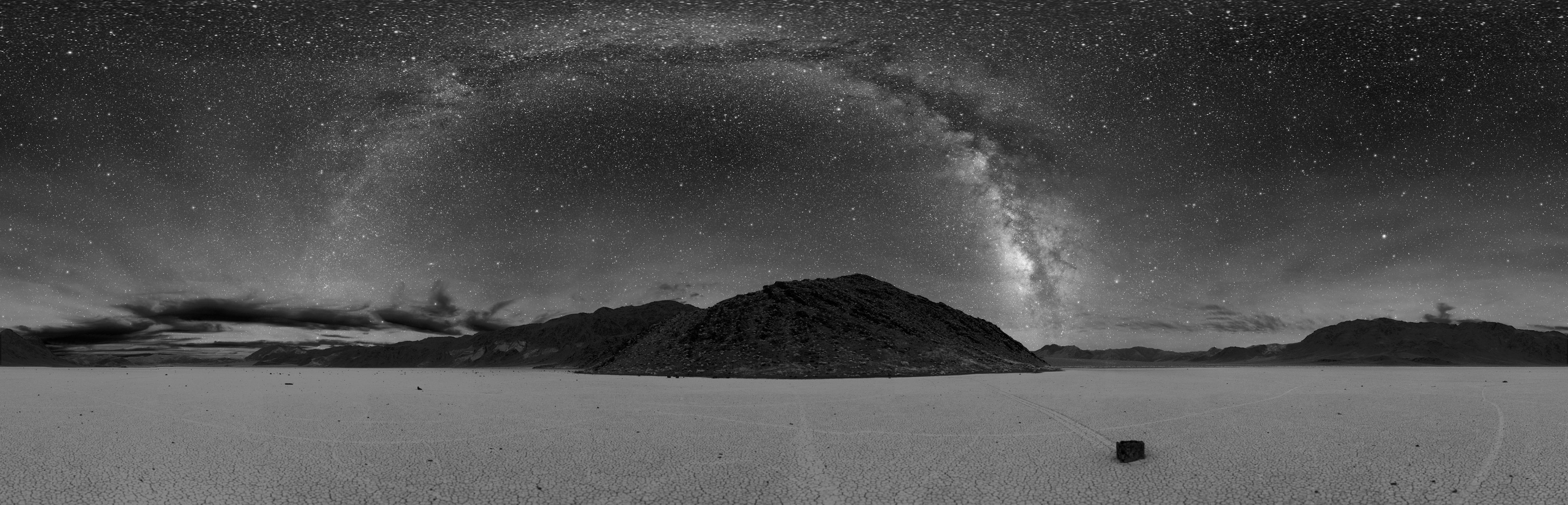
Racetrack Playa is a dry lakebed in Death Valley National Park, 3,714 feet above sea level in the Panamint Range. The playa is remarkably flat - the north end is only 1.5 inches higher than the south across 2.8 miles. The surface is cracked mud, dry most of the year, occasionally flooded by winter storms that transform it into a shallow lake. Mountains frame the basin on three sides; a natural rock grandstand (the 'Grandstand') rises from the playa's north end. The sailing stones rest on the playa's southern portion, their trails varying from inches to hundreds of feet, their paths crossing and diverging like choreographed dancers.
The Mystery
Scientists noticed the trails in the early 1900s; explanations came slowly. Winds seemed inadequate to move rocks weighing hundreds of pounds. Ice was proposed in the 1950s - rocks frozen into ice sheets that wind could push - but no one had observed the process. Pranksters were blamed but never caught. Magnetic anomalies were measured and found insufficient. The mystery endured because conditions for movement were so rare: Racetrack Playa receives only 1-2 inches of rain annually, and winter cold sufficient to form ice is uncommon. The rocks might move once every few years, for minutes at a time. Observation required patience or luck.
The Solution
In 2014, scientists finally captured the sailing stones in action. They had installed GPS trackers in rocks and monitored weather conditions. In December 2013 and January 2014, they witnessed movement. The process required precise conditions: rain flooding the playa to form a shallow pond, temperatures dropping overnight to form thin ice sheets (a few millimeters thick), light winds the following morning. The ice, pushed by winds as gentle as 10 mph, dragged embedded rocks across the slick mud beneath. Rocks moved together when caught in the same ice sheet, explaining parallel tracks. The mystery was ice, wind, and water - but the confluence so rare that decades of observation had missed it.
The Experience
Visiting Racetrack Playa requires commitment. The drive from the nearest paved road covers 28 miles of rough dirt track, demanding high-clearance vehicles and several hours. The reward is profound isolation - one of the most remote accessible locations in the lower 48 states. The sailing stones rest on the playa's surface, trails extending behind them like solidified wakes. Walking the playa, examining individual rocks and their paths, feeling the silence and scale of the basin, conveys what photographs cannot. The rocks moved; they will move again. Standing where they sailed, you understand why the mystery captured imaginations for a century.
Visiting Racetrack Playa
Racetrack Playa is located in the northern portion of Death Valley National Park, California. Access is via 28 miles of dirt road from Ubehebe Crater; high-clearance vehicles are essential, 4WD recommended. The road is slow - allow 2 hours each way. No services exist; bring ample water, food, and fuel. Cell service is nonexistent. The best time to visit is late fall through early spring when temperatures are manageable. Walking on the playa is permitted; do not disturb rocks or trails. The Grandstand offers elevated views. Camping is available at primitive sites along the access road. This is genuine wilderness - preparation is mandatory.
From the Air
Located at 36.68°N, 117.56°W in the Panamint Range of northern Death Valley. From altitude, Racetrack Playa appears as a flat white oval surrounded by dark mountains - the contrast stark and unmistakable. The playa's geometric perfection is visible from high altitude; the sailing stone trails are too small to see except at low altitude. The Grandstand protrudes from the playa's northern section. The access road from Ubehebe Crater is visible as a thin line winding through the mountains. The isolation is absolute - no development, no other roads, no signs of humanity except the track and occasional vehicles. What appears from altitude as simple desert lakebed hosts one of geology's most elegant mysteries.