Radio Veronica
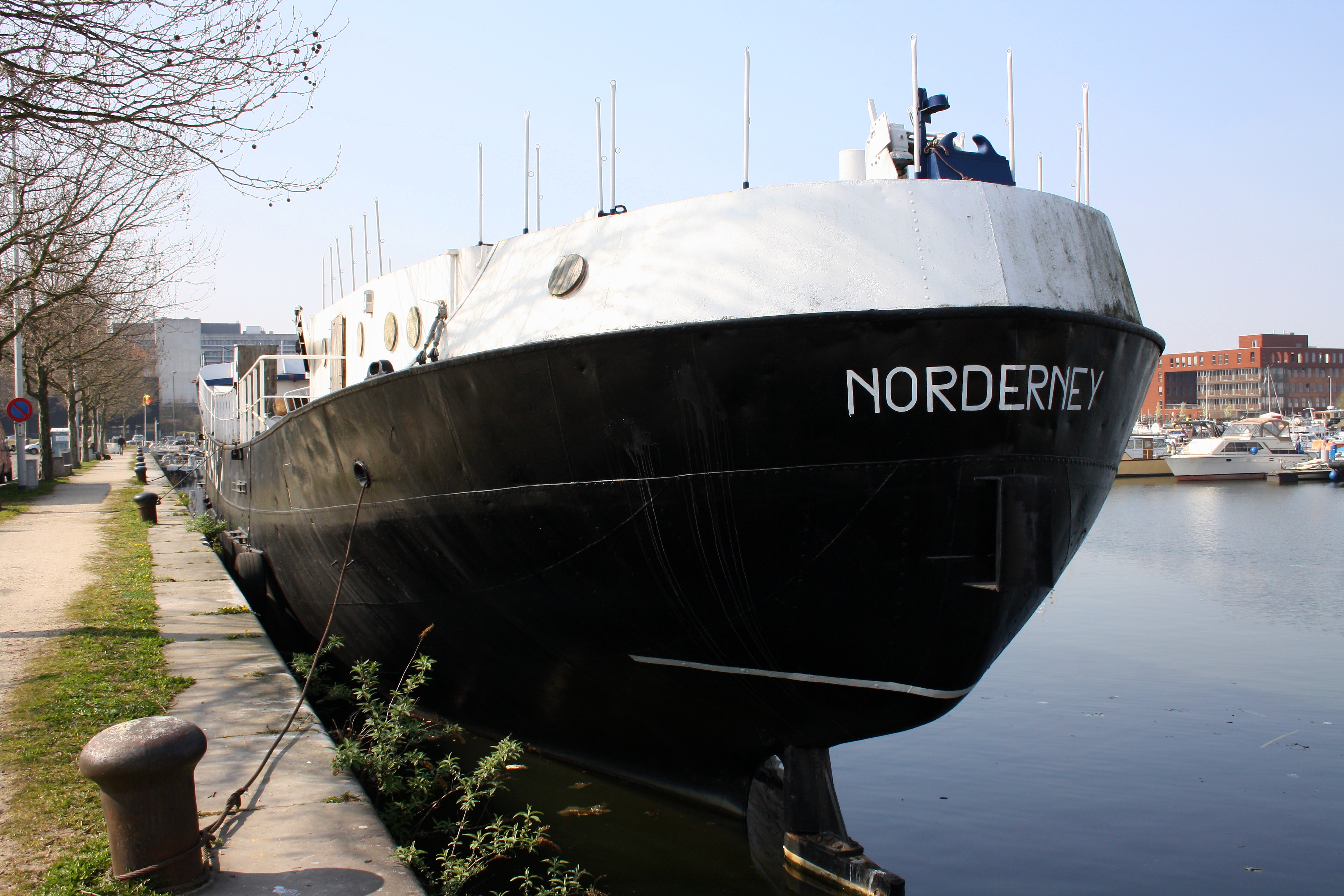
At 6:00 p.m. on 31 August 1974, a recorded jingle began to play aboard the MV Norderney, anchored off the Dutch coast. Halfway through, an engineer reached for a switch and cut the transmitter mid-note. Photographs taken inside the cramped studio that evening show staff openly weeping. Outside Dutch territorial waters, beyond the reach of broadcasting law, Radio Veronica had spent fourteen years playing the records that Hilversum would not. The pirates were now silent. The Norderney, once the loudest voice in Dutch pop, would eventually be towed to Antwerp and tied up at a dock where, decades later, visitors can still walk her decks.
A Trawler, a Transmitter, and a Black Sheep
The station was the unlikely brainchild of independent radio and television retailers in the Netherlands, who needed a reason for people to buy more sets. Hilversum's state-licensed stations offered worthy programming but little pop. So in December 1959, the retailers fitted out a former lightship called Borkum Riff with a one-kilowatt transmitter and a horizontal antenna strung between her masts, anchored her in international waters, and began test broadcasts. Regular programmes started on 6 May 1960. The original name, VRON, was soon dropped in favour of Radio Veronica, taken from Annie M. G. Schmidt's children's poem 'Het Zwarte Schaap Veronica' - the Black Sheep Veronica. It was an apt choice. By 1964 the operation moved to a converted fishing trawler, the MV Norderney, with a ten-kilowatt transmitter and an anchor designed to keep her broadside-on to the antenna's preferred bearing.
The Mebo II Affair
In the late 1960s a new rival arrived in the form of Radio Nordsee International, run by two Swiss businessmen aboard the Mebo II, which carried a 100-kilowatt transmitter and parked itself one mile from the Norderney. Veronica's management did not respond with better programming. They paid RNI one million guilders to go off the air for two months, then installed their own crew aboard the rival ship to enforce the deal. When the two months expired and RNI's Swiss director Erwin Bollier tried to refund the money and reclaim his ship, Veronica refused, and on the night of 15 May 1971 three men in a rubber dinghy set fire to the Mebo II's stern. The crew sent mayday calls and were rescued. The studios survived; RNI was back on the air the next morning. Two days later, Veronica's advertising director was arrested. Then its director, Bull Verweij, admitted in a television interview that he had paid for the attack. Five men, including Verweij, were sentenced to a year in prison. The damage to Veronica's reputation was incalculable, and it gave the Dutch government precisely the political cover it needed to outlaw offshore broadcasting.
12 1/2 Years, to the Minute
There were grace notes along the way. When the Norderney lost her anchor in an April 1973 storm and ran aground at Scheveningen beach, Radio Caroline - a rival - put Caroline's own ship Mi Amigo on Veronica's frequency until the trawler could be refloated and towed back to sea. When Veronica had to abandon 1562 kHz because of interference from a powerful Swiss transmitter at Beromünster, the station chose noon on 30 September 1972 for the switchover and stayed off the air for exactly half an hour: twelve and a half years of broadcasting marked by a thirty-minute silence. The new frequency, 557 kHz on 538 metres, gave Dutch and Belgian listeners cleaner reception and made Veronica's well-crafted jingles into a cultural reference for a generation.
The Final Hour
The Dutch anti-pirate law took effect on 1 September 1974, so Veronica chose 6:00 p.m. on the last day of August to close. The final programme was pre-recorded in the Hilversum studios on the Utrechtseweg, as most of Veronica's programmes were, but the very last news bulletin was read live from the news studio on board the Norderney. Directors Bull Verweij and his brother Jaap stood among the staff for the final hour. DJ Rob Out delivered the farewell: 'Part of the democracy in the Netherlands is dying with the closure of Radio Veronica, and that is a tragedy for the country.' The Dutch national anthem played. Then the jingle. Then the cut. RNI and Radio Atlantis went silent the same evening. Caroline, ever the survivor, kept broadcasting.
What Came After
Some of the staff founded the Veronica Broadcasting Organisation, applied for a licence, and after what one critic called a mini-Watergate of bureaucratic obstruction were invited to open Hilversum 4 - a classical music network - on 28 December 1975. Their first legal programme 'accidentally' opened with a snatch of The Beatles' Long Tall Sally before the announced classical piece. The brand outlived the ship. Today Veronica is a commercial radio station owned by the Sky Radio Group, and Veronica TV broadcasts on Dutch cable. The Norderney herself eventually came to rest in Antwerp, where her hull continues to draw pilgrims from a generation that grew up listening to the black sheep of Dutch radio.
From the Air
The MV Norderney is moored in Antwerp at approximately 51.232°N, 4.416°E along the Scheldt waterfront. Visible from low approach into Antwerp International Airport (EBAW), about 8 km south-east. Brussels (EBBR) lies 45 km south. The Scheldt and the city's port cranes are the most visible landmarks from the air. Best viewing altitude 1,500-3,000 ft on a clear day.