RAF Fauld Explosion
At 11:11 on the morning of 27 November 1944, the Staffordshire countryside heaved. An underground munitions depot at RAF Fauld, built within disused gypsum mine workings, detonated with a force that was felt miles away. Between 3,500 and 4,000 tonnes of high explosive bombs went off simultaneously, blasting a crater 100 feet deep and over 1,000 feet across. It was the largest non-nuclear explosion in British history, and one of the largest accidental explosions anywhere on earth. Roughly seventy people died. The blast obliterated farms, destroyed a reservoir dam, and buried entire buildings under displaced earth. And then wartime censorship ensured that almost no one heard about it.
The Bomb Store
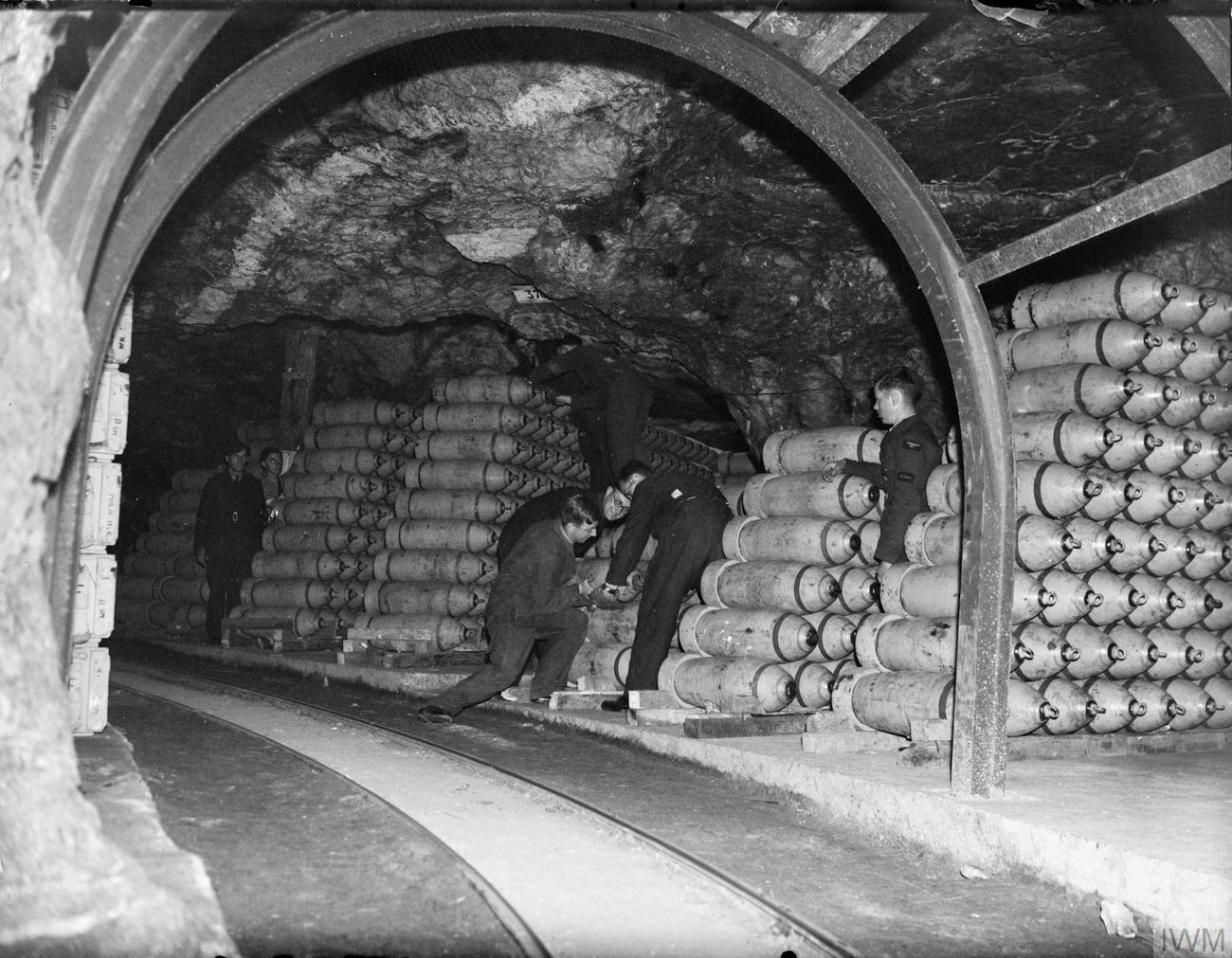
No. 21 Maintenance Unit RAF had repurposed abandoned gypsum mine tunnels near the village of Hanbury as a bomb storage facility. The underground network housed a staggering arsenal: thousands of tonnes of high explosive bombs alongside up to 500 million rounds of small arms ammunition. The tunnels offered protection from German air attack, but the concentration of ordnance underground created a different kind of risk. RAF personnel, civilian workers, and Italian prisoners of war laboured in the tunnels, handling live munitions under conditions where a single mistake could trigger catastrophe. That mistake appears to have been straightforward: a worker removing a detonator from a live bomb used a brass chisel instead of the required wooden batten. The brass struck sparks. The sparks found explosives. At 11:11 am, two detonations ripped through the depot in rapid succession.
The Crater and the Flood
The blast annihilated everything nearby. Upper Castle Hayes Farm simply ceased to exist. The Peter Ford and Sons lime and gypsum works north of Hanbury was obliterated. Purse Cottages vanished. The explosion also destroyed a reservoir dam, sending floodwater cascading across the landscape and compounding the destruction. Hanbury Fields Farm, Hare Holes Farm, and Croft Farm with its adjacent cottages all sustained severe damage. Debris struck Hanbury village itself. Twenty-six people were killed or went missing at the RAF dump, divided among RAF personnel, civilian workers, and Italian prisoners of war. Five died from toxic fumes. The true death toll, including those killed by the flood and falling debris, is estimated at around seventy, but wartime censorship and the scale of destruction made an exact count impossible. The official report was not publicly released until 1974, three decades after the event.
A Crater That Endures
The explosion left a scar on the Staffordshire landscape that remains visible today. The crater, roughly a thousand feet across, is still there, filled with vegetation but unmistakable from the air and on foot. Despite the devastation, the RAF continued to use the surviving portions of the underground facility for munitions storage until 1966. Between 1967 and 1973, the United States Army stored ammunition at the site, ordnance previously held in France. The tunnels that survived the blast still carry warnings about unexploded munitions, and portions of the site remain restricted. David Bomberg, the painter, had been briefly employed as a war artist by the War Ministry in 1943 and produced several paintings of the bomb store under the collective title 'The Bomb Store,' capturing the eerie subterranean world before it was torn apart.
Remembered at Last
For forty-six years after the explosion, there was no memorial. In 1990, a campaign to commemorate the dead finally succeeded. The memorial stone was donated by the Italian government, in recognition of the Italian prisoners of war who died, and flown to England on an RAF aircraft. It was unveiled on 25 November 1990. A second memorial was dedicated on the seventieth anniversary, 27 November 2014. A tourist trail now leads from the Cock Inn pub in Hanbury, itself damaged by debris from the blast, to the crater's edge. The walk is quiet, pastoral, the kind of English countryside where nothing seems to have happened. But the crater remains, and the fields around it still occasionally yield fragments of ordnance. The largest explosion in British history happened here, in a place most people have never heard of, and the landscape has still not finished absorbing it.
From the Air
Located at 52.847N, 1.731W near Hanbury, Staffordshire. The explosion crater is visible from the air as a large depression in otherwise flat agricultural land, roughly 1,000 feet wide. Nearest airports: East Midlands (EGNX, 15nm east), Birmingham (EGBB, 20nm south). CAUTION: unexploded ordnance warnings remain active at the site.