Rahmi M. Koc Museum
Rahmi Koc walked into the Henry Ford Museum in Dearborn, Michigan, sometime in the late 1980s and walked out with an idea. The Turkish industrialist, scion of one of the country's wealthiest families, had spent his life building cars, refrigerators, and consumer goods through the Koc Group conglomerate. What he saw in Dearborn was something Turkey did not have: a museum that took industry seriously, that preserved the machines and ships and steam engines that built the modern world. By 1991, his foundation had bought a derelict Ottoman anchor-foundry on the Golden Horn. By December 1994, Turkey had its first major industrial museum.
The Lengerhane
The first building had a working life longer than most countries. Built during the reign of Sultan Ahmed III sometime between 1703 and 1730, the Lengerhane (Turkish for 'anchor house') cast anchors and chains for the Ottoman Navy. Selim III restored it in the late 18th century. The Ottoman Ministry of Finance took it over in the 19th. After the Republic was declared in 1923, the State Monopoly and Tobacco Company used it as a warehouse until 1951. Then it sat. A roof fire in 1984 left it derelict. When the Koc Foundation bought the structure in 1991, restorers spent two and a half years bringing the Class II historical monument back to life. A glass-sided ramp now leads visitors down to a basement exhibition area where Ottoman shipwrights once stored chain.
The Tersane Across the Road
Across the same street sits the museum's second building, a former dockyard built in 1861 by Sirket-i Hayriye, the Ottoman company that ran the Bosphorus passenger ferries. The dockyard maintained the ferry fleet that connected Europe to Asia across the strait. The Koc Foundation acquired it in 1996 and opened the expanded museum in July 2001. The two buildings sit on opposite sides of the same lane, with the dockyard halls running right down to the Golden Horn waterfront, close enough that the larger marine exhibits can be seen against actual water.
Cars, Trains, and Boats
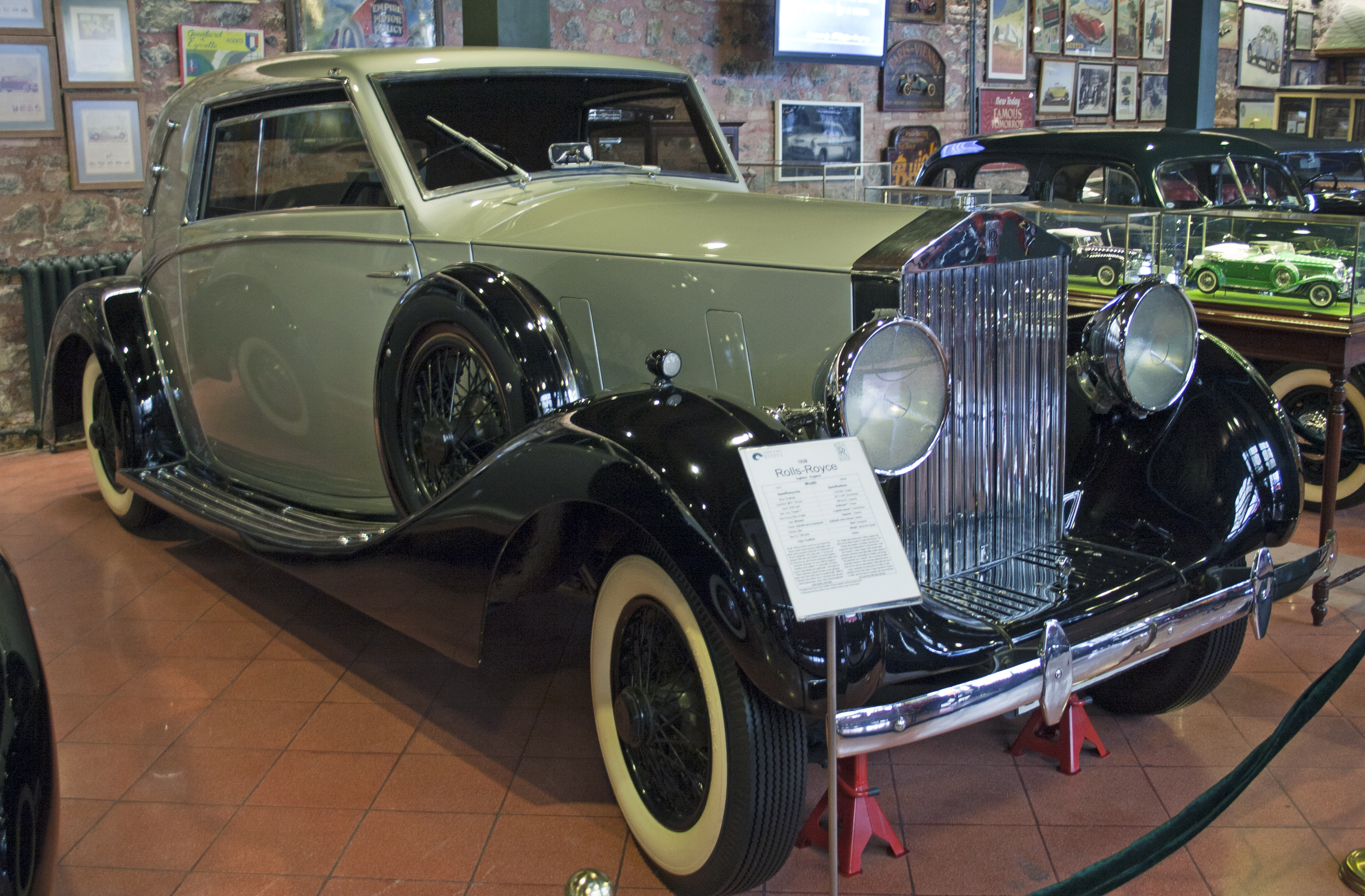
The road transport collection runs from a 1898 De Dion-Bouton through 1990s sports cars. A 1930 Bugatti Type 46 Coupe de Ville. A 1938 Rolls-Royce Wraith. The 1936 Lincoln Zephyr. The rail collection includes Sultan Abdulaziz's imperial coach from 1867, the one he rode in to visit Paris, London, and Vienna. There is an 1872 horse-drawn Istanbul tram. There is a 1918 Henschel steam locomotive. The marine hall holds Sadun Boro's sloop Kismet, the boat in which he became the first Turk to circumnavigate the globe. There is a 1961 amphibious car, a 1900 marine compound steam engine, a Bosphorus ferryboat. A small fleet of preserved aircraft fills the aviation section.
The Hands-On Floor
What separates the Rahmi M. Koc from a typical static-display museum is the deliberate emphasis on machines visitors can operate. Cutaway cars and aeroplanes show their guts. Scientific instruments, including a Wimshurst electrostatic generator, an orrery, and the Strasbourg turret clock, can be cranked and observed. The 2006 Leonardo da Vinci exhibition pushed this further, displaying 40 full-sized working reproductions built from drawings in the Codex Leicester. Visitors operated parachutes, ornithopter bicycles, printing presses, and Archimedes screws. The model worked so well that the museum has hosted iterations ever since.
The Family Empire
Rahmi Koc inherited his place in Turkish business from his father Vehbi, founder of the Koc Group, who had built the country's first national consumer-goods empire from a small grocery shop in Ankara in 1926. Today Koc Holding accounts for roughly nine percent of Turkey's GDP. The museum is, in one sense, the family's tribute to industrial capitalism itself, a celebration of the machines that built the wealth. It is also a sister institution to two related Koc museums: the smaller Cengelhan Rahmi M. Koc Museum opened in Ankara in 2005, and a third location opened on Cunda Island in 2014. Together they form a kind of distributed cabinet of curiosities, a Henry Ford Museum reimagined for the Turkish century.
From the Air
Located at 41.0423 N, 28.9493 E on the northern shore of the Golden Horn in the Hasköy neighborhood of Istanbul. The Golden Horn estuary is unmistakable from the air, slicing into the European side between the historic Sultanahmet peninsula to the south and Beyoglu to the north. Istanbul Airport (LTFM) lies 30 km northwest. Sabiha Gokcen (LTFJ) lies 35 km southeast on the Asian side. The Galata Tower and Bosphorus mouth are clearly visible to the east.