Raid on Dunkirk (1800)
Patrick Campbell, commanding HMS *Dart*, sets an anchor in the shoal water off Dunkirk to swing his sloop alongside the French frigate *Désirée*. The bowsprit slides between the frigate's masts. A boarding party led by Lieutenant James M'Dermeit leaps onto the enemy's deck and is met by hand-to-hand fighting that quickly bogs down in the stern. M'Dermeit, wounded, calls back for reinforcement. Campbell uses his anchor cables to crank *Dart* further along the frigate's side. A second boarding party under Lieutenant William Isaac Pearce charges across and clears the French sailors emerging from below decks. Within minutes, a 36-gun French frigate has changed hands. This is what a cutting-out expedition looks like - and on the night of 7 July 1800, it is the only part of a Royal Navy raid on Dunkirk that actually works.
Why the Frigates Stayed in Port
By 1800 the French Revolutionary Wars had been running for seven years and the Royal Navy was dominant at sea. The French Navy had been beaten back into its own harbours by British blockade squadrons. The big ports were watched by fleets of ships of the line. The shallow Channel harbours - too small for ships of the line, ideal for frigates that could slip out and prey on British commerce - had their own blockade squadrons of smaller vessels. Dunkirk was one of those Channel harbours. Inside it, under Castagnier, lay four French frigates: the 36-gun *Désirée*, the 40-gun *Carmagnole*, and two 36-gunners. Heavy shore batteries and gunboats protected the anchorage; the harbour was hemmed in by the Braak Sands, a complicated maze of shoals that would let a frigate escape into water no British ship of equal weight could follow.
Mixed Weaponry, Mixed Hopes
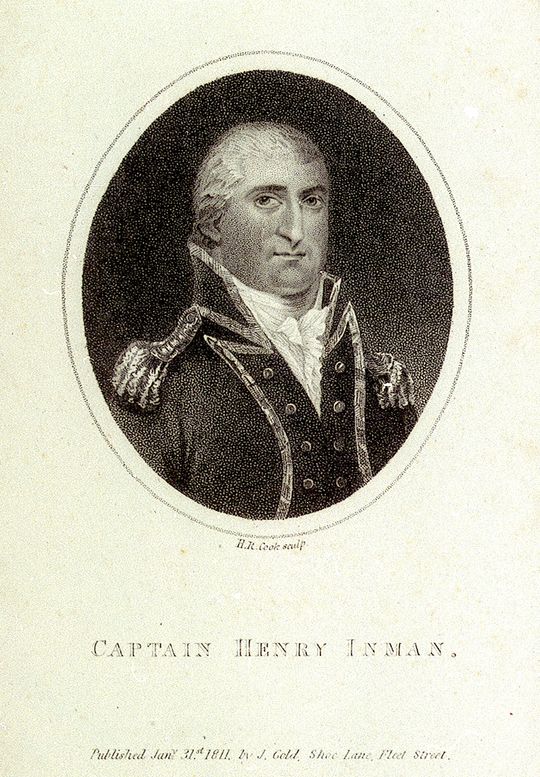
Captain Henry Inman of HMS *Andromeda* had overall command of the raid. He gathered fifteen smaller vessels off the coast and waited. The plan combined two old Royal Navy specialties: cutting-out, in which boarding parties slip into harbour at night and seize ships at anchor, and fireships, hulks packed with combustibles set alight and steered into an enemy line. Some of the fireships - HMS *Wasp*, HMS *Comet* and others - carried experimental weaponry being tested in combat for the first time. Inman knew his largest frigates would be useless in the narrow harbour. *Andromeda* and HMS *Nemesis* stayed offshore and lent their crews to the smaller vessels, including the brigs *Biter* and *Boxer* and the hired armed cutters *Kent*, *Ann* and *Vigilant*. Inman sailed in *Vigilant*. The whole operation was led by *Dart*, an unusually heavily armed sloop of war.
Wind and Tide
The squadron assembled by 17 June 1800 and then waited. The wind and tide refused to cooperate for ten days. The French, with plenty of time to prepare, anchored their frigates in a line running east to west across the harbour entrance, supported by gunboats. The westernmost ships were positioned to bolt for the Braak Sands if the British forced the issue. When the weather finally allowed an attack on the night of 7 July, *Dart* led the squadron into the harbour and went straight for the eastern end of the French line - the flagship frigate *Désirée*. The boarding by Campbell, M'Dermeit and Pearce succeeded. The rest of the raid did not. Three other French frigates cut their anchor cables and ran for the shoals. The fireships drifted aimlessly before exploding uselessly, succeeding only in wounding two British sailors whose boat was too close to *Comet*. French gunboats sortied from Dunkirk and were held back by the hired brigs in a sharp engagement that cost the British four wounded.
What the Raid Cost and Bought
By dawn, Inman called off the attack and withdrew. He had taken *Désirée* - a powerful frigate that would soon be commissioned into the Royal Navy under her own name - and lost one man killed and seventeen wounded; sources differ on whether those totals capture only the casualties aboard *Dart* or the whole squadron. The French had lost a flagship and suffered heavy casualties on her decks; the three other frigates ran aground on the Braak Sands, were refloated during the morning, and returned to Dunkirk for repairs. No prize money was paid in head money for prisoners, probably because the captured French sailors were sent home. Campbell and M'Dermeit were promoted. Campbell, transferring out of *Dart*, took a much smaller sixth-rate frigate as his next command - a paradoxical reward, but in the Royal Navy of 1800 a captain's command of his own ship outranked any larger berth as a lieutenant. The experimental weaponry slipped quietly out of the operational record.
Dunkirk's Other 1940
The Dunkirk that the British Royal Navy raided in 1800 was already a port shaped by century after century of attack from the sea. Charles II had sold it to Louis XIV in 1662; Jean Bart had run his corsairs out of the same harbour a few decades after that; Vauban had laid out the bastions, jetties and forts that the Treaty of Utrecht had partly demolished in 1713. The pattern in 1800 - small British boats slipping into a French-held harbour at night - would echo across the same beaches in 1940, only with the boats running the other way and the cargo measured in soldiers rather than captured frigates. The geography rewards both stories the same way: a port too useful to leave alone, a sandbank-choked approach that punishes every navigator who tries it. The *Désirée* sailed for England under her own name and her captors collected their prize money. The frigates that escaped into the Braak Sand came back to Dunkirk and were repaired. The harbour, as always, stayed.
From the Air
The 1800 raid took place in the anchorage off Dunkirk at roughly 51.06°N, 2.35°E, with the Braak Sands shoal system extending west toward Gravelines. From the air, the sand banks and channel approaches are still discernible at low tide as pale arcs offshore. Nearest airfields: Calais-Dunkerque (LFAC) 30 km west; Ostend-Bruges (EBOS) 50 km northeast. Recommended viewing altitude 2,500-4,000 ft along the coast; light is best with a low sun that picks out the underwater sandbanks through clear water.