Raid on Yakla
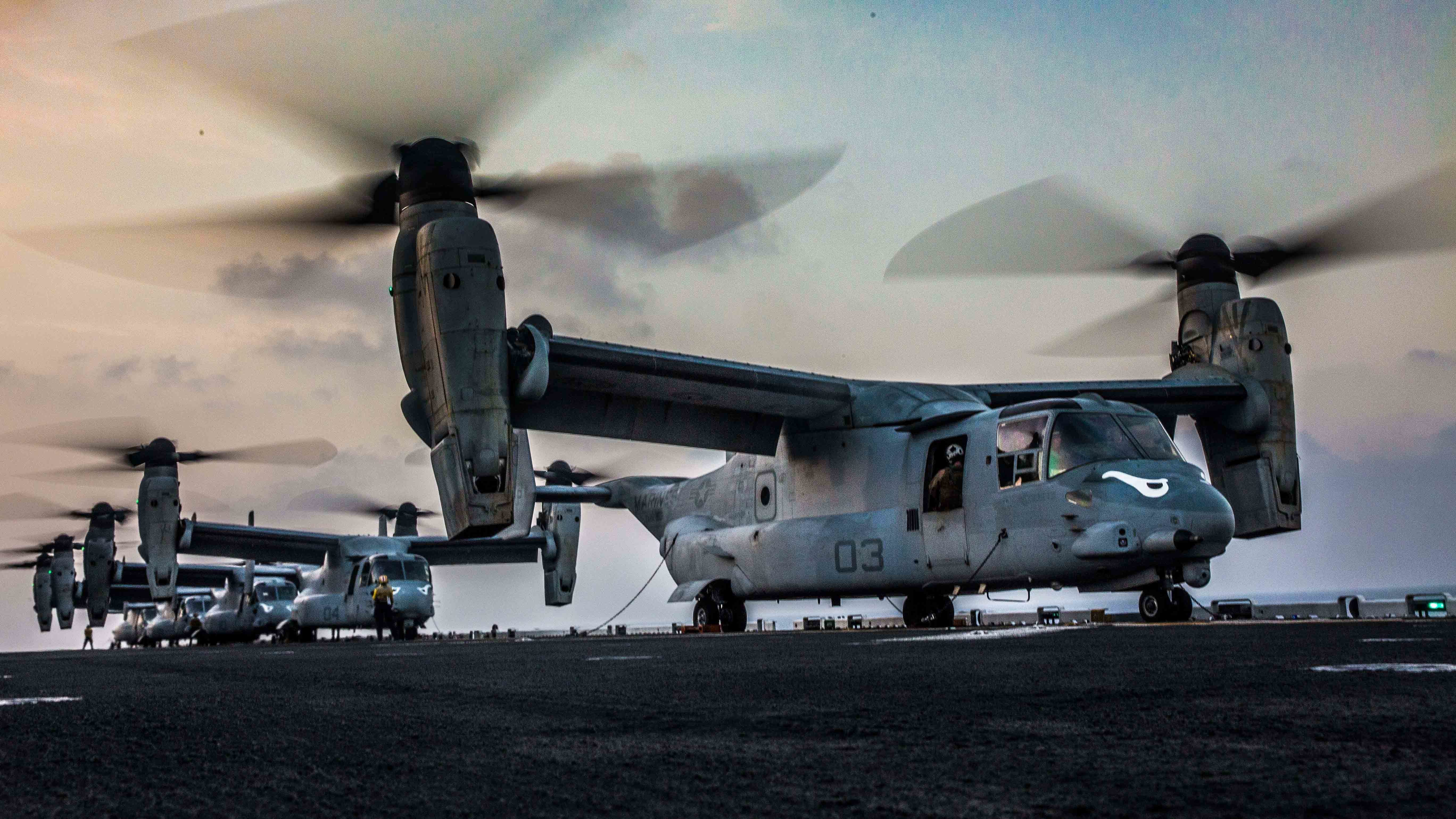
Nine days into his presidency, Donald Trump authorized a ground raid in central Yemen that had been planned under Barack Obama but never approved. What happened on January 29, 2017, in the village of al-Ghayil, in the Yakla area of Al Bayda Governorate, would become one of the most scrutinized military operations of the new administration -- not for what it achieved, but for what it cost. A Navy SEAL was killed. As many as twenty-five civilians died, including nine children, the youngest a three-month-old baby. A $75 million MV-22 Osprey was destroyed. And the principal target of the raid, al-Qaeda in the Arabian Peninsula leader Qasim al-Raymi, was never found.
Dinner Table Authorization
Under Presidents Bush and Obama, military raids of this magnitude went through a rigorous approval process: a Situation Room meeting with a detailed operational plan, risk assessment, and legal review, with representatives from the State Department present. The Yakla raid followed a different path. It was approved over dinner, with Trump joined by his son-in-law Jared Kushner, adviser Steve Bannon, Defense Secretary Jim Mattis, Joint Chiefs Chairman General Joseph Dunford, and National Security Advisor Michael Flynn. No State Department officials attended. The Obama administration had reviewed the operation several times but never authorized it. Colin Kahl, who served as national security advisor to the vice president until January 2017, stated publicly that Obama "made no decisions on this before leaving office, believing it represented escalation of U.S. involvement in Yemen." Defense sources told the Washington Post they expected the new administration to more readily approve such operations.
Contact in the Dark
On January 26, a team of DEVGRU operators -- the unit commonly known as SEAL Team Six -- staged from Djibouti aboard the USS Makin Island. Their primary targets were members of the al-Dhahab family, an influential tribal clan in Al Bayda whose members had ties to AQAP. But the deeper objective, not publicly acknowledged by the military at first, was to capture or kill Qasim al-Raymi himself. It was the prospect of eliminating the AQAP leader that convinced the chain of command the mission was worth the risk. Whether al-Raymi was tipped off, was simply absent, or escaped during the assault remains unknown. The U.S. military reported fourteen AQAP fighters killed. The operation destroyed a local clinic, the village mosque, and a school. More than a dozen buildings were hit by U.S. warplanes. Over 120 goats, sheep, and donkeys -- the village's livelihood -- were killed.
The Children of al-Ghayil
The human cost of the raid extended far beyond the combatants. The Bureau of Investigative Journalism found that twenty-five civilians who were not AQAP members were killed, including nine children under the age of thirteen. A pregnant woman was among the dead. Human Rights Watch counted at least fourteen civilian fatalities, including nine children. The civilian deaths were primarily caused by aerial gunfire from U.S. support aircraft, according to CENTCOM. Among those killed was eight-year-old Nawar al-Awlaki, an American citizen also known as Nora. Her grandfather said she was hit by a bullet in the neck and suffered for two hours before dying, with her mother and uncle at her side. Nawar's father was Anwar al-Awlaki, the American-born AQAP operative killed by a U.S. drone strike in 2011. Her sixteen-year-old half-brother, Abdulrahman, also an American citizen, had been killed by a separate drone strike two weeks after their father's death. Three members of one family, all American citizens, killed by their own government across three separate operations spanning six years.
A Father's Reckoning
Chief Petty Officer William "Ryan" Owens of DEVGRU was killed during the firefight, becoming the first American service member to die in combat under the Trump presidency. Three other SEAL operators were wounded. The White House called the raid "highly successful." Press Secretary Sean Spicer pointed to intelligence gathered during the operation, but the only example Pentagon officials could cite was an outdated bomb-making instructional video with no current intelligence value. Owens's father, William Owens, refused to meet with President Trump when his son's remains were returned to Dover Air Force Base. In an interview with the Miami Herald, the elder Owens asked: "Why at this time did there have to be this stupid mission when it wasn't even barely a week into his administration? For two years prior, there were no boots on the ground in Yemen -- everything was missiles and drones -- because there was not a target worth one American life." He demanded an investigation. On Fox & Friends on February 28, Trump blamed the failure of the mission on the military.
What the Raid Left Behind
The Yakla raid became the subject of three pending Department of Defense investigations. U.S. officials later revealed that special operations forces had captured approximately one terabyte of data on AQAP, and the military worked to locate and monitor hundreds of al-Qaeda contacts gleaned from that intelligence. Whether those contacts yielded operational gains remains classified. What is not classified is the raid's broader impact. Richard Atwood of the International Crisis Group warned that operations like Yakla are more likely to radicalize Yemeni tribesmen and strengthen al-Qaeda than weaken it, particularly when civilians are killed. Farea Al-Muslimi, co-founder of the Sanaa Center for Strategic Studies, noted that one of the men killed, Abdulraoof al-Dhahab, was not actually an AQAP member -- and that his death would stir anti-American sentiment precisely because of that fact. In early March 2017, Navy SEALs planned another raid inside Yemen but aborted the mission at the last minute. The village of al-Ghayil, meanwhile, was left to bury its dead and count its missing livestock.
From the Air
Located at 14.598N, 45.060E in the Al Bayda Governorate of central Yemen. The Yakla area is remote, mountainous terrain in Yemen's interior highlands. Nearest major airport is Aden International (OYAA), approximately 200 km to the south. The terrain is rugged with limited road access. DEVGRU operators staged from Djibouti via the USS Makin Island in the Gulf of Aden.