Rainbow River
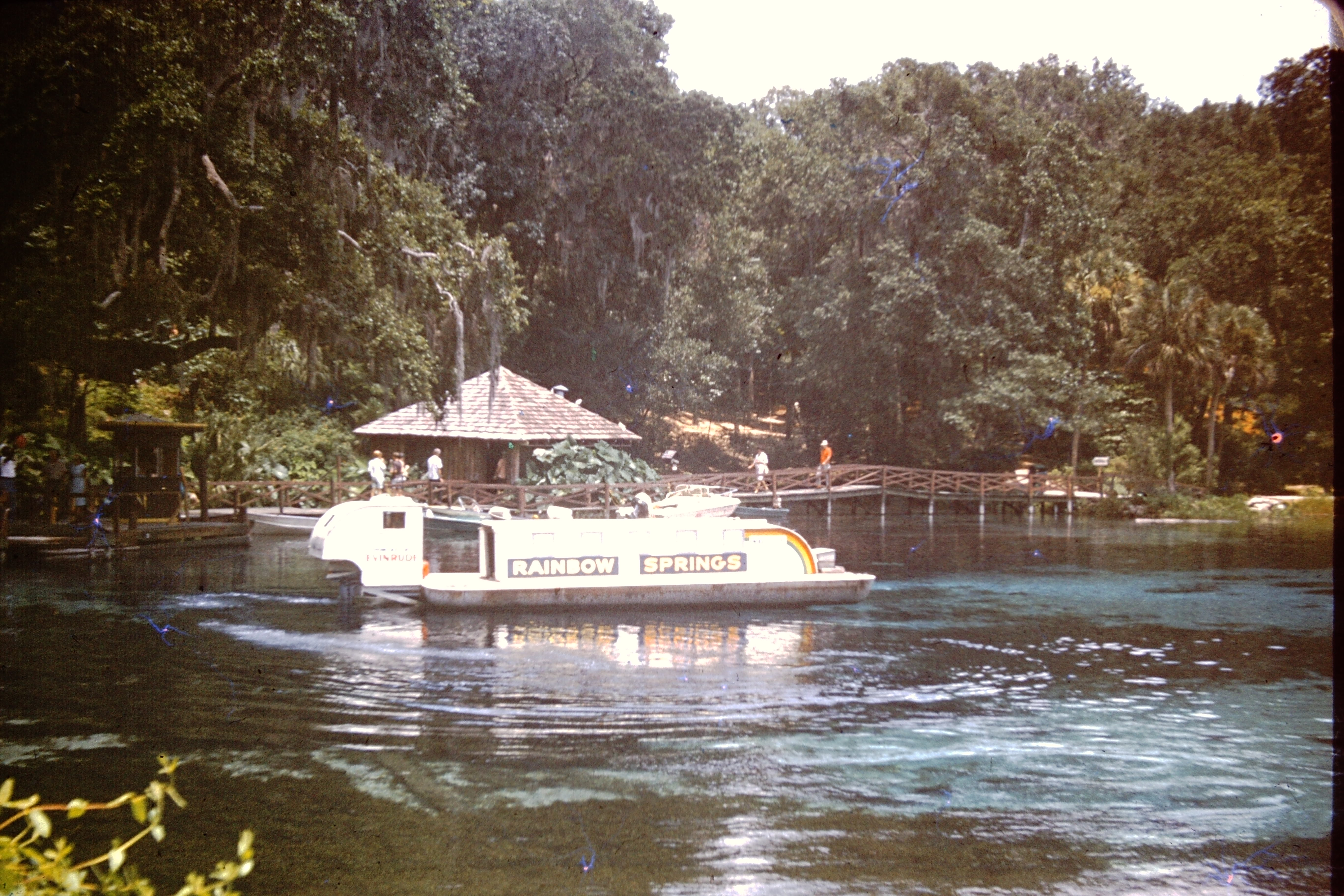
In the 1960s, you could ride a submarine through the Rainbow River. Not a real submarine - a sightseeing boat where passengers sat below the waterline, peering through underwater windows at the crystalline springs flowing beneath them. You could also take a glass-bottomed boat ride, float on a log raft, watch a horse rodeo, ride a leaf-shaped gondola on an overhead monorail, and browse a reptile exhibit. Then Walt Disney World opened seventy miles to the southeast, Interstate 75 replaced US Highway 41 as the main artery through Florida, and the Rainbow Springs attraction closed in 1974. The river, of course, did not care. It kept pumping 400 to 600 million gallons of water per day from dozens of underground vents, just as it had for millennia, at a constant 72 degrees Fahrenheit, clear enough to read a newspaper at the bottom.
Ten Thousand Years of Crystal Water
Archaeological evidence indicates that humans have been drawn to the Rainbow River for over 10,000 years. The appeal is obvious: an inexhaustible supply of fresh, clean, temperature-stable water in a subtropical landscape. The river was known by several names before its current one - Wekiwa Creek, Blue Spring, Blue Run - each name capturing a different aspect of its character. The water emerges from the Floridan Aquifer through Rainbow Springs, a first-magnitude spring system ranked fourth in the state for volume of discharge. Unlike springs that bubble up from a single dramatic vent, Rainbow Springs is a distributed system: dozens of openings in limestone, caves, rock crevices, and sand boils along the entire 5.7-mile length of the river. The result is a waterway that stays impossibly clear from headspring to its confluence with the Withlacoochee River at Dunnellon.
Phosphate, Submarines, and a Leaf-Shaped Monorail
The modern history of Rainbow Springs reads like a capsule history of Florida tourism itself. In the late 1880s, the discovery of hard rock phosphate brought a boom to the area, and a small community called Juliette flourished near the springs. By the 1930s, someone had the idea to turn the springs into a tourist attraction, building sea walls, a lodge, a gift shop, waterfalls, and a reptile exhibit. But the real heyday came in the 1960s under new ownership. The attraction expanded wildly: glass-bottomed boats, riverboat rides, log raft floats, an aviary, a cafe, a horse rodeo, the famous submarine boat tours, and an overhead monorail system with leaf-shaped gondolas. It was peak mid-century Florida roadside spectacle - exuberant, eccentric, and utterly dependent on highway traffic that would soon be rerouted.
The River Reclaims Its Park
After the attraction closed in 1974, the site was abandoned. Vegetation crept over the sea walls and walkways. The gift shop and lodge fell into disrepair. The leaf-shaped gondolas rusted on their rails. But in 1972, even before the closure, the Rainbow River had been designated a Registered Natural Landmark. In 1986 it became an Aquatic Preserve, and in 1987 it earned the designation "Outstanding Florida Waterway" - recognition that the river's value lay not in submarine rides but in the extraordinary clarity and ecological richness of the water itself. The state purchased the original attraction site in 1990. Volunteers cleared the overgrown grounds and opened the park on weekends. The Florida Park Service officially opened Rainbow Springs State Park on a full-time basis on March 9, 1995, completing the river's transformation from roadside spectacle to protected natural treasure.
An Underwater Garden
The park today encompasses uplands, wetlands, and submerged areas fed by the headspring basin. The river supports 11 distinct natural communities, from sandhills and flatwoods to upland mixed forests and hydric hammocks. Beneath the water's surface, aquatic vegetation sways in the current like an underwater garden - visible in extraordinary detail thanks to the spring water's clarity. Above, the banks shelter gray squirrels, white-tailed deer, barred owls, red-shouldered hawks, and swallowtail kites. The trees include longleaf pine, magnolia, dogwood, redbud, and hickory. Visitors swim, snorkel, canoe, and kayak in water that maintains its 72-degree temperature year-round - refreshingly cool in summer, surprisingly warm in winter. The river that once supported submarine tours and monorail rides now supports something quieter and more enduring: direct, unmediated contact with one of Florida's most remarkable natural systems.
From the Air
Located at 29.05N, 82.46W in Dunnellon, Florida, in the southwest corner of Marion County. From altitude, the Rainbow River is visible as a strikingly blue-green ribbon winding 5.7 miles from its headsprings to the Withlacoochee River. The spring vents at the headwaters may appear as lighter patches in the water. Rainbow Springs State Park is visible along the northern section. The town of Dunnellon sits at the confluence with the Withlacoochee. Ocala International Airport (KOCF) is 18 miles northeast. Crystal River Airport (KCGC) is 19 miles west. Gainesville Regional Airport (KGNV) is 52 miles north. The rolling terrain of north-central Florida's horse country stretches to the east toward Ocala.