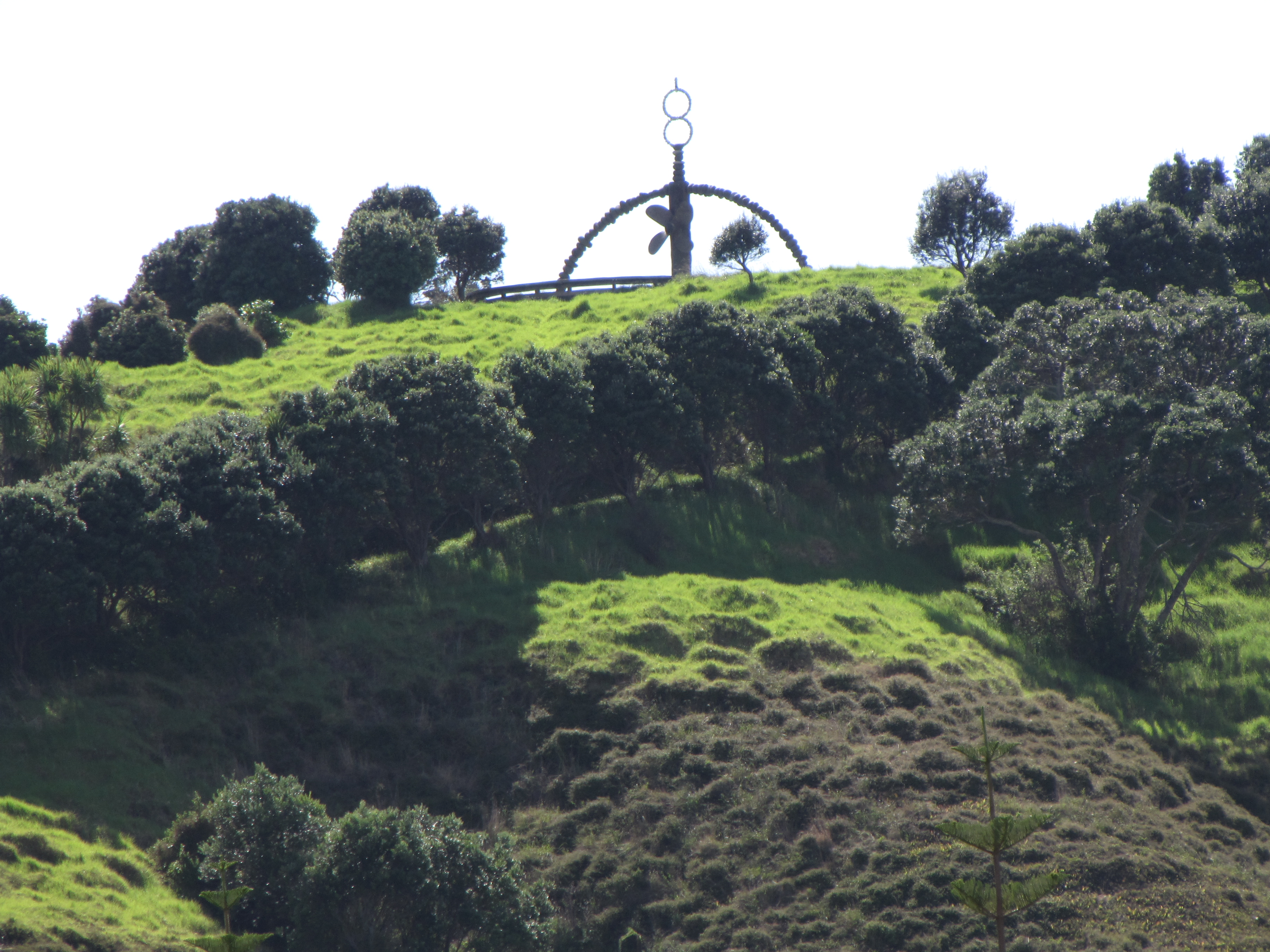
Rainbow Warrior (1955)
She started life as a government research trawler named Sir William Hardy, built in Aberdeen, Scotland, in 1955 for the UK Ministry of Agriculture, Fisheries and Food. Twenty-two years later, Greenpeace UK bought her for 37,000 pounds -- roughly the cost of a modest house -- and spent four months refitting her for a very different kind of work. Renamed Rainbow Warrior by co-founder Susi Newborn after a book given to her by fellow co-founder Robert Hunter, the ship was relaunched on 2 May 1978. Over the next seven years, she would confront whalers, evacuate nuclear refugees, escape captivity in Spain twice, and become the most recognizable protest vessel on earth. On the night of 10 July 1985, agents of the French intelligence service attached two bombs to her hull in Auckland Harbour. The second explosion killed photographer Fernando Pereira and sank the ship that had become Greenpeace's most powerful symbol.
From Trawler to Icon
The transformation from research vessel to protest ship was not just cosmetic. Greenpeace fitted Rainbow Warrior with sails on a ketch rig in 1985, reducing her dependence on engines and extending her range across oceans where fuel was scarce. Her campaigns in the North Atlantic earned international attention -- and international enemies. During operations against Spanish whalers, she was seized twice by Spanish authorities. Both times, her crew escaped. The second escape reportedly contributed to the resignation of the Admiral of the Spanish Navy. By the early 1980s, the ship had become shorthand for environmental confrontation: small, stubborn, willing to put a hull between a harpoon and a whale.
The Rongelap Evacuation
In May 1985, Rainbow Warrior carried out what may have been her most consequential mission. She relocated 300 Marshall Islanders from Rongelap Atoll, which had been contaminated by radioactive fallout from American nuclear tests at the Pacific Proving Grounds. The people of Rongelap had lived with the consequences of the 1954 Castle Bravo test for three decades, watching rates of cancer and birth defects climb while petitioning for relocation that never came. Greenpeace provided what their own government and the United States had not: a way out. The evacuation took multiple trips, moving families and their possessions to Mejato Island, 180 kilometres away. For the people of Rongelap, Rainbow Warrior was not a symbol of protest. She was a lifeline.
Operation Satanique
Rainbow Warrior sailed to Auckland to lead a flotilla of yachts protesting French nuclear testing at Mururoa Atoll in French Polynesia. The French government decided she would not arrive. DGSE agent Christine Cabon infiltrated Greenpeace's Auckland office, monitoring communications and mapping the ship's equipment. Other agents toured the vessel while it was open to visitors, posing as tourists and supporters. Just before midnight on 10 July 1985, Captain Peter Willcox and eleven others were aboard when the first explosion rocked the hull. Most evacuated immediately, but Fernando Pereira -- a Portuguese-Dutch photographer -- went below to retrieve his camera equipment. The second, larger bomb detonated while he was still inside. The ship sank at its berth with Pereira trapped below. He was 35 years old.
The Truth Is Cruel
New Zealand police arrested two French agents, and the investigation that followed unravelled a state-sponsored operation. French Defence Minister Charles Hernu resigned. The captured agents were imprisoned in New Zealand, then transferred to French custody on Hao atoll, where their confinement was brief. On 22 September 1985, French Prime Minister Laurent Fabius summoned journalists and read a 200-word statement. "The truth is cruel," he said. "Agents of the French secret service sank this boat. They were acting on orders." An international arbitration tribunal ordered France to pay Greenpeace US$8.1 million in 1987 -- a sum that could not restore Pereira's life or undo the political damage the affair inflicted on France. The cost of the entire scandal reached 115 million francs. Rainbow Warrior's hull was scuttled at Matauri Bay in Northland, where it became an artificial reef now covered in sea anemones. Her salvaged masts stand outside the Dargaville Museum. A second Rainbow Warrior was acquired in 1989, and a purpose-built third launched in 2011. The ship is gone. The name persists.
From the Air
The Rainbow Warrior memorial is at Matauri Bay (34.97S, 173.93E) in New Zealand's Northland region, near the Cavalli Islands where the hull was scuttled as a dive site. Kaikohe Airport (NZKK) is approximately 50 km to the southwest. The original bombing occurred at Marsden Wharf in Auckland Harbour (36.84S, 174.78E), served by Auckland Airport (NZAA). From the air, Matauri Bay is a curving white-sand beach backed by green hills, with the Cavalli Islands visible offshore. The wreck site is marked by dive buoys in calm weather. Conditions are subtropical maritime, with sea breezes common on clear days.