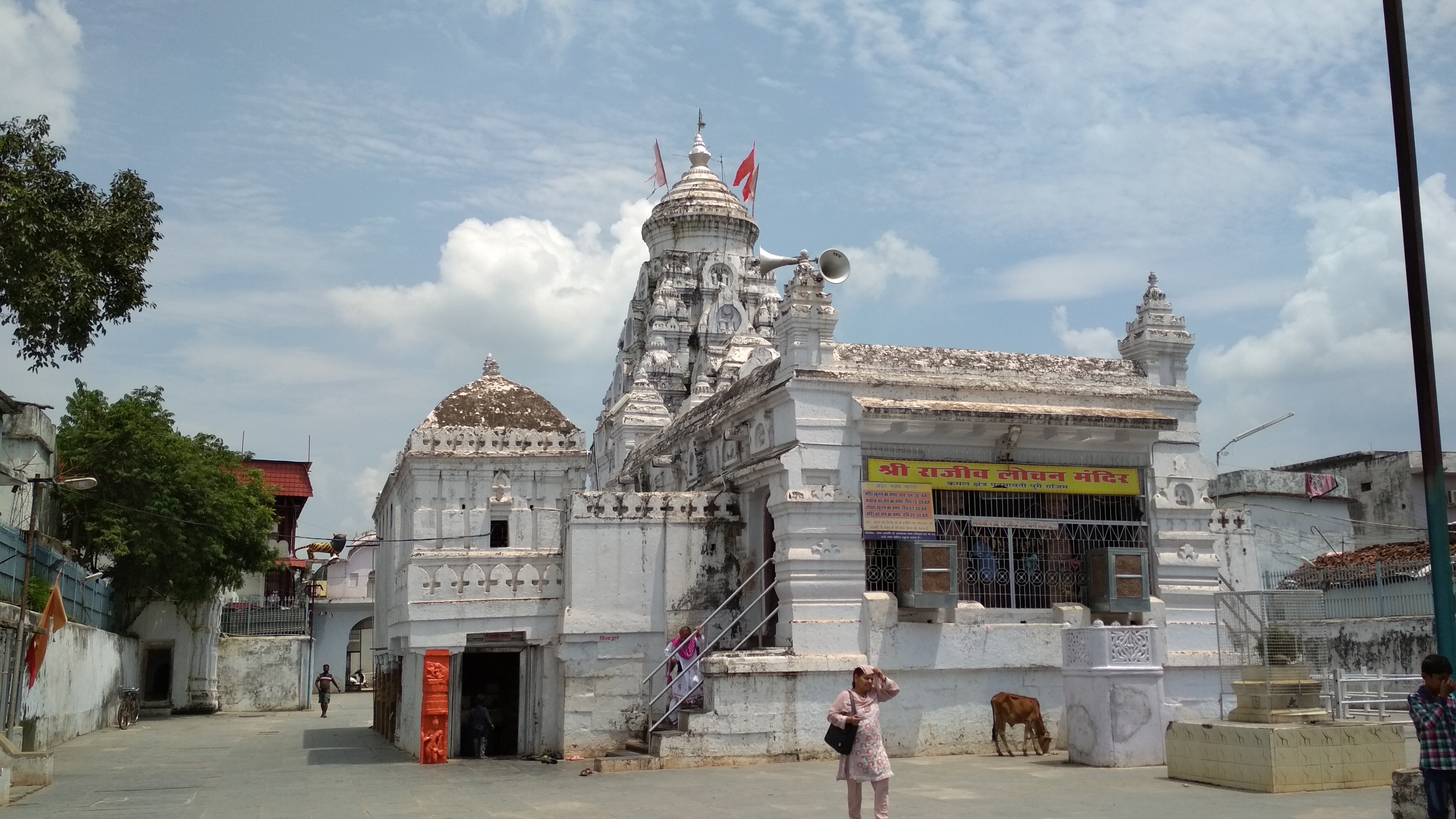
Rajiv Lochan Temple
Three rivers meet at Rajim. The Mahanadi, the Pairi, and the Sondur converge here in a triveni sangam that has drawn pilgrims to this small Chhattisgarh town for over a millennium. At the heart of the settlement, raised on a platform eight feet above the surrounding courtyard, the Rajiv Lochan Temple houses a four-armed form of Vishnu whose name means "lotus-eyed" -- Rajiva-Lochana. The temple dates to the 7th or 8th century, though some historians, including the 19th-century archaeologist Alexander Cunningham, have argued for a date as early as the 5th century. What is beyond dispute is the artistry of the entrance doorway, where Lakshmi flanked by elephants, Shiva among serpent deities, and Vishnu reclining on the cosmic serpent Shesha are carved in ascending bands of stone, one above the next, as though the entire Hindu pantheon were standing guard.
The Prayag of Chhattisgarh
Rajim is sometimes called the Prayag of Chhattisgarh, a comparison to the great sacred confluence at Prayagraj where the Ganga, Yamuna, and Sarasvati rivers meet. The parallel is not idle flattery. The triveni sangam here has been a pilgrimage destination since at least the era of the Nala dynasty, around the 5th century CE. A 7th-century inscription records the temple's construction during the reign of King Vilasatunga, likely a Nala ruler, though later dynasties left their own marks -- the Somavamshi King Jajalladeva in the 9th century, the Kalchuri King Karnadeva in the 11th. Each rebuilding respected what came before while adding new layers. The result is a temple whose stones encode centuries of devotion, one monarch building upon the faith of the last.
A Doorway of Gods and Serpents
The western entrance tells the temple's story in carved stone. Two tall female figures frame the pilasters -- one holds a tree branch, the other a bunch of mangoes, fertility symbols that have greeted visitors for over a thousand years. Between them, the pillars bear human figures intertwined with knotted snakes. Step through the portico, and the inner chamber holds an unexpected pairing: a black stone Buddha sitting in contemplation under the Bodhi tree, and Hanuman, the monkey god, stationed in the opposite corner. Hindu and Buddhist imagery sharing the same threshold is not unusual in central Indian temples of this era, but the ease of coexistence here still surprises. Above the main doorway, carved bands rise in sequence -- Gajalakshmi with her elephants, Shiva with Nagas, Vishnu on Shesha -- a vertical catalogue of divine power that culminates in a riot of figures along the uppermost lintel.
The Pillared Hall's Stone Gallery
Inside the mandapa, twelve square pillars march in two rows, plain-faced in their lower halves, ornately carved above. The pilasters along the walls serve as a gallery of Hindu mythology. On the southern wall, Narasimha -- Vishnu's half-man, half-lion incarnation -- stands beside the river goddess Ganga balanced on a makara sea creature, an attendant holding an umbrella over her head. An amorous couple and a figure identified as Sita appear nearby, alongside an armed dvarapala gatekeeper. The northern wall answers with Varaha, the boar avatar, and Durga with eight arms seated upon a lion. A male figure rides a chariot pulled by five horses -- Cunningham suggested this was Surya, the sun god. Later additions on either side of the hall now serve as the temple's treasury and kitchen, practical rooms that Cunningham lamented "completely spoil the entire view of the temple." Practicality, it seems, sometimes trumps aesthetics even in sacred architecture.
The Lotus-Eyed Lord
Beyond the mandapa, through another elaborately carved doorway where Vishnu sits upon Garuda, the inner sanctum holds the temple's namesake. The four-armed Rajiva-Lochana stands in a square chamber measuring roughly twenty feet on each side. Above, a shikhara rises in the form of a square pyramid, divided into five tiers of niches, reaching an estimated fifty feet above the ground. Its style echoes the Mahabodhi Temple at Bodh Gaya, a resemblance that reinforces the Buddhist currents running through this ostensibly Vaishnavite site. Four subsidiary shrines at the courtyard's corners -- dedicated to Narasimha, Vamana, Varaha, and Badrinatha -- complete the pancayatana layout, surrounding the central deity with his own incarnations.
A Living Pilgrimage
Every year on Maha Shivaratri, the Rajiv Lochan Kumbh Mela transforms Rajim. For fifteen days in February and March, the town fills with naga sadhus, saints, and pilgrims who come to bathe at the sangam and pay respects at the temple. The festival is one of the largest gatherings in Chhattisgarh, drawing visitors from across India. Outside the festival season, the temple carries on in quieter rhythms -- offerings made, prayers spoken, the carved figures on the pilasters looking down on the same devotional gestures they have witnessed for more than a thousand years. The platform still measures sixty-nine by forty-three feet. The brick walls still hold. The lotus-eyed god still watches from his sanctum.
From the Air
Located at 20.964N, 81.878E at the confluence of the Mahanadi, Pairi, and Sondur rivers near Rajim, Chhattisgarh. The nearest major airport is Swami Vivekananda Airport at Raipur (VERP), approximately 45 km to the northwest. From cruising altitude, look for the river confluence and the dense settlement of Rajim along the south bank. Best viewed at 3,000-5,000 feet AGL for the temple courtyard layout. The surrounding terrain is flat agricultural plains with river channels visible in clear weather.