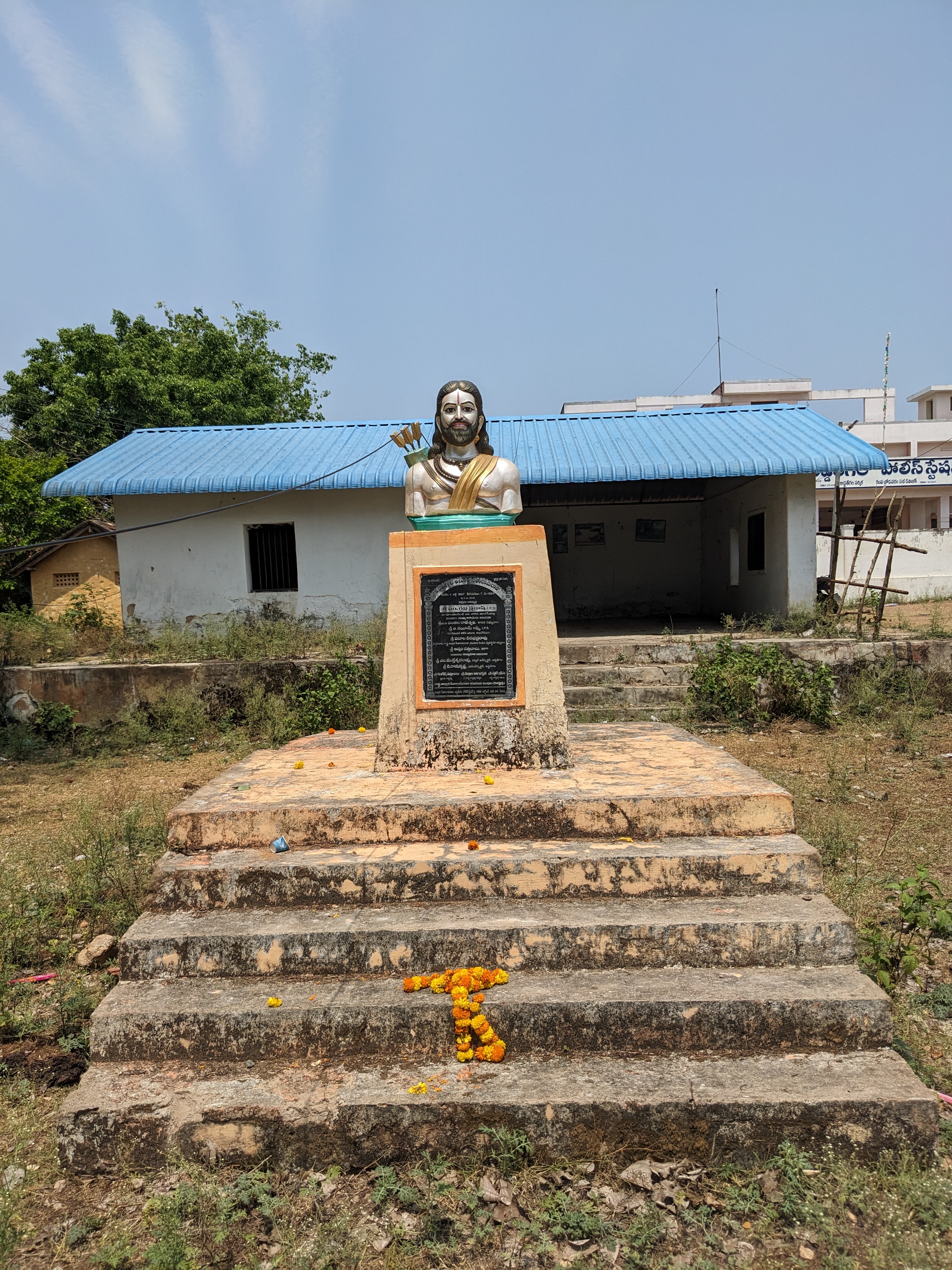
Rampa Rebellion of 1922
In the forested hills of the Eastern Ghats, where malaria and blackwater fever kept colonial administrators at bay, a young sannyasi named Alluri Sitarama Raju convinced the tribal people of the Rampa region to take up arms against the British Raj. The uprising began in August 1922 and lasted nearly two years, a guerrilla campaign fought across 700 square miles of dense hill country by people the British had classified as primitives. The colonial government had taken their forests, banned their farming methods, and forced them to build roads as unpaid laborers. Raju gave them something the Raj never intended them to have: a leader who believed their cause was worth dying for.
The Manyam and Its People
The Rampa region lies in the hills of what is now the Alluri Sitarama Raju district of Andhra Pradesh, in the northern reaches of the Godavari district. The Eastern Ghats rise west of the coastal plains, and in their folds live tribal communities whose way of life had little in common with the settled populations below. For centuries, Indian kingdoms had governed these hill tracts through autonomy rather than direct control. The British continued this pattern in a fashion, designating the areas as Agency tracts administered by District Collectors who served as Agents to the Governor. Officials called muttadars, hereditary village leaders, managed day-to-day governance and revenue collection. The approximately 28,000 tribal people of Rampa sustained themselves through podu cultivation, a system of shifting agriculture in which forest was burned to clear land for planting. It was a rhythm of life bound to the forest itself.
Forests Seized, Livelihoods Destroyed
The 1882 Madras Forest Act shattered that rhythm. Colonial authorities seized control of the forests for commercial exploitation, harvesting timber for railways and ships. The act restricted the free movement of Adivasi communities in their own habitats and outlawed podu cultivation entirely. A government memorandum from 1923 would later admit what everyone already knew: restrictions on jungle clearance had been overdone, and much population and food grains had been lost for the sake of forests of doubtful value. The tribal people faced starvation. The legal system, they believed, favored the zamindars and merchants of the plains. Their only alternative livelihoods were as coolies, laboring for the same system that had dispossessed them. When the colonial government attempted to conscript them as forced labor for road construction, the accumulated grievances reached a breaking point. This was not the first time: a similar rebellion had erupted in 1879 over many of the same injustices.
The Sannyasi Who Became a General
Alluri Sitarama Raju was a charismatic figure who combined ascetic spirituality with revolutionary politics. Many tribal people believed he possessed magical abilities and saw him as a messianic figure. Raju understood their world and their anger, and he channeled both into organized resistance. He framed the overthrow of colonial rule in millenarian terms, casting the rebellion as something larger than a dispute over forests and labor. His coalition was unusual. The tribal communities formed the rebellion's core, but Raju also drew support from sympathetic muttadars, the very class that had once exploited the hill people. British colonial policy had stripped the muttadars of their hereditary powers, reducing them from autonomous rulers to impotent bureaucrats. Where once muttadars and tribal people had been antagonists, they now shared a common enemy.
Guerrilla War in the Ghats
The rebellion broke out in August 1922 and took the form of guerrilla warfare across the thickly forested hills. The terrain was the rebels' greatest ally. British forces found the hills nearly impenetrable, and the diseases endemic to the region, malaria and blackwater fever, to which the tribal people had acquired a degree of tolerance, decimated colonial troops and their supply lines. For nearly two years, Raju's forces evaded capture, striking at colonial targets and melting back into the forest. The Raj poured resources into suppressing the uprising, but the combination of terrain, disease, and a population that sheltered the rebels made conventional military operations extraordinarily difficult. It was not until May 1924 that British forces finally captured Alluri Sitarama Raju. He was executed, and the rebellion collapsed with the loss of its leader.
A Legacy Carved into the Land
The district where the rebellion took place now bears his name: Alluri Sitarama Raju district. It is a rare honor in Indian geography, where administrative boundaries typically carry the names of cities or ancient kingdoms rather than revolutionary figures. The Rampa Rebellion occupies a particular place in the history of Indian resistance to colonialism. It was not led by urban intellectuals or members of the Congress party but by a wandering holy man who united tribal communities in defense of their land and way of life. The forests of the Eastern Ghats still cover these hills, and the descendants of the people who fought alongside Raju still live in them. The rebellion did not end colonial rule, but it demonstrated that even the most marginalized communities could organize, resist, and force the world's most powerful empire to take them seriously.
From the Air
The Rampa Rebellion took place in the Eastern Ghats hill region around 17.44N, 81.78E, in what is now the Alluri Sitarama Raju district of Andhra Pradesh. From the air, the dense forested hills of the Eastern Ghats are visible west of the coastal plains. The terrain remains rugged and heavily wooded. Rajahmundry Airport (VORY) is the nearest airfield, approximately 40 km to the southeast. Best appreciated at 5,000-10,000 feet where the contrast between the flat coastal delta and the steep forested hills becomes dramatic.