Rancho Petaluma Adobe
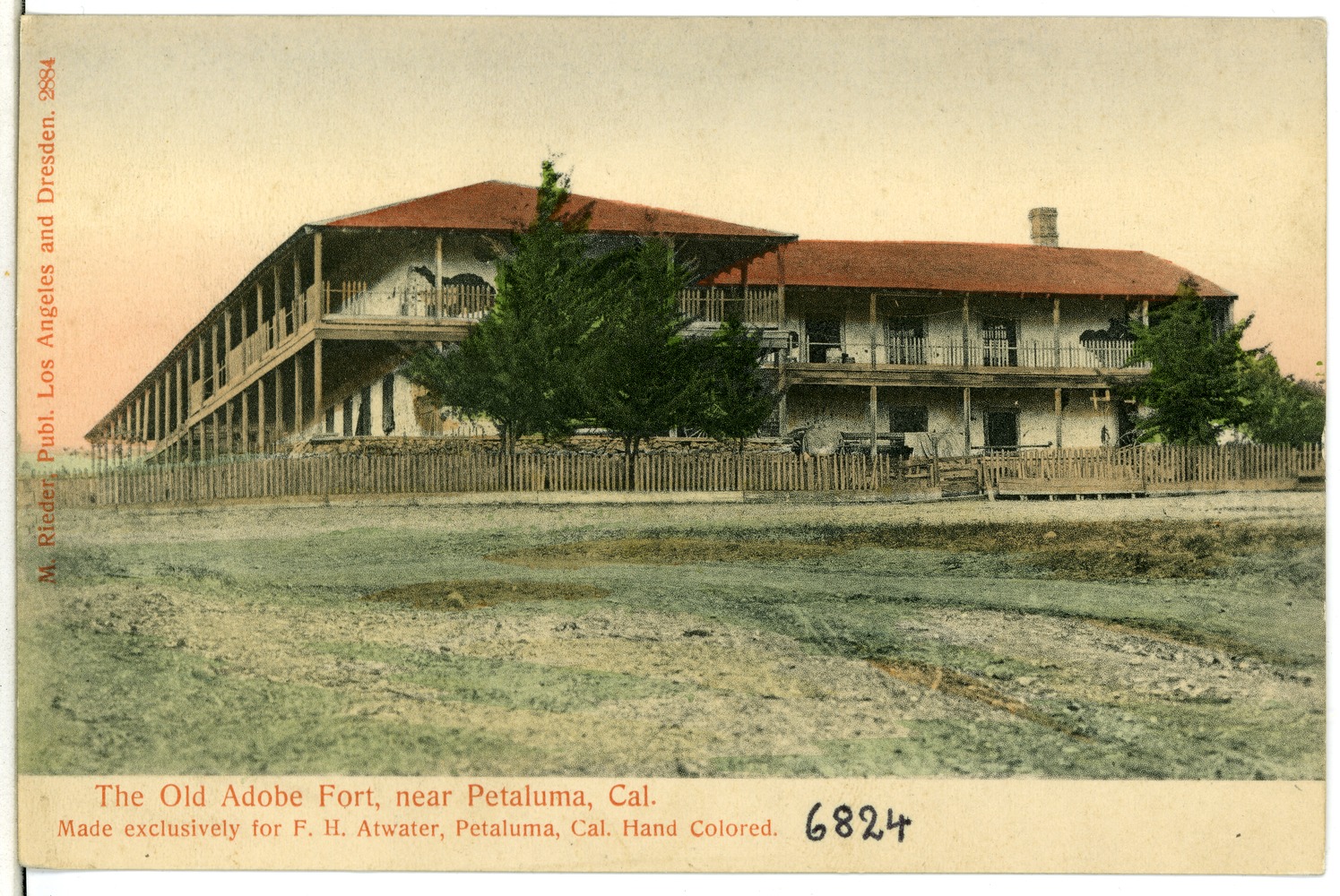
General Mariano Vallejo called it "the fort," and he built it to function as one. The Rancho Petaluma Adobe rose from the Sonoma County hills beginning in 1836, a massive two-story structure of sun-dried bricks and hand-hewn redwood designed to manage 12,000 head of cattle and defend against Russians at nearby Fort Ross or raids from borderland tribes. At its height, 2,000 Native American workers made it one of the most productive ranches north of San Francisco Bay. Today, only half the original structure survives, the largest example of Monterey Colonial architecture in the United States and a National Historic Landmark that locals simply call "Old Adobe."
Empire in Adobe
In 1834, California Governor Jose Figueroa ordered Lieutenant Vallejo north to establish Mexican authority beyond San Francisco Bay. With the land grant came responsibility: counter Russian expansion from Fort Ross and Bodega Bay, manage relations with indigenous tribes, and build something that could survive on the frontier. Vallejo invested an estimated $80,000 in the project, a fortune for the era. His brother Salvador directed construction of two massive two-story buildings surrounding a courtyard. The wide second-floor verandas served double duty: they protected the adobe walls from rain while providing firing positions in case of attack. Large gates on the north and south walls could be sealed against intruders. The southwest section housed the Vallejo family's quarters, with imported glass windows in the dining room and interior fireplaces, luxuries in a land where most lived in simple adobes.
The Labor Question
Financial success at Rancho Petaluma depended on one resource: Native American workers, generally paid in food, clothing, and goods rather than cash. The most valuable were mission-trained neophytes from the recently secularized missions at Sonoma and San Rafael. These skilled workers knew blacksmithing, carpentry, hide tanning, and textile production. They lived in second-floor rooms of the adobe itself. Other workers resided in a rancheria of tule reed huts along Adobe Creek. Seasonal laborers came for the grain harvest or la matanza, the annual cattle slaughter. Some came voluntarily; others were sent by allied chiefs like Marin or Solano. Still others had been captured by the military for theft or raids and were working as punishment. Between 1836 and 1857, the ranch employed up to 2,000 Native Americans at any given time.
Rivers of Hides and Tallow
The cattle provided everything. Each year, about a quarter of the 12,000-head herd went to slaughter. The meat was largely wasted, but the hides and tallow floated down the Petaluma River on boats bound for San Francisco Bay and the global market. Vallejo made an estimated $18,000 to $24,000 annually from this trade alone. The ranch operated as a self-contained economy. A tannery processed hides. A gristmill ground grain. Workshops produced candles, soap, thousands of wool blankets from the 3,000-sheep flock, and boots and saddles for Vallejo's military troops. By 1843, Mexican Governor Manuel Micheltorena expanded Vallejo's holdings with the Rancho Suscol grant, stretching his lands south to the bay and southeast to what would become the city bearing his name.
War and Ruin
The Mexican-American War destroyed everything Vallejo had built. In 1846, John C. Fremont's California Battalion requisitioned the ranch's horses, cattle, and grain reserves while Vallejo sat imprisoned for his Mexican military position. The Native American workforce fled from the soldiers. After the war, Vallejo submitted a claim for $48,700, which Congress eventually paid in 1855, but it was too late. The ranch declined every year. The University of California considered purchasing it for a campus in 1856; Vallejo sold it instead to William Whiteside for $25,000 around 1857. The southeastern half of the adobe, never fully completed to begin with, deteriorated beyond repair. The eastern building's walls had been built but never received floors or a roof.
Saved by Pride
By 1910, over half of Vallejo's great adobe had succumbed to neglect and the elements. That year, the Native Sons of the Golden West's Petaluma Parlor #27 purchased what remained. It took decades of fundraising and restoration work, but in 1951 the fully restored site was turned over to California. The adobe became a National Historic Landmark in 1970. Today about 80 percent of the original adobe brick survives, though most of the wood has been replaced. Visitors can see the foundation outline of the vanished eastern half and explore rooms furnished as they might have looked when Vallejo managed his cattle empire from the second floor. A small museum tells the story of California's rancho era, when vast land grants supported a way of life that would not survive the American conquest.
From the Air
Located at 38.26N, 122.58W on the eastern edge of Petaluma, California. The two-story adobe structure is visible from low altitude along Adobe Road, surrounded by open grassland that suggests the ranch's former extent. Nearby airports include Petaluma Municipal (O69) approximately 4nm west and Sonoma Skypark (0Q9) approximately 8nm northeast. Best viewed at 1,500-2,500 feet AGL. The surrounding hills and the Petaluma River valley provide excellent visual context for understanding the ranch's strategic position.