Rangoon Bombing
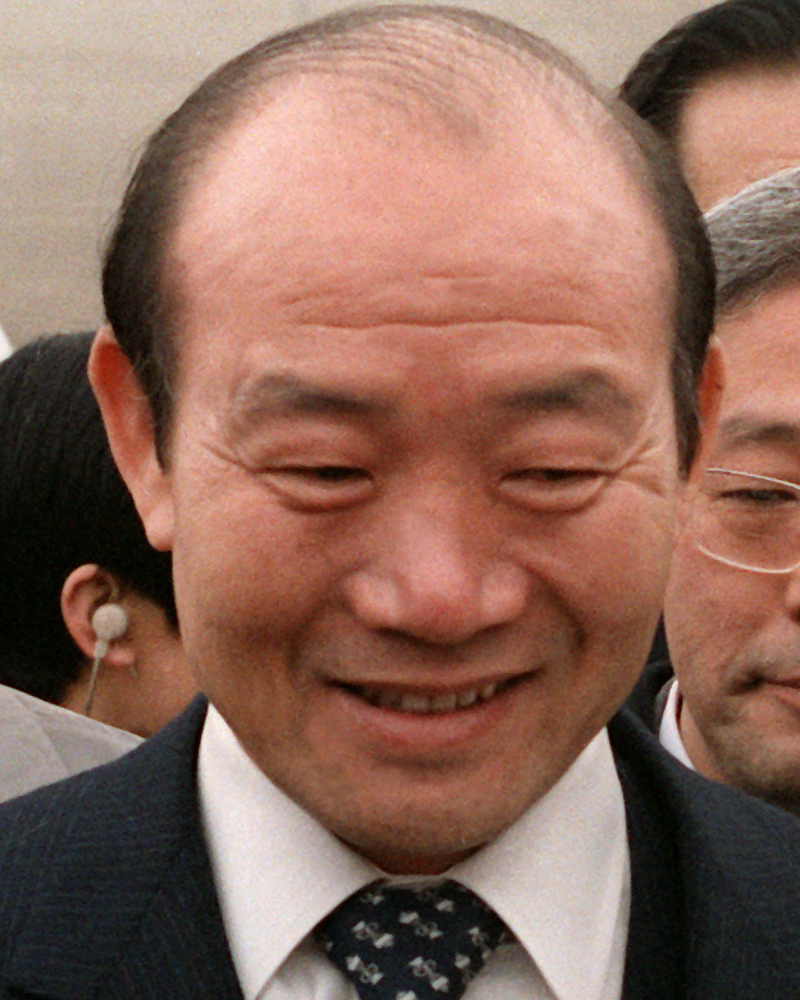
A mistimed bugle call saved the president of South Korea. On October 9, 1983, Chun Doo-hwan was minutes from arriving at the Martyrs' Mausoleum in Rangoon when a bomb hidden in the roof detonated, triggered prematurely by a ceremonial bugle that sounded before the presidential motorcade had actually arrived. The blast killed 21 people and wounded 46, obliterating the advance party of South Korean officials who had gathered to lay a wreath honoring Aung San, Burma's assassinated independence hero. The attack had been orchestrated by North Korea.
A Wreath-Laying That Became a Killing Ground
President Chun had flown to Rangoon on an official state visit. The wreath-laying at the Martyrs' Mausoleum was a standard diplomatic gesture -- the memorial commemorated Aung San and the cabinet ministers killed in 1947, and visiting heads of state routinely paid respects there. Three North Korean military officers had arrived in Rangoon weeks earlier, planting bombs in the roof of the mausoleum structure. Their plan was straightforward: detonate when the South Korean president stood below. But Chun's motorcade was delayed in Rangoon's traffic. When the ceremonial bugle sounded prematurely, the bombers mistook it for the signal of the president's arrival and triggered the explosives. The blast ripped through the crowd of South Korean officials already assembled. Fourteen South Korean presidential advisers, journalists, and security officials died, along with four Burmese nationals, including three journalists.
The Dead and the Diplomacy
The list of South Korean dead reads like a roster of the nation's senior leadership: Lee Bum Suk, Minister of Foreign Affairs; Ham Byeong-chun, Chief Presidential Secretary; Kim Jae-ik, Senior Presidential Secretary for Economic Affairs; the ambassador to Burma; vice ministers of finance, agriculture, and science. These were not junior officials. North Korea had attempted to decapitate the South Korean government in a single stroke, and came within minutes of killing the president himself. The United States quietly provided military and logistics support to return the surviving delegates and the bodies of the dead to Seoul. As Victor Cha, a former director for Asian affairs on the National Security Council, later recounted, a South Korean official told him: "This is what only a true ally like the United States was capable of doing, in ways that would never become public but would be remembered."
Cold War Aftershocks
The diplomatic consequences rippled across Asia for decades. Burma immediately suspended relations with North Korea. China, which had been quietly passing along a North Korean request for trilateral talks with South Korea and the United States, was furious -- Chinese officials refused to meet or speak with their North Korean counterparts for months. The bombing also established a pattern that the international community would recognize again in 1987, when North Korean agents destroyed Korean Air Flight 858 over the Andaman Sea. In 1994, South Korea's representative to the United Nations General Assembly linked the two attacks, arguing that the same state had acted with impunity. The Rangoon bombing became one of the foundational justifications for listing North Korea as a state sponsor of terrorism, a designation it has carried almost continuously since.
The Bomber Who Became a Prisoner Without a Country
Of the three North Korean agents, one -- Shin Ki-chul -- killed three Burmese soldiers before being shot dead. Kim Jin-su refused to cooperate with investigators and was executed by hanging. Kang Min-chul confessed, revealing North Korea's role in the attack. His cooperation spared him the death sentence, but it condemned him to something arguably worse: life imprisonment in Insein Prison with no country willing to claim him. North Korea denied he was a citizen. South Korea might have prosecuted him. He worried that his mother and sister back home would suffer reprisals if he sought asylum. Over 25 years in prison, Kang learned to speak Burmese fluently, learned to climb mango trees with his one remaining arm, converted to Christianity, and took the baptismal name Matthew. He died of liver cancer on May 18, 2008, at the age of 53, while being transferred from Insein Prison to a hospital. No one knows what happened to his remains.
From the Air
Located at 16.803°N, 96.148°E, at the Martyrs' Mausoleum on the northern slopes of the Shwedagon Pagoda hill in Yangon. The mausoleum grounds are set in parkland visible from the air, adjacent to the massive golden stupa of Shwedagon, one of the most prominent aerial landmarks in Southeast Asia. Nearest airport is Yangon International (VYYY), approximately 13 km north. At 3,000-5,000 ft AGL, the Shwedagon Pagoda and surrounding park complex are clearly identifiable, with the mausoleum grounds visible to the north of the pagoda platform.