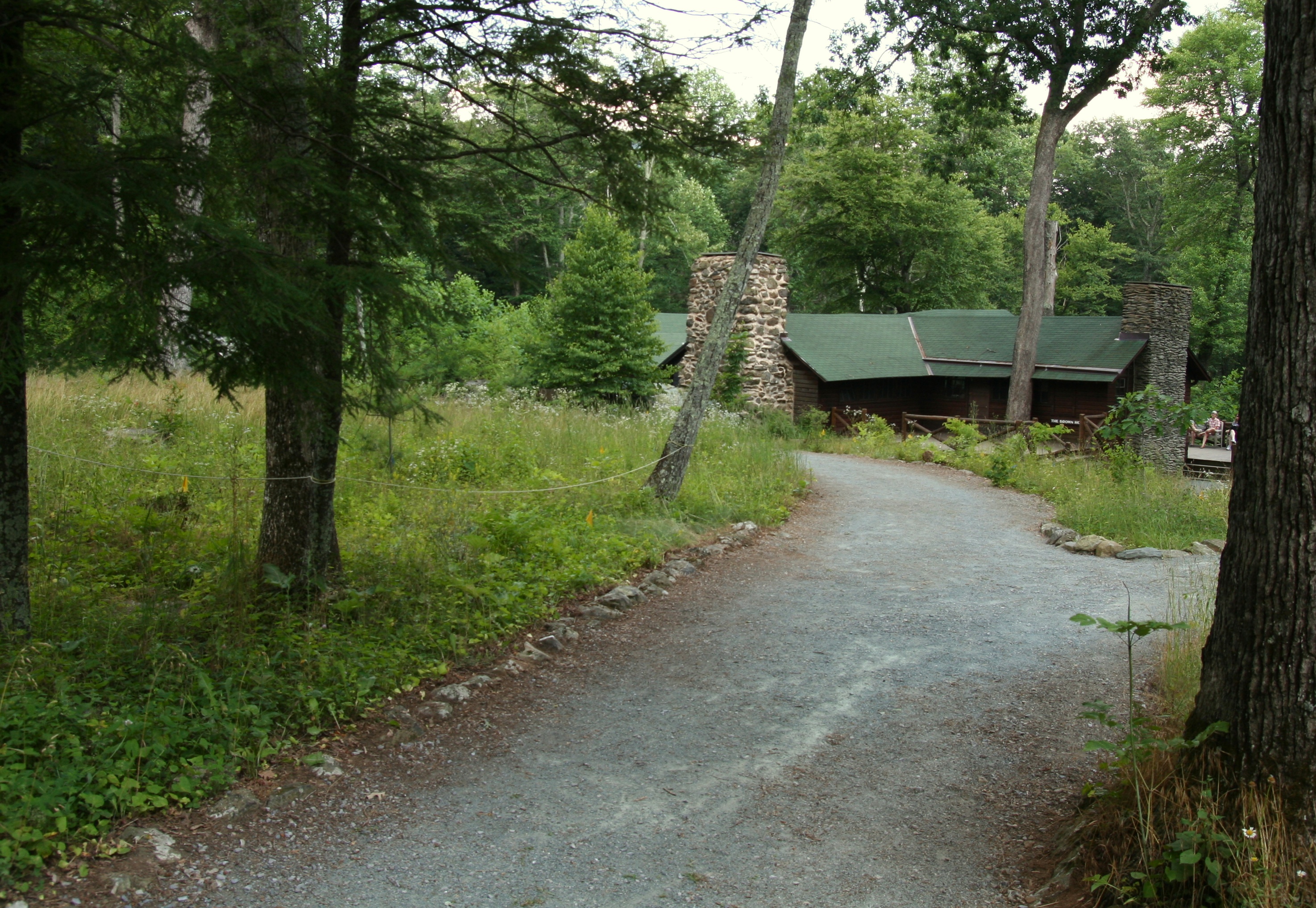
Rapidan Camp
The requirements were specific: within 100 miles of Washington, D.C., at least 2,500 feet above sea level to avoid mosquitoes, and close to an excellent trout stream. Herbert Hoover had spent a decade living at remote mining camps around the world with his wife Lou Henry, and he knew exactly what he wanted in a presidential retreat. When Virginia's conservation chairman recommended the headwaters of the Rapidan River on the eastern slope of the Blue Ridge Mountains, where the Mill Prong and Laurel Prong streams converge in Madison County, Hoover bought the 164-acre site with his own money for $1,045, at five dollars an acre. The Marines built the cabins as a "military exercise." The presidential family called their cabin the Brown House.
Fish, Firelight, and Foreign Policy
From 1929 to 1933, Rapidan Camp served as an escape valve for the pressures of a presidency consumed by the Great Depression. The New York Times described the place as "frontier-like." Trout stocked by the Interior Department filled the streams, and the fish within camp grew so tame that tossing a pebble would bring them drifting into the open to look visitors over. A massive outdoor stone fireplace became the backdrop for photographs of the Hoovers and their distinguished guests: inventor Thomas Edison and his wife, aviator Charles Lindbergh and Anne Morrow Lindbergh, Supreme Court Justice Harlan F. Stone, psychologist Lillian Moller Gilbreth, businessman Edsel Ford, and British Prime Minister Ramsay MacDonald. During one meeting with MacDonald, Hoover offered to buy Bermuda, Trinidad, and British Honduras in exchange for most of Britain's World War I debt. Days later came the Wall Street Crash. To reduce the presidential budget, Hoover had already decommissioned the Presidential Yacht Mayflower. Its Filipino mess crew transferred to Rapidan Camp, along with the kitchen supplies and china.
The Opossum and the Schoolhouse
In the summer of 1929, Admiral Joel T. Boone, Hoover's physician, was exploring mountain trails near camp when he came upon eleven-year-old Ray Buracker in an area called Dark Hollow. Buracker and his eight brothers and sisters had never attended school, because no school existed in that remote stretch of the Blue Ridge. When the President heard about the boy, he said, "Tell that boy if he will bring me an opossum down here I'll give him five dollars." Nothing happened until August 10, Hoover's 55th birthday, when Boone rode back to Dark Hollow on horseback. The boy had caught an opossum. Persuaded by the promise of a horseback ride to camp, the shy Buracker presented his gift directly to the President and his guest, Charles Lindbergh. Anne Morrow Lindbergh was amused to learn that the boy and his friends had never heard of her famous husband. The resulting publicity brought national attention to the lack of schooling in these mountains. Donations poured in: schoolbooks, furniture, a piano. Hoover took a personal interest, welcoming students to the White House on multiple occasions. After he left office, the student body dwindled as families were forced to relocate for the establishment of Shenandoah National Park in 1935.
Decline, Woodpeckers, and Chainsaws
When Hoover lost his 1932 reelection bid, he and Lou Henry donated the camp to the federal government for use by future presidents. Franklin Roosevelt visited in 1933 but found the narrow trails too rough for his wheelchair and the mountain streams too cold for swimming. Plans for a heated pool never materialized. FDR instead established his retreat in Maryland's Catoctin Mountains, naming it Camp Shangri-La, later renamed Camp David. Rapidan Camp fell into disrepair. By 1936, the New York Times described rust and dry rot, and the historic log where Hoover and MacDonald had conferred was destroyed by woodpeckers. Secretary of the Navy Claude Swanson spent time at the camp during FDR's tenure until he died there in 1939. The Boy Scouts took over in 1948, renaming it Camp Hoover, but withdrew in 1958 as maintenance costs mounted. Most structures were demolished in 1960, leaving only three original buildings. The camp later served as a retreat for high-ranking officials. Vice President Walter Mondale was snowed in during one visit and had to be cut out by Secret Service officers with chainsaws.
Porches Built Around Trees
Lou Henry Hoover hired an architect who had designed Girl Scout camps to create the cabins. Large elevated outdoor decks were built with holes cut for the trunks of mature live trees, whose branches sheltered the cabins and porches. On hot days, hinged wooden panels fold down to reveal copper screens for ventilation. Electricity and plumbing were installed with visible wiring snaking along walls and rafters. The hemlocks that once formed a thick cooling canopy began dying in the 1990s when the hemlock woolly adelgid arrived, leaving the surrounding forest scattered with dead and fallen trees, much as it looked in Hoover's day. In 2004, Shenandoah National Park completed a restoration of the three surviving buildings, the Brown House, the Prime Minister's Cabin, and the Creel, to their condition during the Hoover presidency. The camp's name was officially changed back to Rapidan Camp. Visitors can reach it via a 4.1-mile round-trip hike on Mill Prong Trail from Skyline Drive at Milam Gap. The river still draws anglers: Trout Unlimited ranks it number 38 among America's 100 best trout streams.
From the Air
Rapidan Camp sits at 38.49N, 78.42W on Doubletop Mountain in Madison County, Virginia, within Shenandoah National Park on the eastern slope of the Blue Ridge Mountains. Look for the convergence of Mill Prong and Laurel Prong streams amid dense forest canopy. Skyline Drive runs along the ridge to the west. Nearest airports include Shenandoah Valley Regional (KSHD) approximately 30 nm southwest and Culpeper Regional (KCJR) about 25 nm northeast. The camp sits at approximately 2,500 feet elevation. Best viewed at 3,000-4,000 feet AGL, though the forest canopy obscures most structures.