Rasht
In a country defined by arid plateaus and desert wind, Rasht is the anomaly. Capital of Gilan province in northern Iran, this city of nearly 700,000 people sits where the Alborz Mountains slope down toward the Caspian Sea, catching moisture that the rest of the country never sees. Rasht is Iran's rainiest provincial capital, and the wetness changes everything: the landscape turns green with rice paddies, tea bushes, and citrus groves. The cuisine shifts from the kebabs of the central plateau to fish from the Caspian, herbs from the forest floor, and more than 170 distinct local dishes. In 2015, UNESCO designated Rasht a Creative City of Gastronomy, the first city in Iran to receive the honor. This is the corner of Iran that feels least like Iran and most like itself.
The Kitchen of Iran
Rasht earned its UNESCO gastronomy designation because its food cannot be replicated elsewhere. The Caspian coast provides fish. The hills provide walnuts, pomegranates, and sour cherries. The paddies provide rice. The humid climate grows herbs and greens that wither in the dry interior. From these ingredients, Gilaki cooks have developed dishes like baghala ghatogh, a stew of fava beans and dill served with rice, and mirza ghasemi, smoky grilled eggplant mashed with tomatoes and garlic. The traditional drink is doogh, a salted yogurt beverage that cuts through the richness. In nearby Fuman, warm koloocheh cookies stuffed with walnuts are stamped with intricate patterns and eaten fresh. A traditional breakfast here is cooked cow's head, a dish that announces early on that Gilaki cuisine does not cater to timidity.
Mirza's Revolution
A horseman statue in Rasht commemorates Mirza Kuchak Khan, and a steady stream of visitors still pays respects at his mausoleum on Manzariyeh Street. In 1915, Mirza Kuchak Khan launched the Jangal Movement from the forests of Gilan, a guerrilla campaign against foreign interference and government corruption that briefly established an independent republic. The movement drew support from Bolsheviks across the border and created what historians sometimes call Soviet Iran, a short-lived autonomous state in the Caspian lowlands. The republic collapsed, and Mirza Kuchak Khan died fleeing through the mountains in 1921. But his legacy shaped Gilan's identity as a province that resists central authority with the same stubbornness that its forests resist the axe.
Where the Mountains Meet the Sea
The drive from Tehran to Rasht crosses the Alborz Mountains through passes that reveal why Gilan feels like a different country. On the Tehran side: brown hills, sparse vegetation, dry air. On the Rasht side: dense forest, mist clinging to valleys, the smell of damp earth. The railway from Tehran follows the Sefidrood river valley through this transition, stopping at Karaj and Qazvin before descending into the green lowlands. Shared taxis called savaris run along the Caspian coast, connecting Rasht to Chalus and Bandar-e-Anzali, Iran's main Caspian port, where fish markets crowd the harbor and motorboats take passengers into a sprawling lagoon. The geography isolates Gilan just enough to preserve its distinct language, Gilaki, a northwestern Iranian tongue that shares more with ancient Caspian languages than with Farsi.
The Living Museum in the Forest
Eighteen kilometers south of Rasht, the Gilan Rural Heritage Museum occupies 150 hectares of woodland where six complete homesteads have been reconstructed with their rice barns, workshops, and kitchen gardens intact. On open days, local artisans demonstrate thatching, mat-making, and cloth-weaving. Tightrope walkers perform miniature shows. The museum exists because Gilaki rural life is vanishing under the pressure of urbanization, and someone decided to preserve it while living memory could still inform the reconstruction. Back in the city, the Rasht Museum occupies a 1930s house and displays 3,000-year-old terracotta drinking horns shaped like bulls, rams, and deer. Ancient drinkers believed that sipping from these vessels transferred the animal's strength to the drinker. The tradition of belief through consumption persists here, though now it expresses itself through food.
The Golsar Paradox
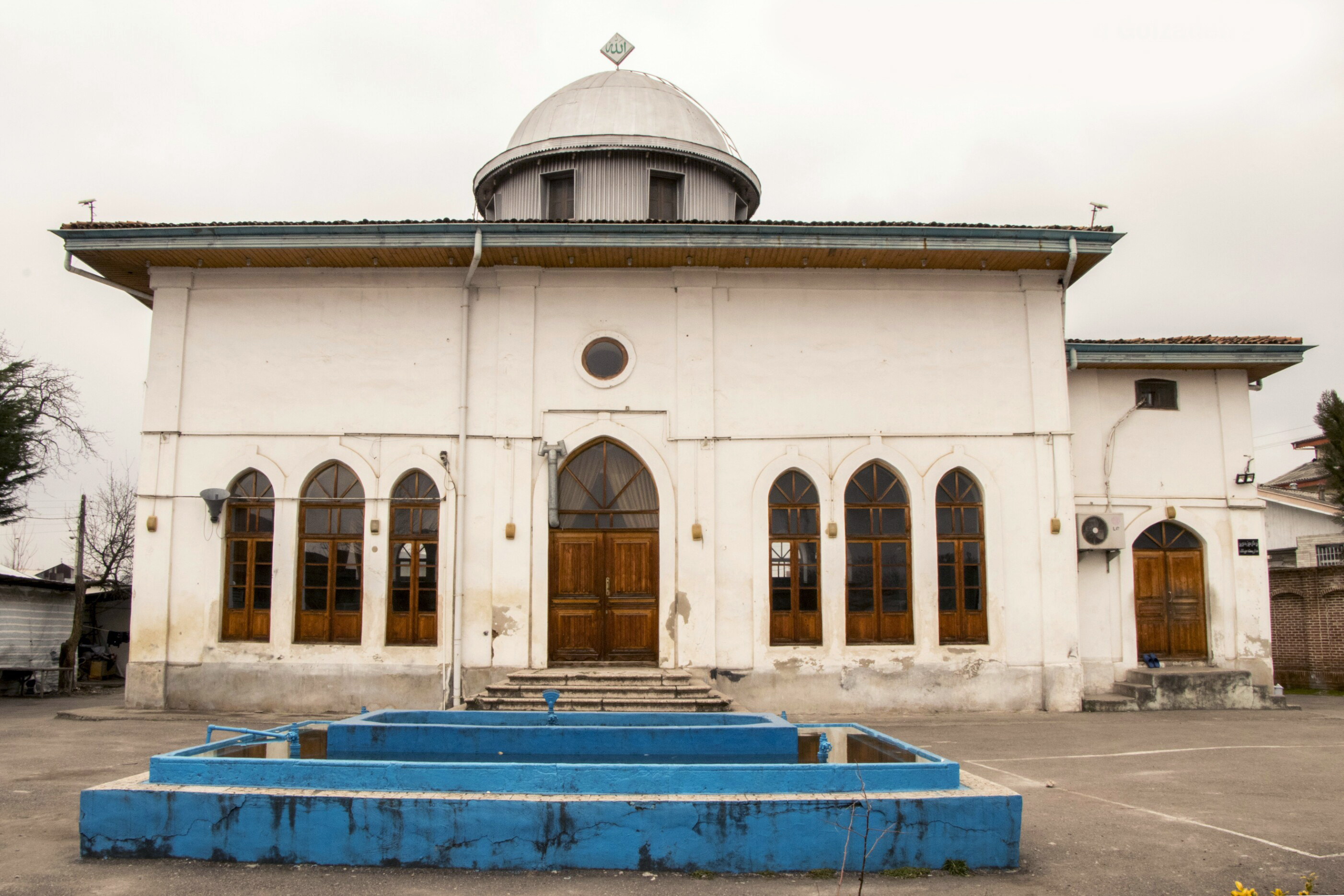
Before 1979, Golsar was a gated enclave north of Rasht, small enough to warrant a chain across its entrance and security guards at the gate. In the decades since, it has exploded into the city's most expensive neighborhood, filled with boutiques, coffee shops, and restaurants where young Rashtis gather on Thursday and Friday nights. The contrast between Golsar's modernity and the rest of Rasht captures something essential about northern Iran: the pull between tradition and transformation, the cosmopolitan impulse that proximity to the Caspian and its international shipping has always encouraged. The Shahrdari, Rasht's most recognizable landmark, bridges this tension with its whitewashed tower topped by a small dome, colonial in style but distinctly Iranian in execution. Floodlit at night, it presides over a city that has always been Iran's gateway to somewhere else.
From the Air
Rasht (37.28N, 49.59E) is located approximately 40km inland from the Caspian Sea coast in northern Iran. Rasht Airport (OIGG) serves the city with domestic flights. The Alborz Mountains rise dramatically to the south, separating the green Caspian lowlands from the arid Iranian plateau. The Caspian coastline and the port city of Bandar-e-Anzali are visible to the north. Rice paddies and lush green vegetation distinguish this region from the brown terrain of interior Iran. Weather is notably wetter than most of Iran, with frequent overcast skies and rainfall throughout the year. Visibility can be reduced by low cloud and mist, particularly in autumn and winter.