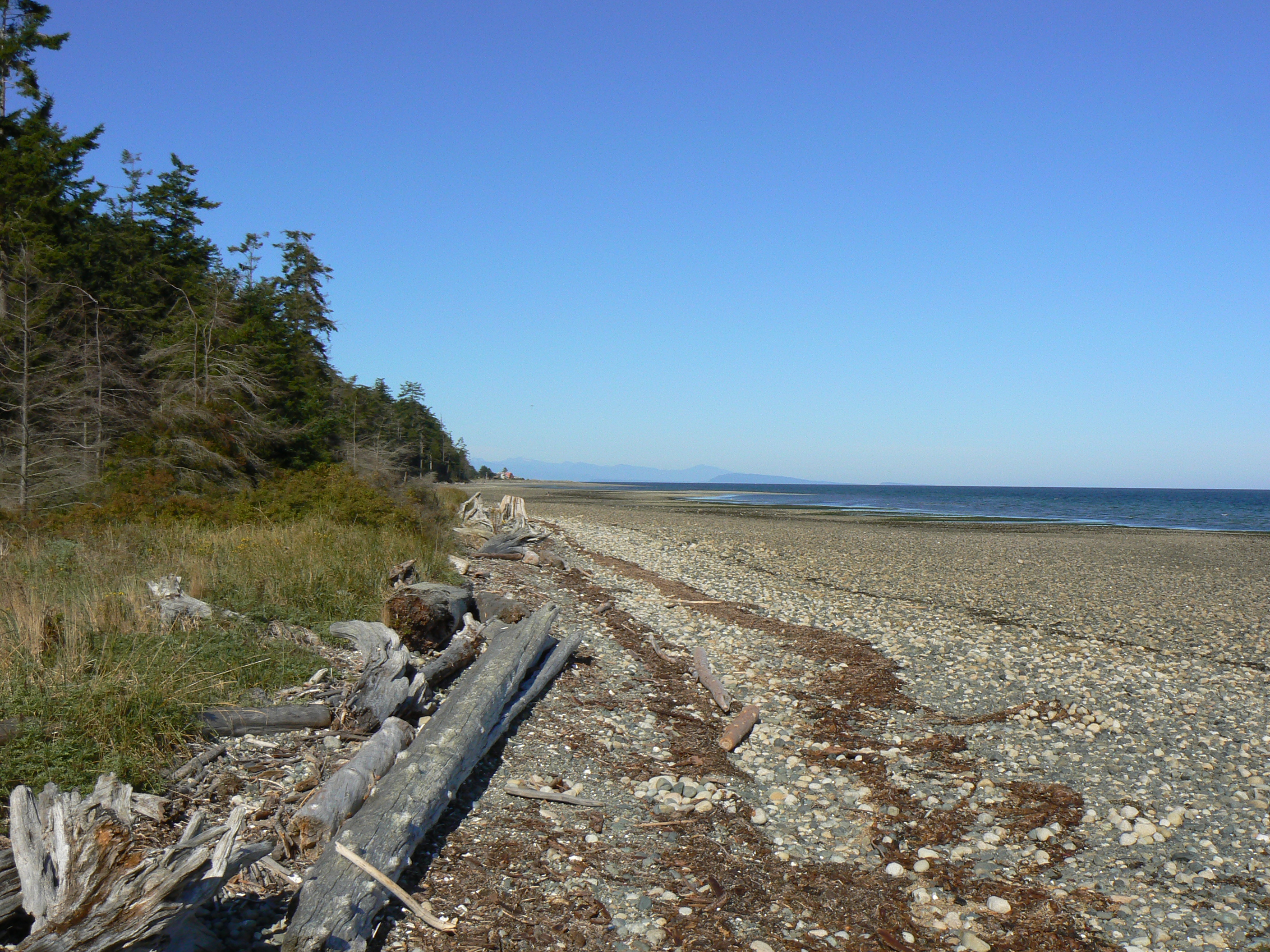
Rathtrevor Beach Provincial Park
When the tide pulls back at Rathtrevor Beach, the sand just keeps going. Nearly a kilometre of flat, glistening beach emerges from the Strait of Georgia, a seemingly impossible expanse that draws children, beachcombers, and brant geese in equal measure. This 347-hectare park on the east side of Vancouver Island, just outside Parksville, is one of British Columbia's most popular provincial campgrounds. But the story of how it became public land reads less like conservation triumph and more like political scandal.
The Deal That Made a Park
The Rath family sold their beachfront property to Clearwater Timber Products in 1963 for $150,000. Within a month, the provincial government appraised the same land at $186,000 and arranged a swap: the park site in exchange for timber-cutting rights in the wilderness near Wells Gray Park. The Victoria Daily Times raised questions in March 1964 about why the government's timber valuation so conveniently matched the inflated appraisal. Despite the scrutiny, the province granted Clearwater an additional 65 square kilometres of timber rights that same year, extending its cutting area from the Flourmill Volcanoes all the way to Mahood Lake.
Stumps for Stanley Parks
By 1969, MLA Bob Williams brought the arrangement to the floor of the legislature. The numbers were damning. Clearwater had already cut 204,000 cubic metres of timber, yielding just $88,000 in stumpage fees credited toward the Rathtrevor purchase. Williams calculated that the government could have collected $670,613 in fees by that point, or $1.6 million if the deal ran its full course, all in exchange for a park site valued at $186,000. Former Highways Minister Phil Gaglardi was accused of using his position to push the deal through. Williams's verdict was blunt: the public was trading fifty to sixty Stanley Parks' worth of wilderness for a single beach, and getting stumps in return.
Redemption on the Sand
The New Democratic Party cancelled the Clearwater arrangement after forming government in 1972, and by 1974 the access road to the logging area was permanently closed when the Mahood River bridge was demolished. The political maneuvering that created Rathtrevor Beach Provincial Park faded into footnote, while the park itself became something the backroom dealers probably never anticipated: genuinely beloved. The two-kilometre stretch of sandy beach, backed by old-growth Douglas fir, has made it one of the most visited campgrounds in the province, with 250 vehicle-accessible and 25 walk-in sites regularly booked through the summer months.
Where the Forest Meets the Tide
Behind the beach, the park preserves a stand of old-growth Douglas fir that offers a sharp contrast to the open sand. Deer and raccoons move through the forest; minks hunt along the shoreline. During spring migrations, the beach becomes a staging ground for brant geese, small dark sea-going geese that gather in impressive numbers along the Strait of Georgia. The Rathtrevor Beach Nature House runs seasonal environmental education programs, connecting visitors with the natural history that makes this stretch of coast so productive. At low tide, the exposed flats teem with invertebrate life, a reminder that what looks like empty sand is actually one of the richest feeding grounds on Vancouver Island's east coast.
From the Air
Located at 49.32N, 124.27W on the east coast of Vancouver Island near Parksville. The beach is distinctive from the air at low tide, when nearly a kilometre of sand is exposed into the Strait of Georgia. Look for the dark band of old-growth forest behind the pale beach. Nearest airport is Qualicum Beach Airport (CAT4). Nanaimo Airport (CYCD) is approximately 35 km southeast. Best viewed at 2,000-3,000 feet for the tidal contrast.