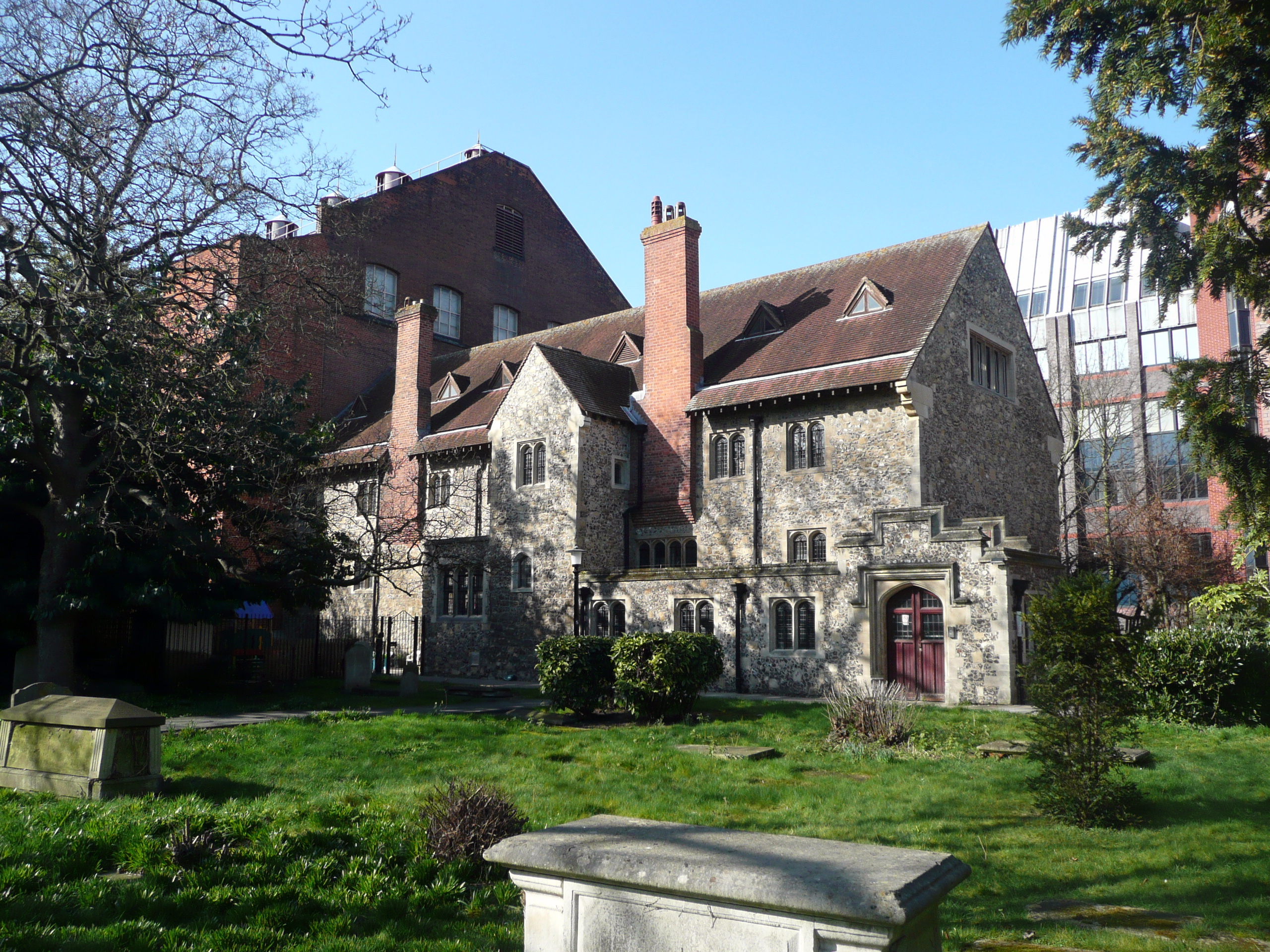
Reading Abbey
Somewhere beneath the car park of Reading Gaol, Henry I of England is buried. He died in Normandy in 1135, and his body was returned to the abbey he had founded fourteen years earlier -- one of the richest and most important religious houses in medieval Europe. When Henry VIII destroyed the abbey in 1538, the last abbot was hanged, drawn, and quartered in front of the church. The buildings were stripped of lead, glass, and facing stone. A prison was built on part of the site. The king who founded the abbey became, in effect, a body beneath a car park -- a fate that drew inevitable comparisons when Richard III was discovered in similar circumstances in Leicester in 2012.
Between Two Rivers
Henry I founded Reading Abbey in 1121, endowing it with his lands in Reading and beyond, "for the salvation of my soul, and the souls of King William, my father, and of King William, my brother, and Queen Maud, my wife, and all my ancestors and successors." The site, chosen on a gravel spur between the rivers Kennet and Thames, was strategically brilliant. The twelfth-century chronicler William of Malmesbury noted it was "calculated for the reception of almost all who might have occasion to travel to the more populous cities of England." Monks from Cluny Abbey in Burgundy established the community, and the abbey was dedicated to the Virgin Mary and St John the Evangelist. The rivers provided transport via wharves on the Kennet and power through watermills on the Holy Brook, a six-mile channel whose origins remain uncertain.
Relics, Harmony, and Royal Guests
Reading Abbey held over 230 relics, including what was believed to be the hand of St James. A shrivelled human hand found in the ruins during demolition work in 1786 now resides in a Catholic church in Marlow. Around 1240, a monk at the abbey wrote down the song Sumer is icumen in -- the earliest known six-part harmony from Britain, its original manuscript now in the British Library. Henry III visited the abbey three or four times a year, staying several weeks each time. The abbey hosted the meeting between Henry II and the Patriarch of Jerusalem in 1185, the wedding of John of Gaunt and Blanche of Lancaster in 1359, and a session of Parliament in 1453. For four centuries, Reading Abbey was where the Crown came to pray, to celebrate, and to govern.
Destruction and Dismemberment
The Dissolution of the Monasteries reached Reading in 1538. The last abbot, Hugh Faringdon, refused to surrender the abbey to the king's commissioners. He was tried for high treason, convicted, and executed by hanging, drawing, and quartering outside the very church where he had served -- one of three abbots killed during the Dissolution, alongside the abbots of Glastonbury and Colchester. After Faringdon's death, the abbey was systematically dismantled. Lead was stripped from roofs, glass taken from windows, facing stones carted away for reuse. Around 1787, Henry Seymour Conway removed a substantial quantity of stone to build a decorative bridge near his home at Park Place outside Henley. St James's Church was built on part of the site between 1837 and 1840. Reading Gaol went up on the eastern portion in 1844.
Ruins Revealed
What survives of Reading Abbey is impressive in its stubbornness. The inner rubble cores of the walls stand in several places, including fragments of the central tower piers and parts of the transepts. The chapter house, apsidal with a triple entrance and three great windows, is the best-preserved ruin on the site. A three-million-pound conservation project, Reading Abbey Revealed, reopened the ruins to the public in June 2018 after years of closure due to falling masonry. In 2016, ground-penetrating radar surveys identified potential grave sites behind the high altar -- graves that lie east of the area where Henry I is believed to be buried, though no direct connection to the king has been confirmed. The abbey gateway, heavily restored by George Gilbert Scott after a storm collapse in 1861, now serves as both a pedestrian passage and a learning space for Reading Museum. Every summer, Shakespeare is performed in the chapter house ruins -- drama played out among the stones of a monastery that once echoed with six-part harmony.
From the Air
Located at 51.46N, 0.97W in central Reading, Berkshire. The abbey ruins sit between the Forbury Gardens and Reading Gaol, visible as a complex of ruined walls and green space. The River Kennet runs to the south, with the Thames confluence to the east. Nearest airports: EGTK (Oxford Kidlington, 35nm northwest), EGLF (Farnborough, 18nm east). The Holy Brook channel is visible threading through the southern part of the site.