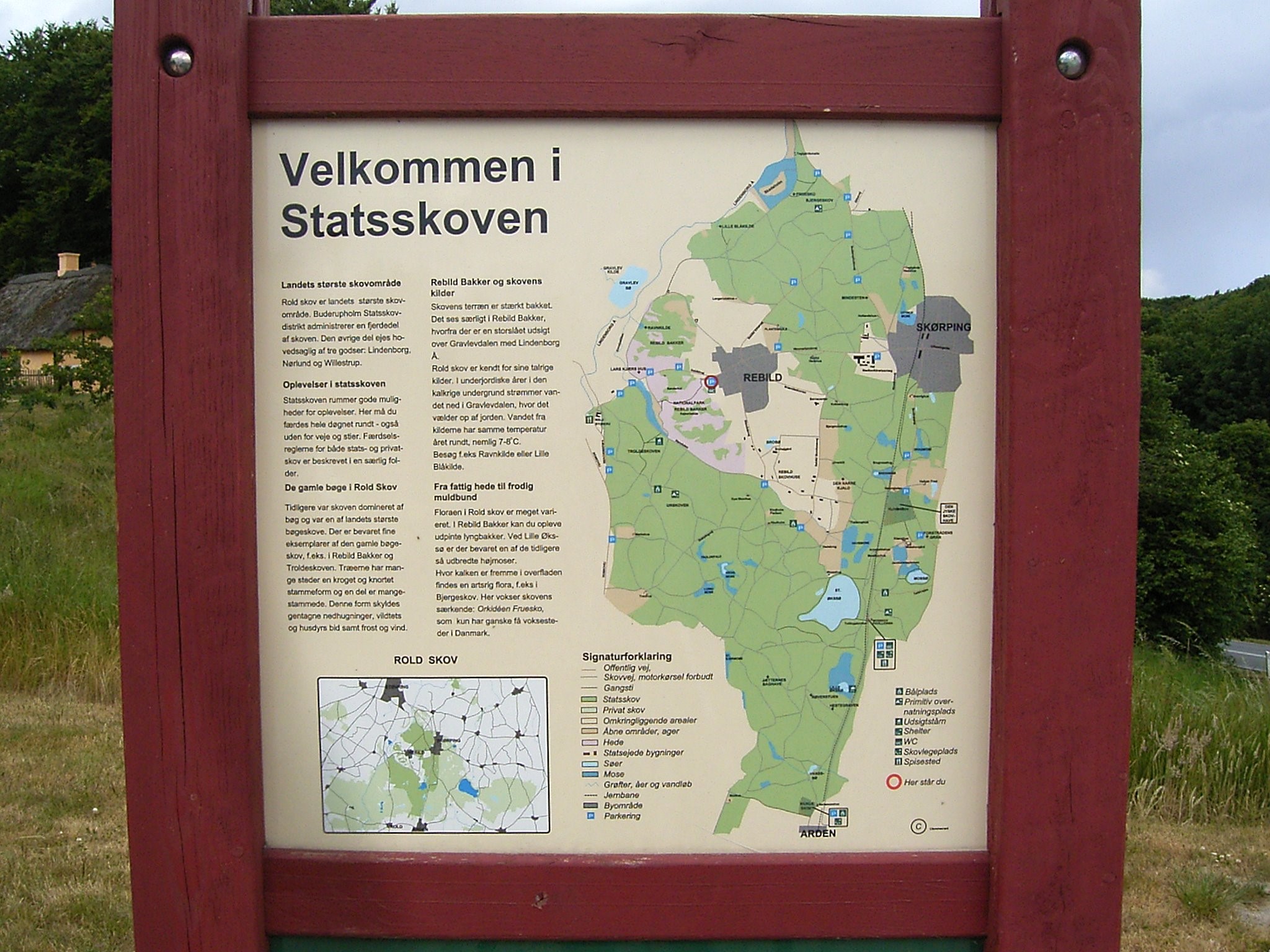
Rebild National Park
Every year on the Fourth of July, the American and Danish flags rise side by side over rolling hills in northern Jutland, and two national anthems echo across a landscape of heather and birch. This is not an American military base or embassy. It is Rebild National Park, a piece of Denmark that Danish Americans purchased in 1911 and gave to the Danish state as a gift, with one unusual condition: that they could return each year to celebrate American holidays on Danish soil.
A Brewer's Gift
The man behind the park was Dr. Max Henius, a Danish-born chemist who emigrated to the United States in 1881 and settled in Chicago. By 1911, Henius had organized Danish Americans to raise funds for purchasing almost 200 acres of hilly countryside in the Himmerland region, near the small town of Rebild. The land had long served as pasture for local cattle, its heathland shaped by centuries of grazing. Henius enlisted fellow Chicago Danes, including Jens Peder Poulsen Fuglsang, born in Virring in 1871, whose surname means 'birdsong' in Danish. In 1912, Henius and Fuglsang traveled to Denmark to present the deed to King Christian X as a permanent memorial to the Danish-American bond. Fuglsang never made it home. He died at sea aboard the ocean liner SS Oscar II on the return voyage in August 1912, a founding figure of a celebration he would attend only once.
The Festival That Survived Two Wars
The first Rebild Festival took place in 1912, when King Christian X addressed a crowd of 10,000 on the sunlit hillsides. The celebration has continued every year since, interrupted only during the two World Wars. American sculptor Georg J. Lober created an emblem for the park that same inaugural year and later added a bronze relief of Abraham Lincoln, an unexpected presence in a Danish heathland that somehow makes perfect sense. The festival traditionally features flag raisings, speeches, and music, drawing Danish Americans and curious tourists alike. In 1990, the annual celebration was the subject of a television documentary featuring actor Richard Chamberlain. Each year on Advent Sunday, the park hosts a Christmas market that draws around 5,000 visitors, proof that the cultural bridge Henius built works in both directions.
Three Stipulations
The gift came with three conditions, clear and non-negotiable. The area must remain in its natural state. It must be open to the public. And Danish Americans must be allowed to celebrate American holidays there. More than a century later, all three conditions still hold. The heathland remains protected, the gates stay open, and the Fourth of July keeps coming around. Rebild occupies a curious legal position in Denmark. It is not included in the Danish National Park laws of 2007, yet it retains the name 'National Park' and its protections remain in force. It is one of Denmark's two original national parks, the other being Dybboel Skanser, established in 1924. The Rold Skov forest surrounds the hills on three sides, creating a natural amphitheater of oak and beech that frames the heathland where immigrants once gathered to honor both the country they left and the one they found.
Heather and Homeland
The park itself is modest in scale but striking in character. Rolling hills covered in purple heather stretch beneath wide Jutland skies, broken by stands of birch and the dark edges of Rold Skov. There are museums scattered through the grounds, including a log cabin that speaks to the pioneer spirit the Danish Americans carried with them to the Great Plains and the streets of Chicago. Walking the trails in midsummer, when the heather blooms and the light lasts past ten at night, it is easy to understand why Henius chose this particular piece of Denmark. It looks like a place worth remembering, worth returning to. The Rebild Festival has made it one of Denmark's major tourist attractions, a place where an emigrant's nostalgia became a national tradition and where two flags flying together still means something.
From the Air
Located at 56.83N, 9.83E in the Himmerland region of northern Jutland, Denmark. The park appears as a distinctive patch of open heathland surrounded by the dense forest of Rold Skov. Nearest airport is Aalborg Airport (EKYT), approximately 30 km to the north. Best viewed at 3,000-5,000 feet to appreciate the contrast between the open rolling hills and the surrounding forest. The Limfjord is visible to the northwest.