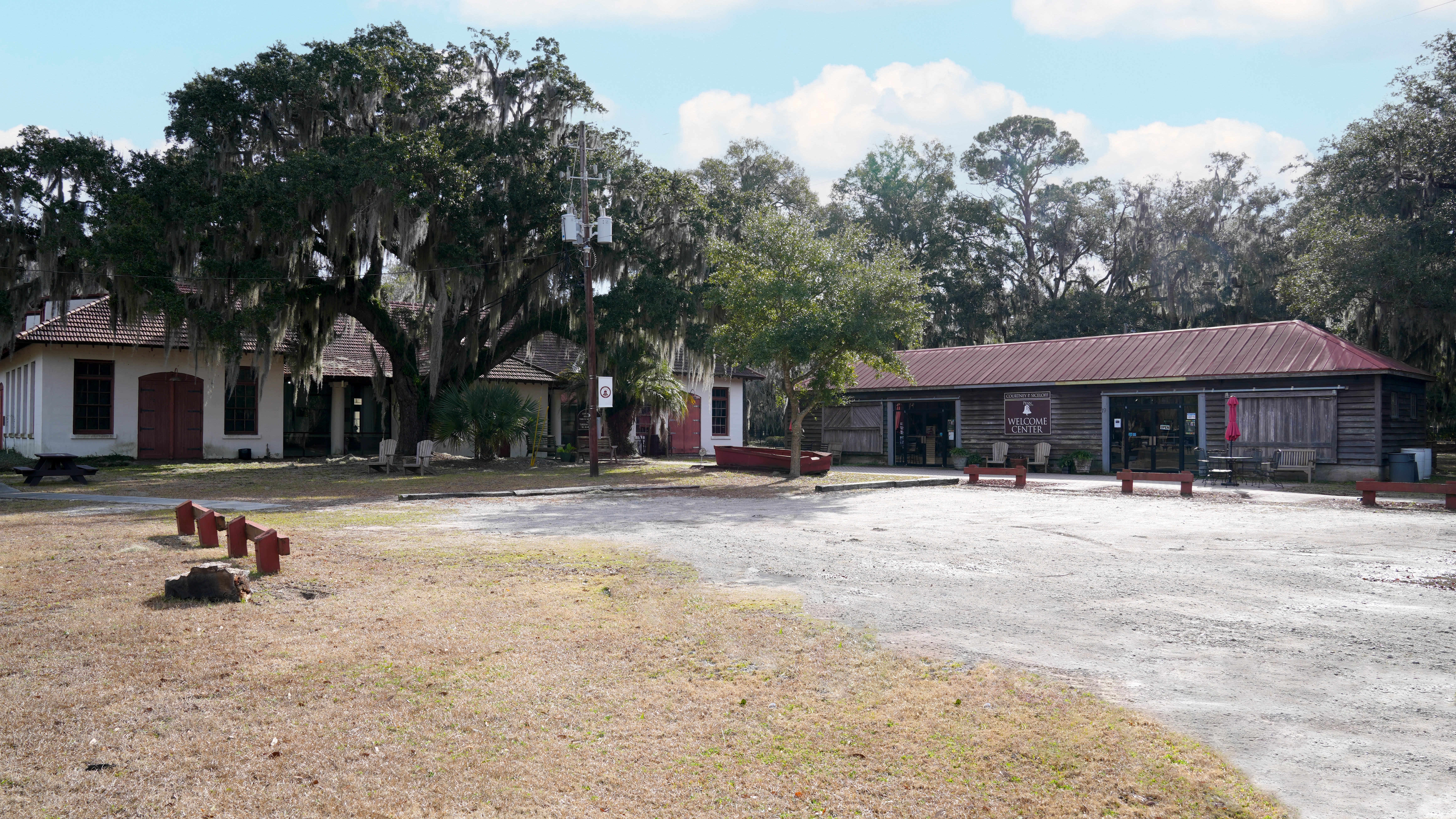
Reconstruction Era National Historical Park
On New Year's Day 1863, Union General Rufus Saxton stood before a gathering of 3,000 enslaved people from the surrounding Sea Islands at Camp Saxton in Port Royal, South Carolina, and read aloud the Emancipation Proclamation. It was one of the first public readings of Lincoln's order anywhere in the country. That same site witnessed another first: some of the earliest African Americans mustered into the U.S. Army as enlisted soldiers in the 1st South Carolina Volunteers. Today, Camp Saxton is one of four locations that make up the Reconstruction Era National Historical Park -- the first unit of the National Park System dedicated entirely to the Reconstruction period, and a place where the promise and peril of American freedom are written into the very ground.
Fifteen Years in the Making
The campaign to create a national monument to Reconstruction began in the final days of the Clinton administration, when outgoing Interior Secretary Bruce Babbitt visited the Beaufort area with historian Eric Foner, author of the landmark study Reconstruction: America's Unfinished Revolution, 1863-1877. The idea stalled for years. In 2004, the Sons of Confederate Veterans organized a campaign to block the proposed park, persuading U.S. Representative Joe Wilson to oppose it. Opposition softened over the next decade. At a December 2016 public meeting held by Congressman James Clyburn and the National Park Service, the proposal received overwhelming support. The great-great-grandson of Robert Smalls -- the formerly enslaved man who commandeered a Confederate warship and later served in Congress -- spoke in favor. On January 12, 2017, President Barack Obama used his authority under the Antiquities Act to designate the Reconstruction Era National Monument. In 2019, President Donald Trump signed the John D. Dingell Jr. Conservation, Management, and Recreation Act, which re-designated it as a national historical park.
Where Freedom Was First Tested
The Beaufort area fell to Union forces in November 1861, making it one of the first places in the South under federal control. Plantation owners fled, and the military partitioned their estates and distributed land to the people who had been enslaved on it. What followed became known as the Port Royal Experiment: an unprecedented effort to prove that formerly enslaved people could live, work, and govern as free citizens. Freed men and women voted, bought property, and built churches, schools, and businesses. Penn School -- founded in 1862 by Quaker and Unitarian missionaries from Pennsylvania -- became the first school in the South established specifically for the education of African Americans. The experiment produced leaders like Robert Smalls, who rose from slavery in Beaufort to the U.S. House of Representatives. It was, in many ways, the opening chapter of Reconstruction -- written here on the Sea Islands before the war itself had ended.
Four Sites, One Story
The historical park encompasses four locations in and near Beaufort, each illuminating a different facet of Reconstruction. Penn Center on St. Helena Island preserves the campus of that first school for freed people, with buildings dating from the 1850s through the 1960s. Camp Saxton at Port Royal marks the Emancipation Proclamation reading and the mustering of Black soldiers; a small white church called Pinckney Porter's Chapel now houses the exhibits. The Emancipation Oak, an ancient live oak in a nearby grove, still stands as a living witness. The Beaufort area sites include the historic Tabernacle Baptist Church downtown, where Robert Smalls once worshipped, and the old Beaufort Firehouse, which serves as a visitor contact station. Together, these places tell a story that most American history textbooks have condensed to a paragraph: the years after the Civil War when Black Americans seized freedom with both hands, built institutions from nothing, and fought to hold onto what they had gained.
An Unfinished Revolution
The park's very existence is a statement. For over a century, Reconstruction was treated as a failure or a footnote in American public memory -- a period of carpetbagger corruption best forgotten. The fifteen-year fight to establish this park mirrors the broader struggle to reclaim the era's true significance. The Reconstruction Era National Historic Network, administered by the Park Service, now connects sites, archives, and educational programs across the country, building a more complete understanding of a period that shaped everything from the 14th Amendment to the modern civil rights movement. The annual Original Gullah Festival in Beaufort celebrates the cultural heritage of the people whose ancestors lived Reconstruction firsthand. And the park itself, administered by the National Park Service on land where enslaved people first heard the words 'forever free,' stands as evidence that some revolutions take a long time to finish.
From the Air
Primary coordinates at 32.433N, 80.671W in Beaufort, SC. The park's four sites are spread across the Beaufort/Port Royal/St. Helena Island area in the South Carolina Lowcountry. Best viewed at 3,000-5,000 feet AGL. Penn Center is on St. Helena Island (32.388N, 80.575W). Camp Saxton is at Port Royal (within Naval Hospital Beaufort grounds). Nearest airports: KARW (Beaufort County Airport, ~3nm E), KSAV (Savannah/Hilton Head Intl, ~35nm SW). The Beaufort waterfront, bridge connections to the Sea Islands, and the Naval Hospital campus are prominent visual landmarks.