Redpath Museum
Somewhere between the dinosaur skeleton and the stuffed Labrador duck, you realize that the Redpath Museum is less a museum than a time capsule of curiosity itself. Built in 1882, this Greek Revival gem on McGill University's campus is Canada's oldest building constructed specifically to house a museum. Sugar magnate Peter Redpath paid for the whole thing as a gift to the university, and the result is a place where Beaux-Arts ornamentation meets half-a-billion years of natural history -- a cabinet of wonders tucked into the bustle of downtown Montreal.
A Sugar Baron's Gift
Peter Redpath made his fortune refining sugar, but his legacy is written in stone, bone, and mineral. In 1882, he donated the funds for a purpose-built natural history museum on McGill's Sherbrooke Street campus, making it the first structure in Canada designed from the ground up to be a museum. The building itself is a statement: a Greek Revival facade with classical columns, opening into a soaring interior decorated in the Beaux-Arts style. The ornate plasterwork and iron railings frame display cases that have changed remarkably little in spirit since the doors first opened. Film crews have noticed. Both the interior and exterior have served as backdrops for movies and commercials, drawn by the atmosphere of scholarly grandeur that no set designer could quite replicate.
Deep Time on Display
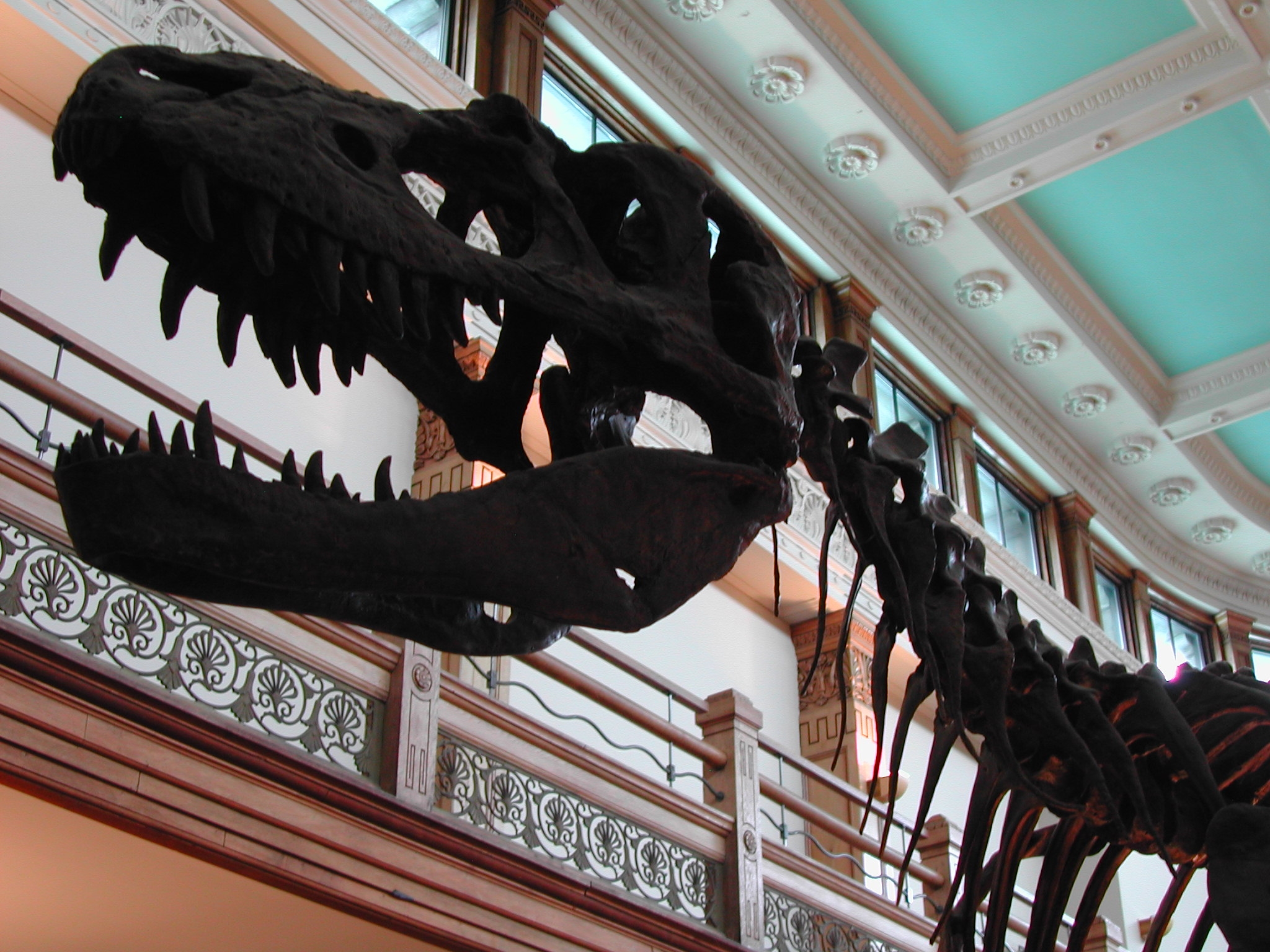
The museum's paleontology collection owes its foundation to Sir William Dawson, McGill's legendary principal, who amassed fossil plants from his native Nova Scotia and specimens from around the globe. But the collection's crown jewels come from the Burgess Shale, the 508-million-year-old fossil deposit in the Canadian Rockies that preserves some of the earliest complex life on Earth. Dr. Thomas Clark spent decades at the museum conducting pioneering research on these ancient creatures, including the delicate Marrella splendens, a feathery arthropod that remains the Burgess Shale's most abundant fossil. A Gorgosaurus skeleton presides over the central evolution exhibit atrium, a tyrannosaur relative that prowled Alberta roughly 75 million years ago, standing guard beneath the museum's vaulted ceiling.
Cabinets of the World
The geology collection alone contains approximately 16,000 mineral specimens catalogued under six distinct collections, each bearing the initial of its donor. The Ferrier collection, assembled by the famous mining engineer Walter Frederick Ferrier, draws specimens from classic mineral localities worldwide. The Palache collection is named for Charles Palache, the Harvard mineralogist. The oldest donations, including the Shirley Collection from the wife of Sir Hugh Graham, 1st Baron Atholstan, date to the early 1880s, making them contemporaries of the building itself. Beyond minerals, the ethnological collection is one of the oldest in North America, with over 17,000 items spanning Africa, ancient Egypt, Oceania, paleolithic Europe, and South America. It began with Dawson's own collection, supplemented by materials from the Natural History Society of Montreal. The First Nations artifacts that once filled these halls have since moved to the nearby McCord Museum.
Ghosts of Vanished Species
Among the taxidermied specimens, two birds stand out for a haunting reason: they no longer exist. The Labrador duck, a striking black-and-white sea duck, was last seen alive in 1878, just four years before the museum opened. The Carolina parakeet, the only parrot native to the eastern United States, vanished by 1918. The Redpath's specimens of both species are irreplaceable records of creatures that human activity erased from the planet. In a museum built to celebrate natural history, these birds serve as quiet reminders that the story is still being written -- and that some chapters end abruptly.
Still Open, Still Free
The Redpath Museum sits a short walk from McGill Metro station on the Green Line, embedded in the dense fabric of downtown Montreal. The Lyman entomology collections, once housed here, were transferred in 1961 to Macdonald Campus in Sainte-Anne-de-Bellevue, where they became the Lyman Entomological Museum and Research Laboratory. But the core collections remain, and the museum continues to serve both as a teaching facility for McGill and as a public institution open to visitors. In an era of interactive screens and immersive installations, the Redpath offers something rarer: the unmediated encounter with objects themselves, displayed in a building that is, in its own right, one of the exhibits.
From the Air
The Redpath Museum sits at 45.50N, 73.58W on the McGill University campus along Sherbrooke Street in downtown Montreal. From the air, the campus green spaces stand out amid the dense urban grid at the base of Mount Royal. Best viewed from 2,000-3,000 feet AGL. Montreal/Pierre Elliott Trudeau International Airport (CYUL) lies approximately 12 nm to the west. Montreal/Saint-Hubert Airport (CYHU) is about 9 nm to the southeast. The distinctive cross atop Mount Royal and the McGill campus grounds provide useful visual reference points.