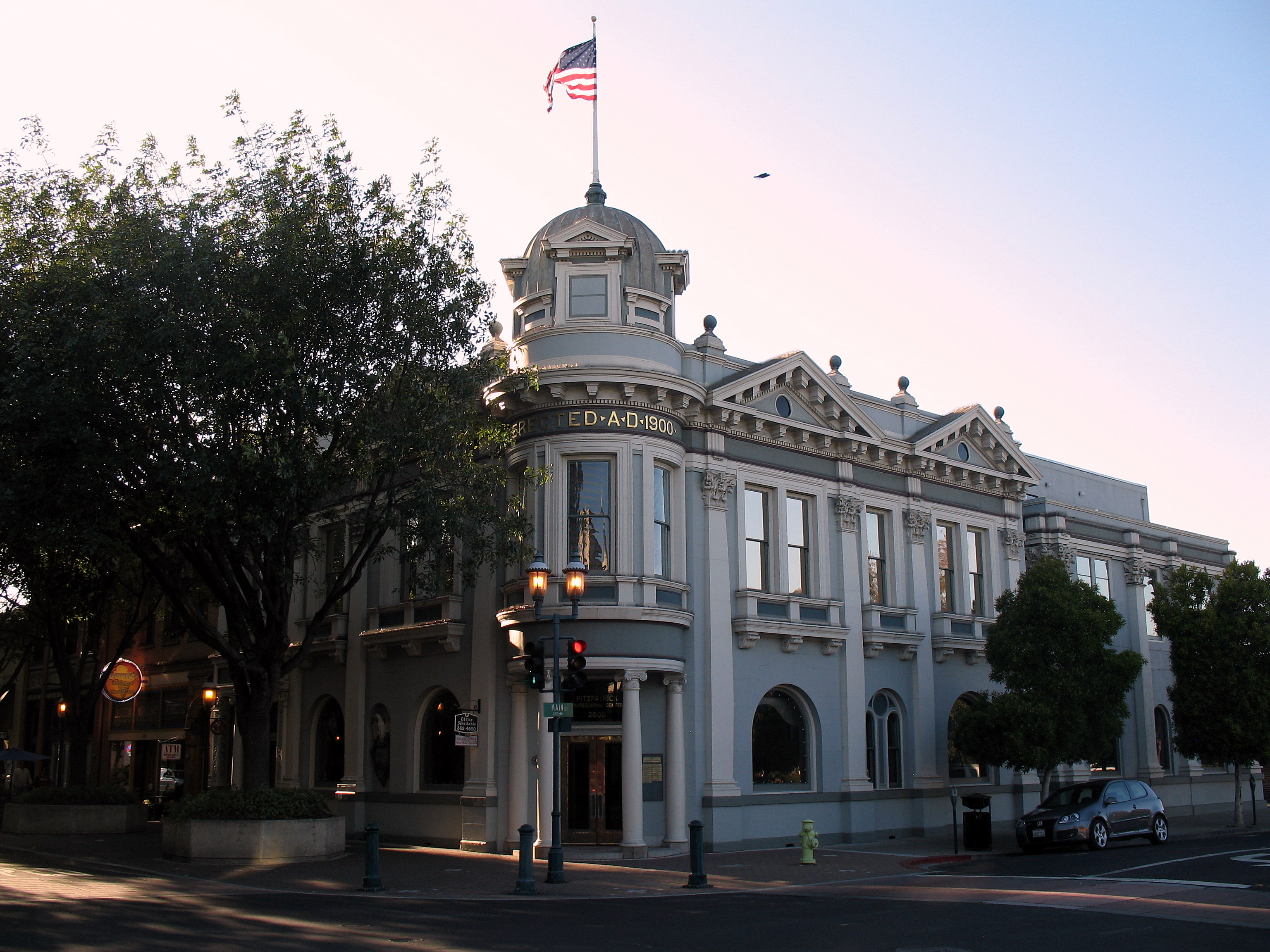
Redwood City Historic Commercial Buildings
Wyatt Earp walked into the Alhambra Theater in Redwood City and ordered a drink at the bar. The year was sometime before 1896, when the theater was still new, filling a cultural void on the Peninsula between the larger cities of San Jose and San Francisco. The theater that hosted Earp's visit, along with three other buildings spanning more than half a century of construction, now forms one of the most concentrated historic districts on the San Francisco Peninsula.
The Pioneer Store and the Quong Lee Laundry
The oldest building in the district dates to 1859, when Redwood City was still a rough settlement built around lumber and the port. Originally constructed as a general store, the building later became the Quong Lee Laundry, reflecting the Chinese community's presence in Peninsula commerce during the late nineteenth century. The four buildings in the historic district span from this pioneer-era store through 1912, tracing the town's evolution from frontier outpost to established community. Together they present a compressed timeline of Redwood City's commercial development, each structure representing a distinct era of ambition and architectural fashion.
Surviving the Earthquake
The Bank of San Mateo County building was completed in 1900 as the second location for the First National Bank of San Mateo County, originally established in 1891. When the 1906 earthquake devastated San Francisco and damaged communities across the Bay Area, the bank building survived. The institution continued operating for decades, printing a variety of National Bank Notes during its operational years before eventually merging with Wells Fargo in the 1970s. The Alhambra Theater, opened in 1896, had a more dramatic trajectory. It hosted operas, plays, and musical performances before being purchased by the Masonic Order in 1921. In 2001, a fire caused extensive damage, but the building was saved.
The Finest Hotel Between Two Cities
The Sequoia Hotel, constructed in 1912 on the site of the former Eureka Brewery, which had burned down in October 1902, was claimed in 1916 to be the finest hotel in operation between San Francisco and San Jose. The boast may have been accurate for a town that was still finding its footing as a commercial center. Over the following century, the hotel's trajectory mirrored that of many small-city landmarks: it transitioned from a destination for travelers to housing for low-income residents in the early 2000s. Today, the hotel lobby hosts the Center for Creativity, and plans have been approved to renovate the building as a boutique hotel, bringing it full circle from hospitality to necessity and back to hospitality again.
From the Air
Located at 37.49°N, 122.23°W in downtown Redwood City. San Carlos Airport (KSQL) is approximately 2 miles west. The historic district sits along the commercial core near the intersection of Broadway and Main Street. From altitude, downtown Redwood City is identifiable by its courthouse square and proximity to the Caltrain tracks.