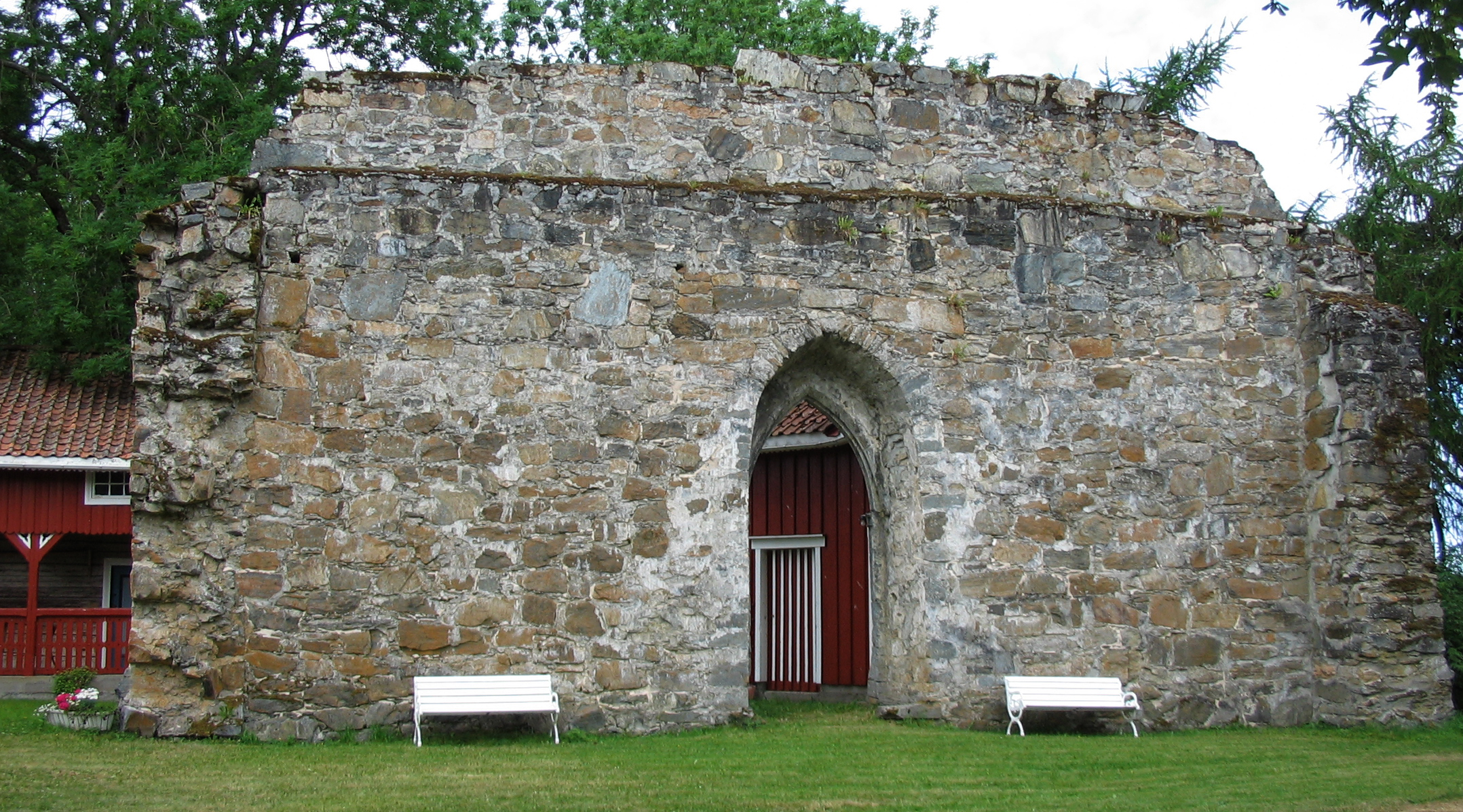
Rein Abbey, Norway
In the final pages of Kristin Lavransdatter, Sigrid Undset's Nobel Prize-winning trilogy of medieval Norway, the heroine retreats to a convent to spend her last days as a corrodian -- a layperson living within a religious community. The convent Undset chose for that ending was not fictional. Rein Abbey, a Roman Catholic house for women on the Fosen peninsula northwest of Trondheim, was real enough that its ruins still stand on a low hill overlooking the surrounding farmland. Undset set Kristin's death there during the Black Death of 1349, and the choice was precise: Rein was exactly the kind of aristocratic foundation where a woman of Kristin's standing would have found refuge. Founded around 1226, the abbey served noblewomen of the Norwegian aristocracy for over three hundred years.
A Duke's Promise
Rein Abbey was built on the ancestral estate of Duke Skule Bardsson, one of the most powerful figures in thirteenth-century Norway. According to tradition, Skule founded the abbey in or shortly after 1226, possibly in fulfillment of a vow made during recovery from illness. He dedicated it to Saint Andrew and installed his half-sister, Sigrid Bardsdatter, as its first abbess. The location was deliberate -- a prominent elevation in an otherwise flat landscape on the Fosen peninsula, visible from the surrounding farmland and from the waters of the Trondheimsfjord. The community that gathered here was elite from the start. Skule's own daughter, Queen Margaret of Norway, wife of King Hakon Hakonsson, spent her final years within its walls. Many other women of the Norwegian aristocracy followed, making Rein less a place of austere withdrawal than a continuation of noble life under religious discipline.
Between Orders
What kind of religious community was Rein? The historical record is not entirely clear. There is no definitive information on which monastic order it followed, though it may have observed the Rule of St. Augustine. Some scholars describe it as a collegiate foundation -- a community of secular canonesses rather than cloistered nuns in the strictest sense. This distinction matters because it suggests a community where noblewomen maintained a degree of independence and social connection not typical of the most austere religious orders. The abbey's buildings were struck by lightning and burned down in 1317, a disaster significant enough to be recorded, but the community rebuilt quickly. That resilience suggests both material resources and institutional commitment -- a house with the wealth and will to recover from catastrophe.
The Lady of Austraat
The Reformation reached Norway in the 1530s, and with it came the dissolution of the country's monasteries and convents. Rein Abbey's assets were seized by the Crown, and the community's future seemed finished. But Ingerd Ottesdatter Romer -- known as Ingrid of Austraat, one of the most powerful women in sixteenth-century Norway -- found a way to preserve something. In 1531, she had herself elected administrator of the abbey, a move that allowed her to protect the remaining members of the community while simultaneously acquiring the abbey's estates for herself and her descendants. It was a characteristic act by a woman whose political skill and personal ambition were inseparable. The estates passed through her family's hands for generations. Since 1704, they have been associated with the family of Henrik Hornemann, a Trondheim merchant, whose descendants maintained the property through the centuries.
Stones and Stories
Some remains of the abbey structures survive among later buildings on the estate, though the site has been archaeologically investigated only once, in 1861. The former abbey is now protected by Riksantikvaren, the Norwegian Directorate for Cultural Heritage. From the hilltop, the view has not changed much since the thirteenth century: flat farmland stretching to the waters of the fjord, the kind of open, windswept landscape that makes a building on high ground feel both exposed and commanding. Undset understood this geography when she placed Kristin Lavransdatter's death here. The novel's final scenes are saturated with the weight of time passing and faith persisting in a landscape stripped of comfort. The ruins carry that same quality. Enough stone remains to suggest the scale of what was built, but not enough to reconstruct it. Rein Abbey is a place where the imagination must do the work that masonry no longer can.
From the Air
Located at 63.56N, 9.93E on the Fosen peninsula, northwest of Trondheim, Trondelag county. The abbey ruins sit on a low hill visible against surrounding flat farmland near the Trondheimsfjord. Best viewed at 1,500-3,000 feet AGL, where the hilltop site and its relationship to the fjord and surrounding agricultural landscape are clear. Nearest major airport: Trondheim Airport Vaernes (ENVA), approximately 45 km east-southeast. Orland Air Station (ENOL) is roughly 35 km to the west.