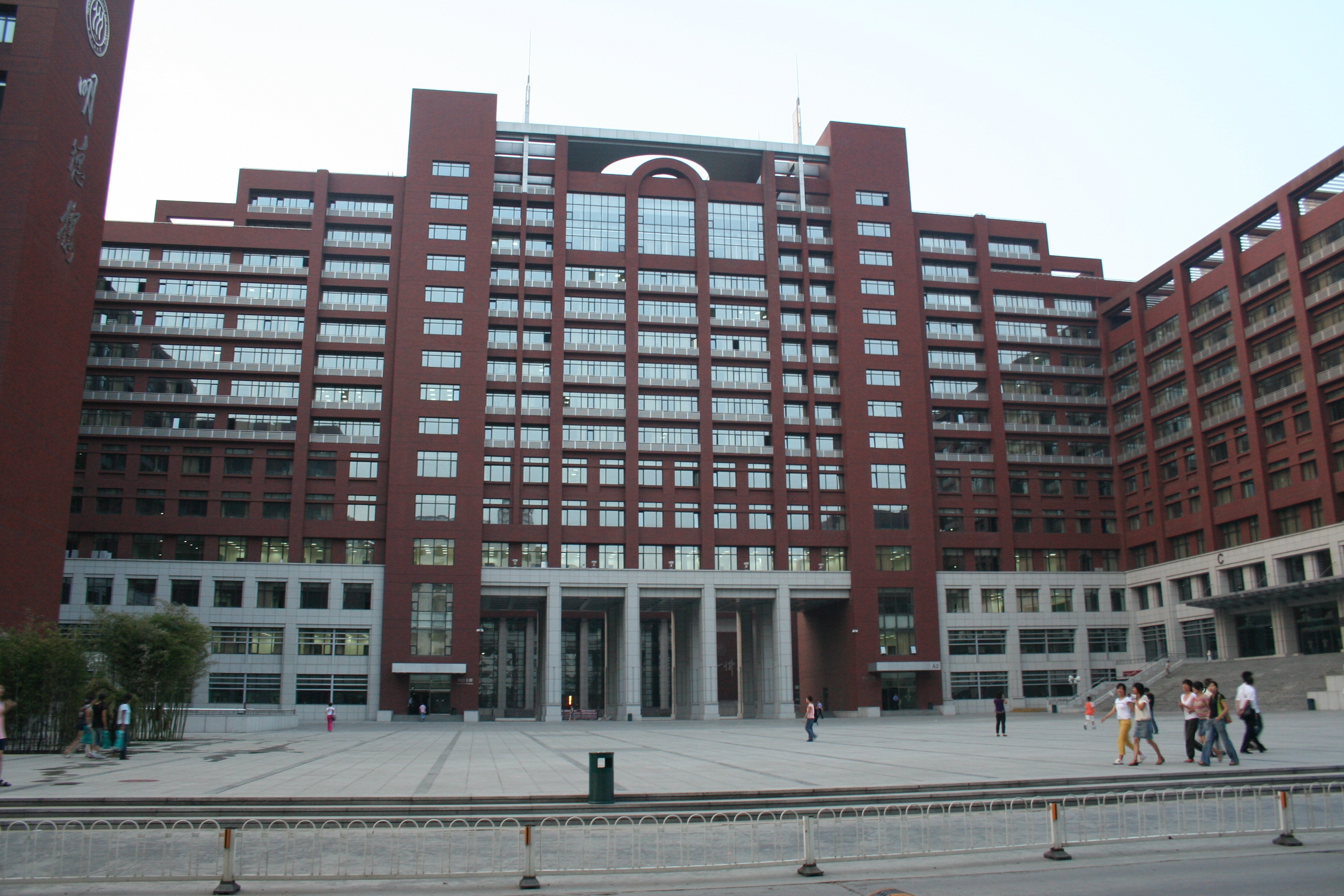
Renmin University of China
The name says everything and nothing. Renmin means 'the people,' and the Renmin University of China was founded precisely to serve that idea -- though which people, and toward what ends, has shifted dramatically over eight decades. It began in 1937 as the Shanbei Public School, established by the Chinese Communist Party in the caves of Yan'an to train cadres for the war against Japan. Today it stands in the Haidian university district of Beijing, a modern research institution with 25 schools and 63 undergraduate specialties, its library holding 2.5 million volumes. The journey from revolutionary training camp to one of China's most prestigious universities is the journey of modern China itself.
From Caves to Campus
Shanbei Public School was not an ordinary institution. It was created during the War of Resistance against Japanese Aggression with an explicit purpose: to produce 'hundreds of thousands of revolutionary comrades,' as its founding mission stated. Successive leaders including Wu Yuzhang and Cheng Fangwu shaped the school through its early incarnations. After the founding of the People's Republic in 1949, the institution was formally reorganized and renamed Renmin University of China, becoming the first university established by the new government. Its mission evolved from wartime training to building the intellectual infrastructure of the socialist state, with particular emphasis on the humanities, law, and social sciences -- fields where ideological foundations mattered most.
The Humanities Powerhouse
While neighboring Peking University and Tsinghua University are known for sciences and engineering, Renmin has carved out a distinctive identity as China's premier institution for the humanities and social sciences. Its 33 national key disciplines and its status within Project 211 and Project 985 -- the government programs identifying China's top universities -- reflect this specialization. The Renmin University Press is one of China's most influential academic publishers, and its economics and law programs routinely produce graduates who shape national policy. The library, recognized by the Ministry of Education as the Information Center of Arts Literatures, opened a new building in 2011 to house its expanding collections. For a country that has often prioritized technology and engineering in its development strategy, Renmin's strength in the humanities represents a deliberate counterbalance.
An International Crossroads
Renmin has pursued international partnerships with an ambition that reflects China's broader engagement with the world. The university maintains exchange programs with institutions across dozens of countries, and its campus in Haidian hosts a growing population of international students drawn to Chinese studies, economics, and law. The Suzhou campus, opened in recent years, extended the university's reach beyond Beijing. For foreign scholars seeking to understand Chinese governance, legal traditions, or economic policy, Renmin is often the first door they knock on -- its faculty includes many of the scholars whose work directly informs government decision-making. The university sits at the intersection where academic research meets the practical business of governing the world's most populous country.
The Weight of a Name
Renmin University occupies an unusual position in China's academic landscape. Its founding as a party institution gives it a political lineage that most universities lack, and its emphasis on social sciences places it at the center of ongoing debates about China's direction. Faculty members regularly publish research that shapes national policy on everything from economic reform to legal modernization. The campus itself sits in the dense university cluster of Haidian District, surrounded by some of China's most important research institutions, creating an intellectual density that few places in the world can match. Walking from Renmin to Peking University takes about fifteen minutes. Walking from Renmin to the corridors of political power -- in conceptual terms -- takes rather less.
From the Air
Coordinates: 39.971N, 116.313E. Located in Haidian District, northwest Beijing, within the dense university cluster that includes Peking University and Tsinghua University. Not individually distinguishable from the air, but the area is identifiable by the concentration of green campus spaces between Beijing's Fourth and Fifth Ring Roads. Nearest major airport is Beijing Capital International (ZBAA/PEK), about 28 km northeast.