Republic of San Marco
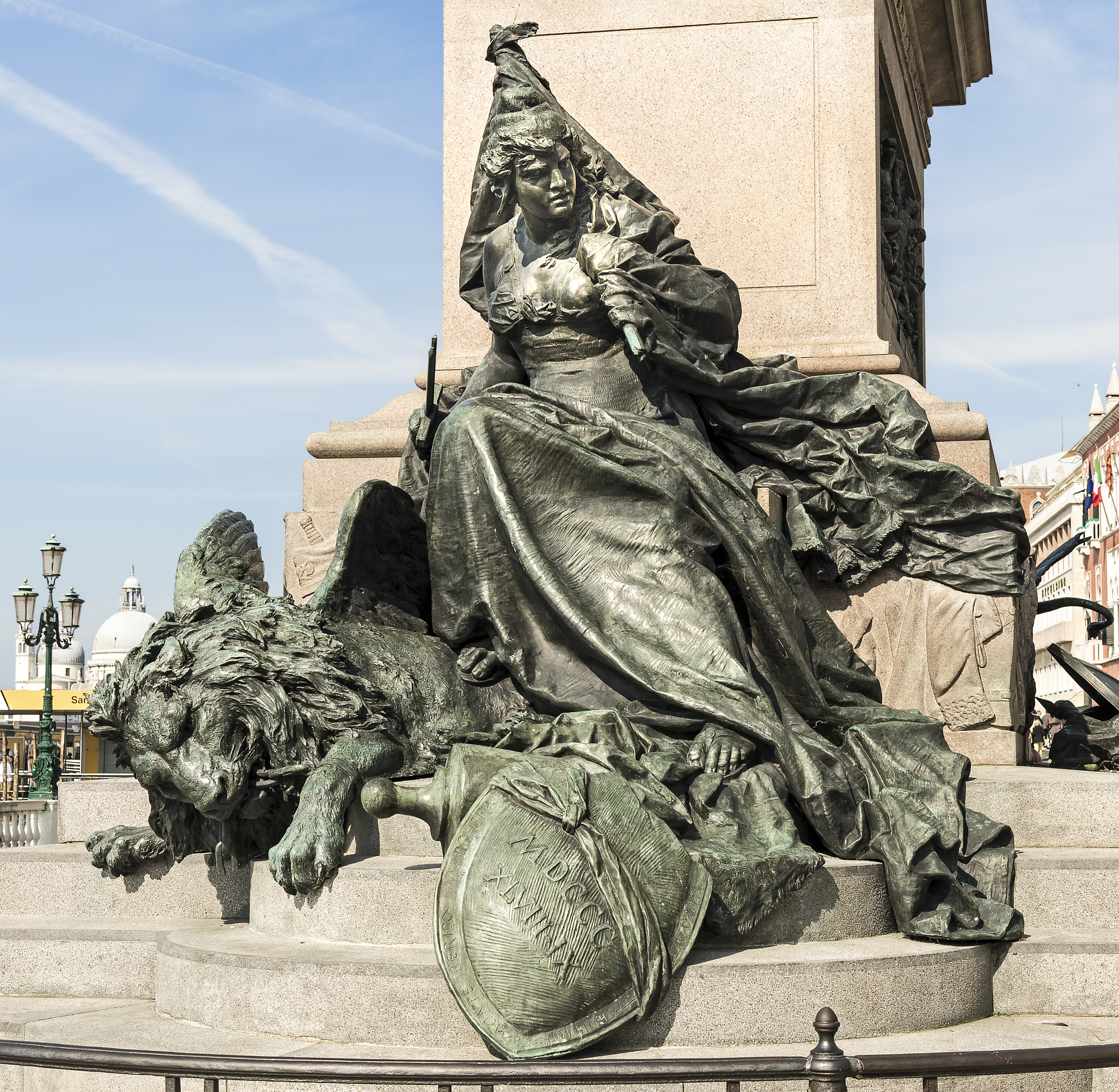
On March 18, 1848, two men walked out of an Austrian prison in Venice into a city that was about to attempt the impossible. Daniele Manin, a lawyer, and Niccolo Tommaseo, a writer, had been jailed for advocating Venetian self-governance. Their liberation by a crowd of citizens was not a symbolic gesture but the opening act of a revolution. Within days, Venice declared itself the Republic of San Marco -- a deliberate echo of the thousand-year-old republic that Napoleon had extinguished just 51 years earlier.
A Thousand Years, Then Nothing
The Republic of Venice had existed as an independent maritime republic for 1,101 years, dominating Mediterranean trade and naval power for most of that span. When it surrendered to Napoleon in 1797, the shock was less military than existential: a state that had endured since the early medieval period simply ceased to be. The Treaty of Campo Formio handed Venice to the Habsburgs as the Venetian Province a few months later, and the 1815 Congress of Vienna confirmed the arrangement, folding Venice into the Kingdom of Lombardy-Venetia within the Austrian Empire. Habsburg rule proved exploitative. Austria favored Trieste as its imperial seaport, siphoning resources from the Venetian economy. Within 50 years, Austria had extracted 45 million Austrian lire more from the region than it had invested. Venetian entrepreneurs found themselves strangled by a bureaucratic regime reluctant to extend credit, and the city that had once financed half of Europe's commerce watched its commercial vitality drain away.
Seventeen Months of Defiance
The 1848 revolutions that swept across Europe gave Venice its chance. In the upheaval that followed Manin and Tommaseo's release, the city declared independence from the Habsburg Empire and proclaimed the Republic of San Marco. The new republic was centered on the Venetian Lagoon but extended into much of Venetia, the mainland territory the old Republic had called the Terraferma. It was a revolutionary state born of genuine popular energy, but also of strategic calculation: Venice later joined the Kingdom of Sardinia's broader effort to unite northern Italy against Austrian and French domination. The gamble required Venice to hold out long enough for its allies to prevail. It could not. The First Italian War of Independence ended with Sardinia's defeat, leaving Venice isolated and exposed.
Siege and Surrender
Abandoned by its allies, Venice endured one of the most punishing sieges in 19th-century European history. Austrian forces blockaded the lagoon and bombarded the city. The republic's strategic mistakes compounded its isolation -- despite having sympathizers in the formerly Venetian port of Pola in Istria, where the Austrian fleet was stationed, Venice made no effort to seize those ships. Mainland recruits who might have bolstered the defense could have joined the 2,000 Papal guards and Neapolitan soldiers under General Guglielmo Pepe, who had ignored orders to retreat in order to support the infant republic. But coordination failed, resources ran short, and disease spread through the besieged city. On August 28, 1849, seventeen months after its declaration of independence, the Republic of San Marco fell to Austrian reconquest.
The Ghost That Built a Nation
The Republic of San Marco lasted barely a year and a half, yet its significance outlived its politics. Venice's stand became a foundational story of the Risorgimento, the movement for Italian unification that would eventually succeed in 1861. Manin, who died in exile in Paris in 1857, became a martyr-hero whose name was invoked at every stage of the unification struggle. The republic demonstrated that Venice's identity had not been erased by half a century of foreign rule -- that the memory of a thousand years of self-governance could still mobilize an entire city. When Venice finally joined the Kingdom of Italy in 1866, seventeen years after the republic's fall, the intervening decades of renewed Austrian control had only deepened the sense that the 1848 revolution had been premature, not wrong.
From the Air
Centered on the Venetian Lagoon at approximately 45.433N, 12.317E. The Republic of San Marco's territory extended from the lagoon across much of the Veneto mainland. Key landmarks visible from the air include the Piazza San Marco, the Doge's Palace, and the fortifications along the lagoon's edges that played roles in the 1849 siege. Nearest airport: Venice Marco Polo (LIPZ). The lagoon's shape and the city's island geography illustrate why Venice was so defensible during the siege.