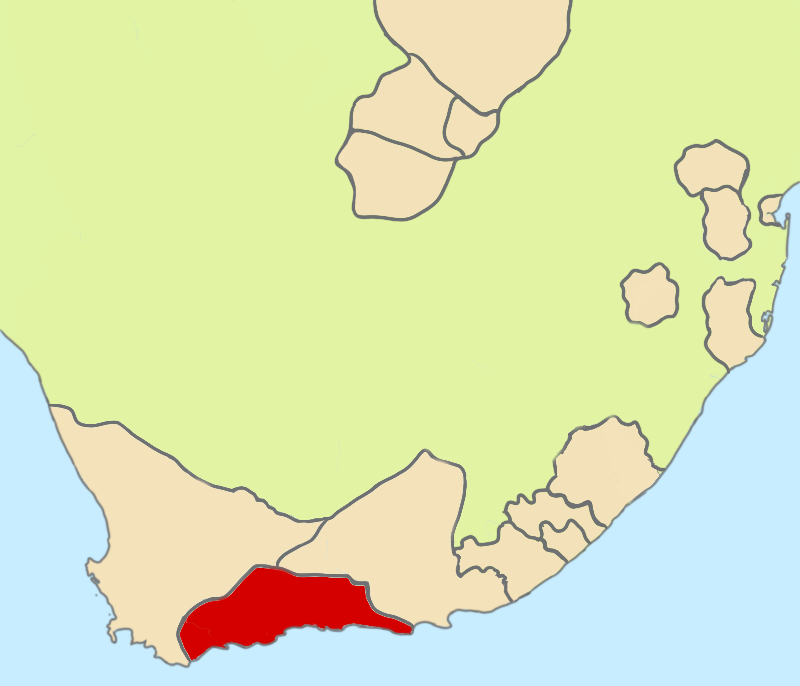
Republic of Swellendam
On 17 June 1795, roughly sixty armed farmers marched on the drostdy -- the magistrate's office -- in the frontier town of Swellendam, forced the magistrate Anthonie Faure and his officials to resign, and declared themselves a republic. They elected Hermanus Steyn d'Jonge as president. They began calling themselves 'national burghers,' borrowing the revolutionary vocabulary then sweeping across Europe from Paris. The Republic of Swellendam lasted exactly 140 days. It is one of the strangest, most defiant, and most quickly forgotten episodes in South African history -- a frontier rebellion that combined genuine grievance with theatrical ambition, all of it overtaken by the geopolitical tides of a world at war.
Tax, Children, and the Company's Grip
The revolt did not emerge from nowhere. The Dutch East India Company, which administered the Cape Colony, had long frustrated the frontier farmers of the Overberg and beyond. Two grievances dominated: the burden of taxes paid to a company whose benefits rarely reached the hinterland, and the ban on registering Khoikhoi children on farms -- a restriction that struck at the labor practices on which the settler economy depended. The Khoikhoi, the indigenous herding people of the region, had been drawn into colonial agriculture as laborers, and the farmers resented any interference with what they considered their prerogatives. The rebellion in Swellendam followed a similar uprising in Graaff-Reinet, where Marthinus Prinsloo had established an acting government on 4 February 1795, just months earlier. Both revolts reflected the same fundamental frustration: the Company was distant, extractive, and unresponsive. Revolution, it seemed, was in the air -- from the streets of Paris to the sheep farms of the Overberg.
A Republic Without a Country
Under Petrus Delport's leadership, the group that seized the drostdy on 17 and 18 June installed their own institutions with surprising speed. A national magistrate was appointed. A national convention served as the governing body. President Steyn d'Jonge presided over what was, on paper, a functioning republic. But the ambitions of the Swellendam burghers outran their capacity to sustain them. The republic had no military force beyond the armed farmers themselves, no treasury beyond what could be collected locally, and no diplomatic recognition from any power. The government in the Free Republic of the Netherlands acknowledged the republic's existence but showed no intention of offering support. The irony was structural: the burghers had revolted against an absentee government, but their own government had no means to be anything more than local.
The British Arrive
What the Republic of Swellendam could not have anticipated was that larger forces were already in motion. Britain and the Dutch Republic were at war. The French had overrun the Netherlands in January 1795, establishing the Batavian Republic and effectively ending Dutch sovereignty over its colonial possessions. On 4 November 1795, British forces occupied the Cape Colony. The Republic of Swellendam, along with the Republic of Graaff-Reinet, was absorbed into British administration without a shot being fired in its defense. Hermanus Steyn d'Jonge's presidency ended as abruptly as it began. The 140-day republic left behind no lasting institutions and no territorial legacy, but it planted a seed of frontier self-determination that would bear fruit decades later in the Great Trek and the establishment of the Boer republics -- the Transvaal and the Orange Free State -- further north. Swellendam itself endures as one of South Africa's oldest and most charming towns, its restored drostdy now a museum where visitors can walk the same hall that Anthonie Faure was forced to vacate at the barrel end of frontier justice.
From the Air
Located at 34.02S, 20.44E. Swellendam is visible as a compact town along the N2 highway at the foot of the Langeberg mountains. The drostdy (magistrate's building, now a museum) is in the town center. Nearest airfield: Swellengrebel Airport (light aircraft only). Cape Town International (FACT, ~220 km W), George Airport (FAGG, ~160 km E). Best viewed at 3,000-4,000 ft with the Langeberg range as backdrop to the north.