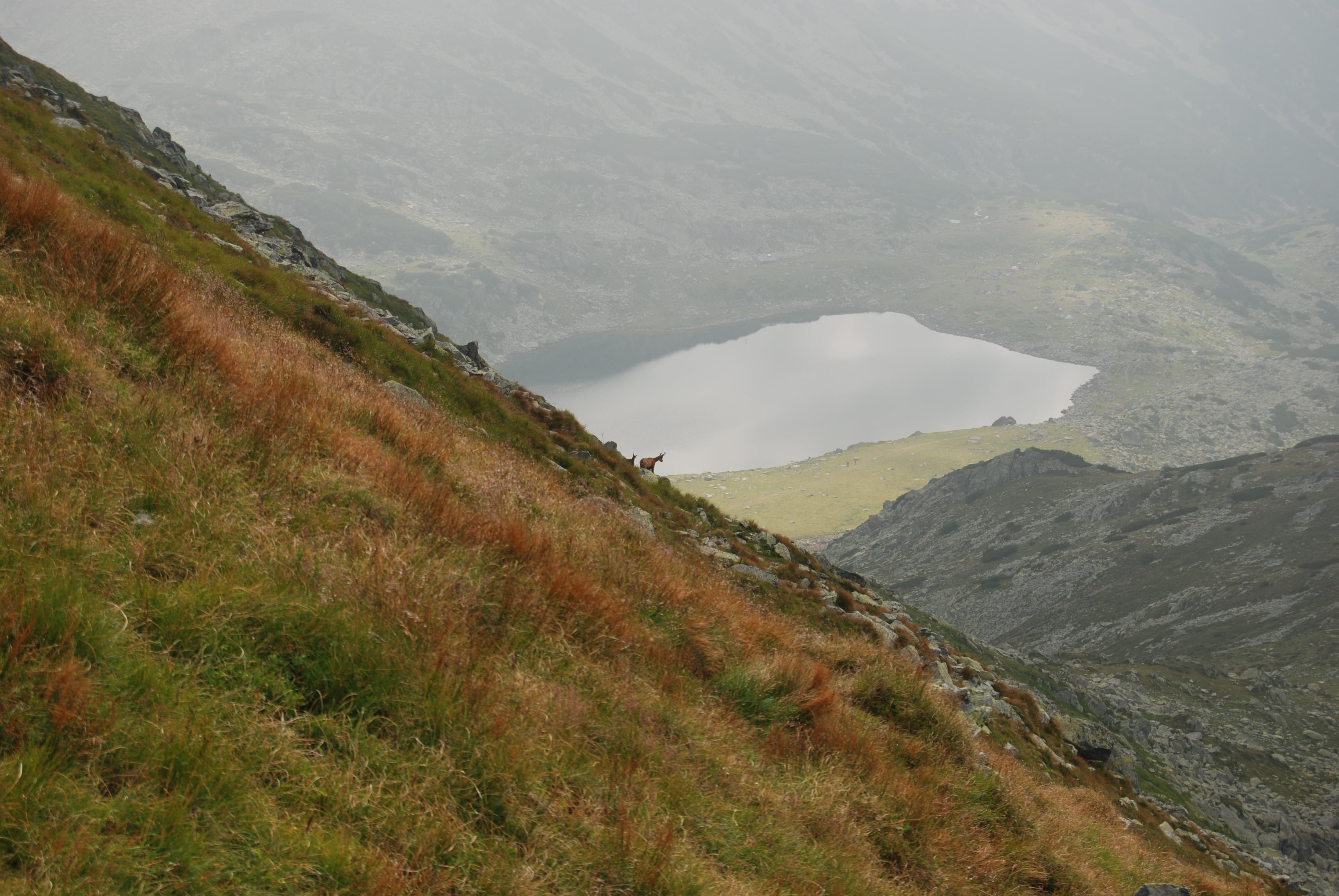
Retezat National Park
You carry everything in. You carry everything out. There are no garbage bins in Retezat National Park -- not at the trailheads, not at the mountain huts, not anywhere. The rule is a statement of philosophy: this landscape belongs to the wolves, the bears, the lynx, and the glacier lakes that formed it, and the humans who enter are guests, not customers. Situated between Transylvania and Oltenia in Romania's Hunedoara County, Retezat covers 380 square kilometers of protected parkland surrounded by another 186 square kilometers of buffer zone. Within those boundaries lie more than a hundred glacier lakes, forests no axe has touched, and some of the most dramatic alpine terrain in southeastern Europe.
A Hundred Mirrors in the Mountains
Glaciers carved the Retezat during the last ice age, scooping cirques into the ridgelines and leaving behind the lakes that define the park's character. More than a hundred of these glacier lakes sit scattered across the high terrain, each one a different size, shape, and shade of blue or green depending on depth, mineral content, and the angle of the light. Peleaga Peak, the park's highest point at approximately 2,500 meters, stands above them all. The surrounding ridgelines hold some of the last untouched primary forests in Europe -- stands of trees that have grown, fallen, and regenerated without human intervention for centuries. Romania designated these forests as strictly protected areas, recognizing that their ecological value lies precisely in being left alone.
Where the Predators Still Are
A third of all Romanian plant species grow within Retezat, and about 130 of those are endangered across Europe. But the park's most striking ecological claim is its intact predator community. Wolves, brown bears, Eurasian lynx, wildcats, otters, and badgers all live here -- not as isolated remnants of a vanished ecosystem, but as functioning populations in a landscape large and wild enough to sustain them. Romania holds one of the largest brown bear populations in Europe outside Russia, and the Retezat's remoteness makes it prime habitat. The lynx, Europe's largest wild cat, is a more elusive presence, its tracks more commonly seen than the animal itself. This is not a sanitized wildlife park. The predators are real, the forest is dense, and hikers share the trails with animals that outweigh and outnumber them.
Getting Lost on Purpose
Reaching Retezat requires commitment. The most popular access point is Carnic, past the village of Salasu de Sus, near the train station at Ohaba de sub Piatra. When you step off the train, a poster board displays park information and taxi phone numbers. A man with a minivan sometimes shuttles hikers from the station to the park entrance, though no one seems certain of his schedule. From Carnic, the trails begin. Jeeps and ATVs are prohibited -- violators face fines of roughly 500 euros -- so movement through the park happens on foot or by bicycle. The hut at Pietrele, a two-hour walk from Carnic, offers meals for a few euros and bunks for roughly five euros a night. The rooms sleep at least five people, the staff speaks little English, and there is no clear booking policy. Fellow hikers translate. Comfort is not the point.
Shepherds, Milk, and Firelight
Above the tree line, the park's human presence reduces to shepherds and their flocks. They sell fresh milk -- about five lei per liter -- and sometimes cheese to passing hikers. The transactions happen without a shared language, conducted through gesture, goodwill, and the universal arithmetic of holding up fingers. Camping is permitted in designated areas, but there are no facilities: no toilets, no fences, no fire pits. Open fires are banned entirely, so anyone planning to cook must carry a gas stove. The prohibition is not bureaucratic caution -- it reflects the reality of protecting a landscape where primeval forest and alpine meadow meet, and where a single campfire could consume what centuries have built. At night, the absence of artificial light reveals a sky that most Europeans have forgotten exists. The Retezat is not convenient, and that is precisely its value.
From the Air
Located at 45.33N, 22.83E in the Southern Carpathians of Romania, between Transylvania and Oltenia. The park's alpine terrain is characterized by sharp ridgelines, cirque lakes, and dense forest cover. Peleaga Peak (approximately 2,500m / 8,200ft) is the highest point. Best viewed from 8,000-12,000 feet AGL, where the glacier lakes become visible as scattered blue points among the rocky terrain. Nearest airport: Sibiu International (LRSB), approximately 55 nm northeast. Timisoara (LRTR) lies about 80 nm west. The terrain is rugged with limited flat areas -- expect turbulence over ridgelines.