Rhodes Memorial
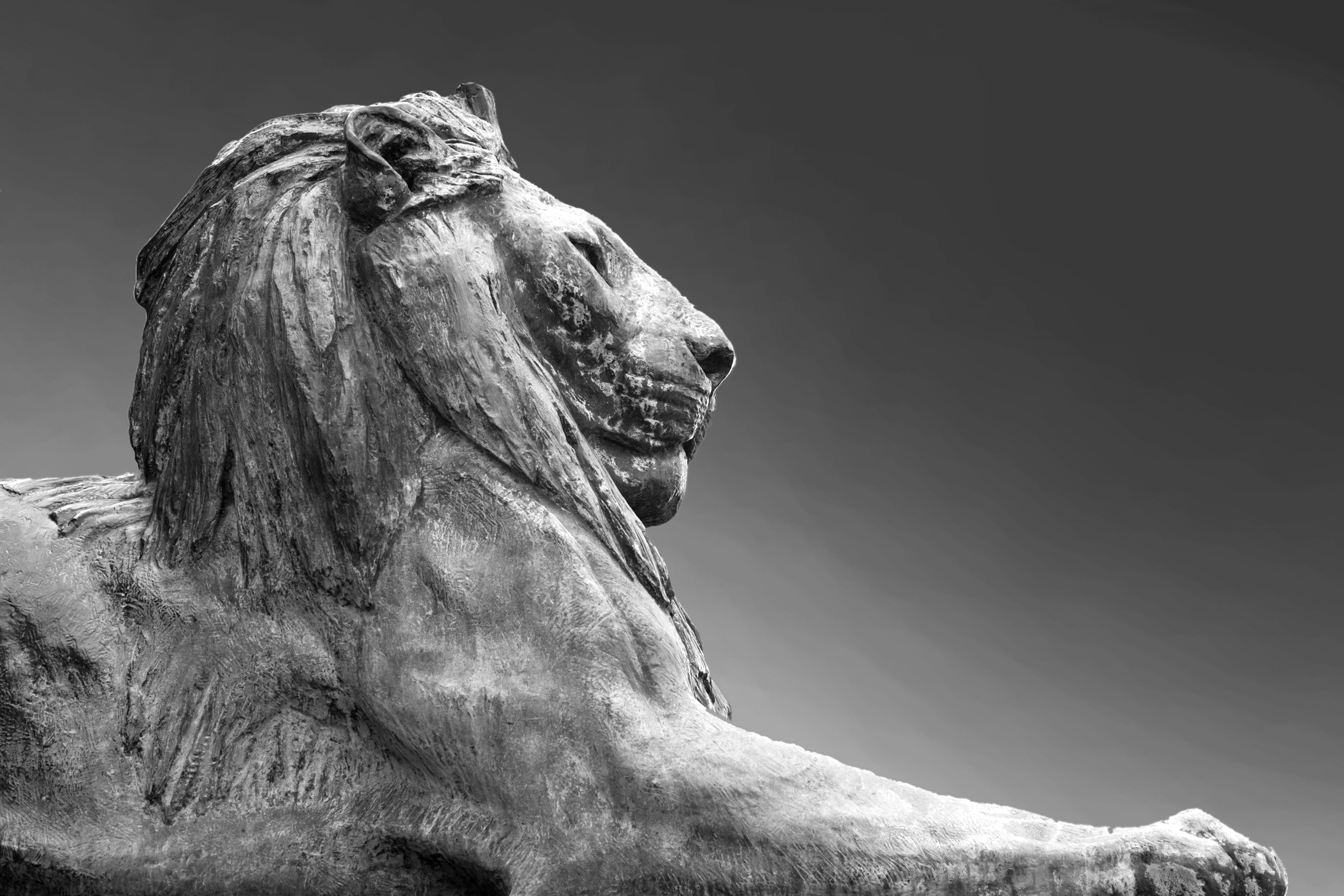
Forty-nine granite steps lead up the hillside, one for each year of Cecil Rhodes's life. At the bottom, a bronze horseman charges forward. Eight bronze lions flank the ascent. At the top, a colonnade styled after a Greek temple opens onto a view facing northeast -- toward Cairo, toward the British imperial corridor Rhodes spent his life trying to build. The monument is grand in the way only supreme self-confidence can produce, and it sits on the lower slopes of Devil's Peak because this was Rhodes's favorite spot on his own estate. That a colonial mining magnate owned a significant portion of one of the world's most iconic mountains tells you much of what you need to know about the man and his era.
The Man on the Mountain
Cecil John Rhodes was born in England in 1853 and died in South Africa in 1902. In between, he founded the De Beers diamond monopoly, served as prime minister of the British Cape Colony from 1890 to 1896, and pursued imperial expansion across southern Africa during the period known as the Scramble for Africa. His policies dispossessed indigenous populations, concentrated wealth among white settlers, and laid the groundwork for the systems of racial inequality that would eventually become apartheid. Rhodes owned vast tracts of the slopes of Table Mountain and Devil's Peak. On his death, much of this land was given to the nation -- part became the University of Cape Town campus, part became Kirstenbosch National Botanical Garden. The memorial itself, designed by architect Herbert Baker, was completed in 1912.
Stone and Bronze
Baker reportedly modeled the memorial on the Greek temple at Segesta, though scholars note it more closely resembles the temple of Pergamon. The structure is built of Cape granite quarried on Table Mountain, arranged as a massive staircase rising from a semicircular terrace to a rectangular U-shaped colonnade. The bronze horseman at the base is Physical Energy, a sculpture by George Frederic Watts, while the eight bronze lions and a bust of Rhodes are the work of John Macallan Swan. Below the memorial, Rhodes's own wooden bench still sits at his preferred viewpoint. Around the site, groves of European oaks and stone pines mix with remnants of indigenous Afromontane forest, and just uphill grows a small stand of the rare Silvertree -- a species that may grow wild only on Table Mountain.
A Monument in Dispute
In post-apartheid South Africa, the Rhodes Memorial has become a lightning rod for debates about colonial memory. In September 2015, the bronze bust was vandalized -- its nose cut off, the memorial daubed with graffiti calling Rhodes a "racist, thief, and murderer." In July 2020, the bust was decapitated entirely. The head was recovered nearby and reattached on Heritage Day later that year. Meanwhile, a statue of Rhodes on the nearby University of Cape Town campus became the focus of the Rhodes Must Fall movement in March 2015 and was permanently removed. The memorial itself still stands, and the debate around it captures a fundamental tension: whether monuments to colonial figures should be preserved as sites of critical interrogation, or whether their continued presence on the landscape legitimizes the systems those figures built.
The Landscape Beyond the Monument
Today the memorial is part of Table Mountain National Park. The tea room that once served visitors behind the colonnade burned down in the 2021 Table Mountain fire, which also scorched the surrounding vegetation. Below the memorial, a game enclosure holds eland, zebra, and wildebeest, while alien fallow deer are being removed to make way for indigenous antelope species. Nearby stand Groote Schuur Hospital, Mostert's Mill, and the ruins of Rhodes's private zoo, closed in the late 1970s with only the lion's den remaining. His Groote Schuur estate is now a presidential residence. The landscape tells a layered story -- indigenous ecology, colonial acquisition, national reclamation -- with the memorial's granite steps at its center, still pointing toward Cairo, still provoking the question of what a nation does with the monuments its history leaves behind.
From the Air
Located at 33.95°S, 18.46°E on the lower slopes of Devil's Peak, adjacent to Table Mountain. Nearest airport: Cape Town International (FACT). The memorial is a recognizable visual landmark from the air -- a white granite structure with a broad staircase on the green mountainside. Best viewed at lower altitudes in clear conditions, approaching from the northeast. The University of Cape Town campus is visible below, and Kirstenbosch Gardens lie to the south.