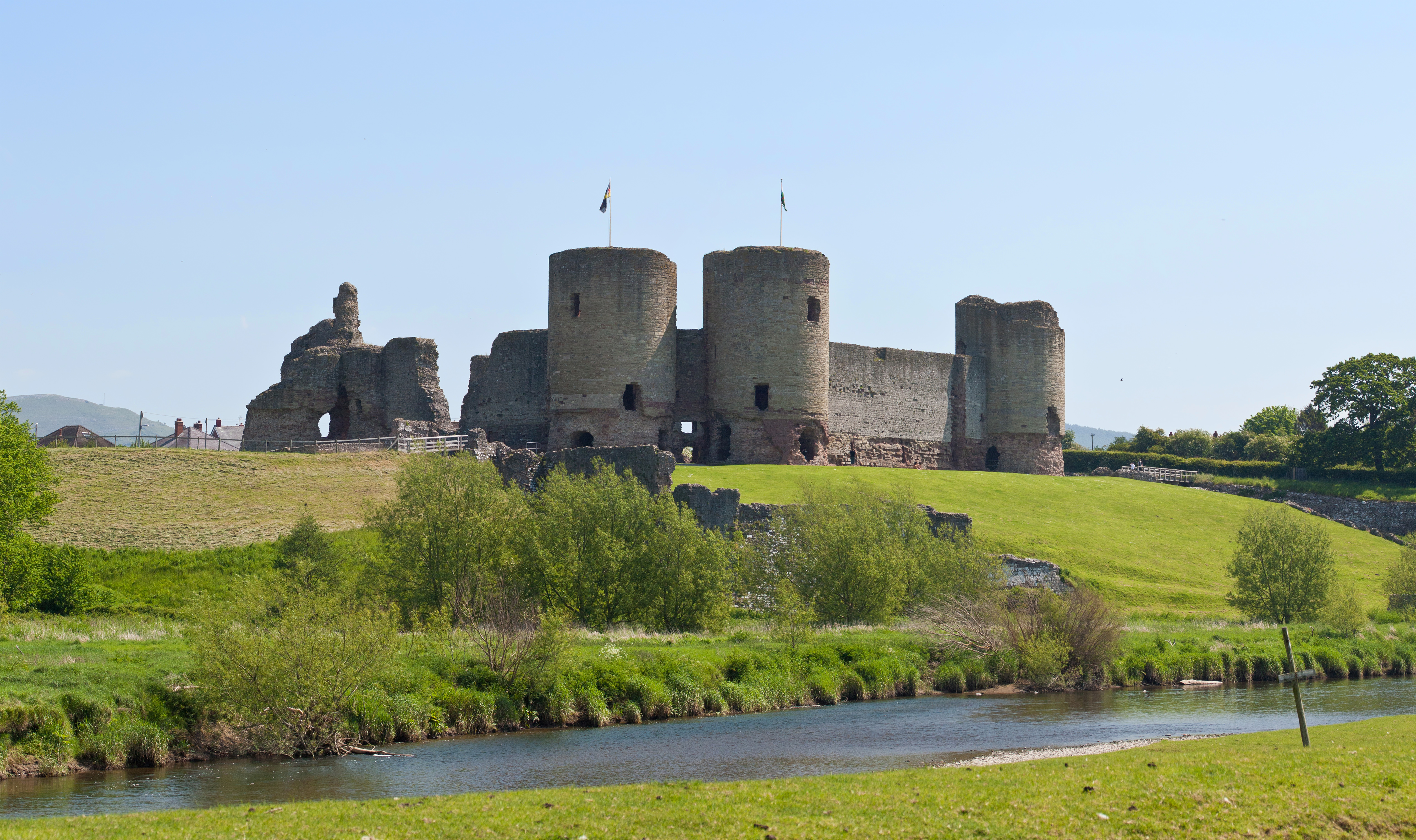
Rhuddlan Castle
In 1284, a document was signed at Rhuddlan Castle that changed the course of Welsh history. The Statute of Rhuddlan ceded all lands of the former Welsh princes to the English Crown and imposed English common law across a nation that had governed itself for centuries. It was not merely a legal instrument but an act of erasure, replacing Welsh law with English courts, sheriffs, and bailiffs. The castle where this happened still stands above the River Clwyd, its diamond-shaped layout unique among Edward I's Welsh fortresses, a reminder that the architecture of conquest can be as distinctive as the conquest itself.
The First Link in the Iron Ring
Rhuddlan was begun in 1277, immediately after Edward I launched the First Welsh War. The site was strategic: one day's march from Chester, accessible by the River Dee for supplies, and near a ford that could be crossed at low tide. Construction was overseen first by Master Bertram, a Gascon engineer, before being handed to the Savoyard master mason James of Saint George, who remained in charge until work ceased in 1282. The castle was planned as a concentric fortification with a unique diamond layout, its gatehouses positioned at the corners of the square baileys rather than along the sides, as at Flint, Harlech, or Beaumaris. Records show it was the most expensive building project the English undertook in the late 1270s. Edward's daughter Elizabeth was born at Rhuddlan in 1282, the same year the castle was completed.
The Law That Ended a Nation
Two years after Elizabeth's birth, the Statute of Rhuddlan was signed within these walls following the defeat of Llywelyn ap Gruffudd, the last native Prince of Wales. The statute was comprehensive in its reach. Edward could now appoint royal officials throughout Wales to collect taxes and enforce English law. The counties of northwestern North Wales were placed under a Justiciar of North Wales. Yet the reality on the ground was more nuanced than the statute's text suggested. Welsh law continued to be practiced at local level long after the conquest, a quiet persistence that lasted until 1536, when the Laws in Wales Acts finally made English common law the exclusive judicial system. For two and a half centuries, the people whose independence was formally abolished at Rhuddlan continued to live by their own legal traditions.
Contested Ground
The site had been fought over long before Edward raised his castle. In the late eleventh century, the Normans built a motte-and-bailey castle at nearby Twthill, constructed by Robert of Rhuddlan in 1086. Rhuddlan's strategic position at a crossing of the River Clwyd ensured it was contested by the Princes of Gwynedd and the Earls of Chester for generations. Even after Edward's castle was completed, it faced repeated assault. In 1282, Welsh forces besieged it during a rebellion until an English force led by the future Amadeus V, Count of Savoy, broke through. In 1294, the castle was attacked again during the revolt of Madog ap Llywelyn but held firm. A century later, it became a staging point in the downfall of a king.
A King's Last Free Steps
In 1399, Richard II stopped at Rhuddlan on his way to Flint Castle, where his rival Henry Bolingbroke waited to take him prisoner. It was one of the last journeys Richard made as a free man. The irony was sharp: the castle built to impose English authority over Wales became a waystation in the transfer of that authority from one English king to another. After the Civil War, Rhuddlan was slighted by the Parliamentarians in 1647 following a three-month siege, its walls broken to prevent further military use. Today, Cadw maintains the ruins, where the diamond plan is still clearly readable in the foundation walls. The River Clwyd still protects the fourth side where a moat once covered the other three, and the towers that Thomas Pennant called Twr-y-Brenin, the King's Tower, stand open to a sky that Edward I intended them to dominate.
From the Air
Located at 53.289N, 3.464W on the River Clwyd in Denbighshire, North Wales. The castle's distinctive diamond-shaped plan is visible from the air, with the River Clwyd running along its northern edge. The nearby motte of Twthill (1086) is visible just to the south. Nearest airports include Hawarden (EGNR, 15nm east) and RAF Valley (EGOV). The castle sits on flat ground near the coast, making it easy to spot from altitude.