Richardson Olmsted Complex: The Asylum That Became a Hotel
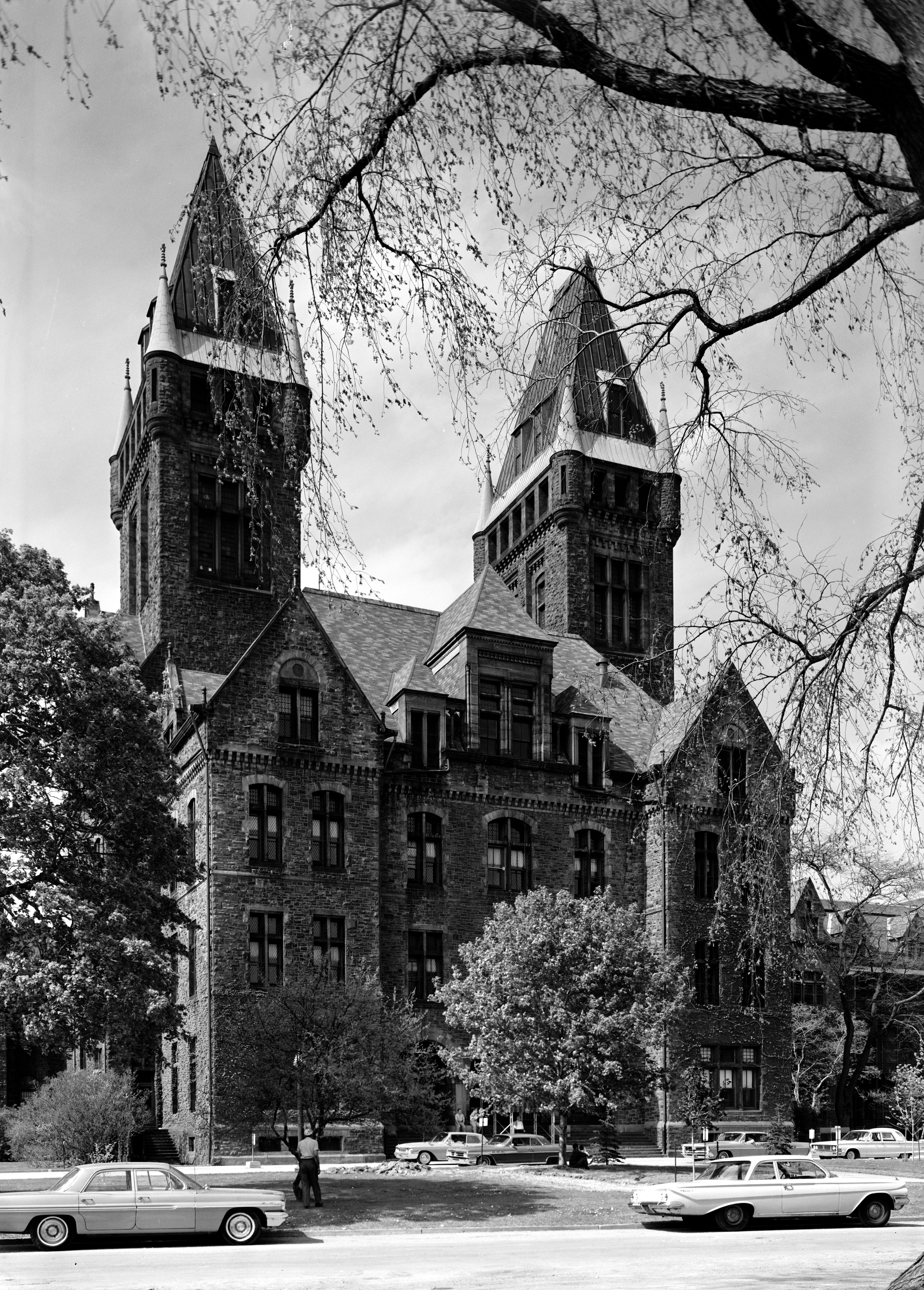
Buffalo promised a hundred years of free drinking water. That was the city's winning bid in the 1860s, when towns across western New York competed to host a new state asylum for the mentally ill. What Buffalo got in return was one of the most extraordinary buildings in America: a sprawling Medina red sandstone and brick complex designed by Henry Hobson Richardson, with grounds laid out by Frederick Law Olmsted and Calvert Vaux, the same duo who shaped Central Park. The building opened in 1880. By 1974, the last patients had left. For decades, the great towers and curving corridors sat empty, slowly surrendering to weather and vandalism. Today, those same towers house the Hotel Richardson, and a new architecture museum is rising on the grounds.
Architecture as Medicine
The Richardson Olmsted Complex was built around a radical idea: that architecture itself could heal. Dr. Thomas Story Kirkbride, a Philadelphia Quaker physician, believed that fresh air, sunlight, and dignified surroundings were as important as any medical treatment. His Kirkbride Plan prescribed a distinctive layout: a central administrative tower with pavilion wards stepping back on each side in a shallow V, connected by curved two-story corridors. The arrangement ensured every room received natural light and fresh air. At Buffalo, Richardson rendered this plan in muscular Romanesque style, using locally quarried Medina sandstone that glows warm red in afternoon light. The central towers, originally roofed in clay tile and later re-covered in copper in 1918, became Buffalo's most recognizable silhouette. Patients were segregated by sex - men in the eastern wings, women in the western - and moved closer to the administration building as their conditions improved, eventually participating in activities like agricultural therapy and baseball.
Olmsted's Healing Landscape
Frederick Law Olmsted designed the asylum grounds around 1870, calling for 150 trees and up to 2,000 shrubs selected for contrasting shapes, sizes, and leaf appearance. His vision was a "pastoral landscape" where the public could see in and the patients could see out, a deliberate transparency that rejected the notion of hiding the mentally ill behind walls. Olmsted specified that trees be spaced apart to create an open, almost forest-like feeling. Of his original plantings, only two Swamp White Oaks in front of the administrative building and a large White Ash along Forest Avenue survive today. The 203-acre campus shrank to roughly 100 acres after New York State sold the farmland to what became Buffalo State University in 1927, and the Olmsted-designed South Lawn was paved for parking in 1933. The South Lawn landscape was restored in 2013, bringing at least a portion of Olmsted's therapeutic vision back to life.
Overcrowded and Abandoned
The Kirkbride Plan called for a maximum of around 250 patients. Buffalo's asylum was designed for 600. By 1940, nearly 4,000 people were crammed into a facility built for a fraction of that number. The humanitarian ideal that had inspired the building's creation buckled under the weight of chronic underfunding and changing attitudes toward institutional care. In the early 1960s, three male wards were demolished to make way for the modern Strozzi Building. The last patients left the original wards in 1974. The complex was added to the National Register of Historic Places in 1973 and designated a National Historic Landmark in 1986, but designation alone could not stop the deterioration. Richardson had died in 1886, before his design was fully complete; architects Green and Wicks finished the western wards in 1895, faithfully emulating his style. Now even their additions were crumbling.
The Long Fight Back
Preservation Buffalo Niagara (then the Preservation Coalition of Erie County) filed a lawsuit that led New York State to establish the Richardson Center Corporation in 2006 and commit $100 million toward rehabilitation. Stabilization of the most damaged buildings began in 2008 and was completed in 2012. The first phase of redevelopment opened in May 2017 as Hotel Henry, occupying the Towers Building and two flanking buildings, roughly one-third of the campus. The COVID-19 pandemic shuttered Hotel Henry in 2020. In 2021, Douglas Development Corporation took over, reopening the property as the 88-room Hotel Richardson in March 2023, within walking distance of the Buffalo AKG Art Museum and the Burchfield Penney Art Center. As of July 2025, the nonprofit Richardson Center Corporation oversees the hotel directly, with Greenwood Hospitality Group managing daily operations.
A New Chapter in Stone
Construction began in fall 2025 on the Lipsey Architecture Center Buffalo, a new museum on the campus designed by Boston-based firm Howeler+Yoon. With a projected completion date of early 2027, the center will feature thirteen exhibits, a theater, and a gift shop, all celebrating Western New York's rich architectural heritage. The building that Lizzie D. Cottier secretly wrote a novel inside while committed in 1885, where Robert Redford filmed scenes for The Natural in 1983, and which inspired the setting of the horror video game Outlast in 2013, is becoming something its original architects could never have imagined: a cultural destination. Richardson designed a place meant to cure through beauty. After a century of neglect, that premise is finally being tested again, though the patients now check in voluntarily and the treatment is a good night's sleep in rooms where sunlight still pours through Richardson's tall windows.
From the Air
Located at 42.93°N, 78.88°W in Buffalo, New York, the Richardson Olmsted Complex sits north of downtown in the city's cultural corridor. The distinctive twin towers and sprawling V-shaped ward wings are identifiable from altitude, built of red Medina sandstone. Best viewed at 2,000-3,000 feet AGL. Buffalo Niagara International Airport (KBUF) is approximately 8 miles east. Nearby visual landmarks include the Buffalo State University campus immediately adjacent, Delaware Park (Olmsted-designed) to the northeast, and the downtown Buffalo skyline to the south. Lake Erie shoreline visible to the west.