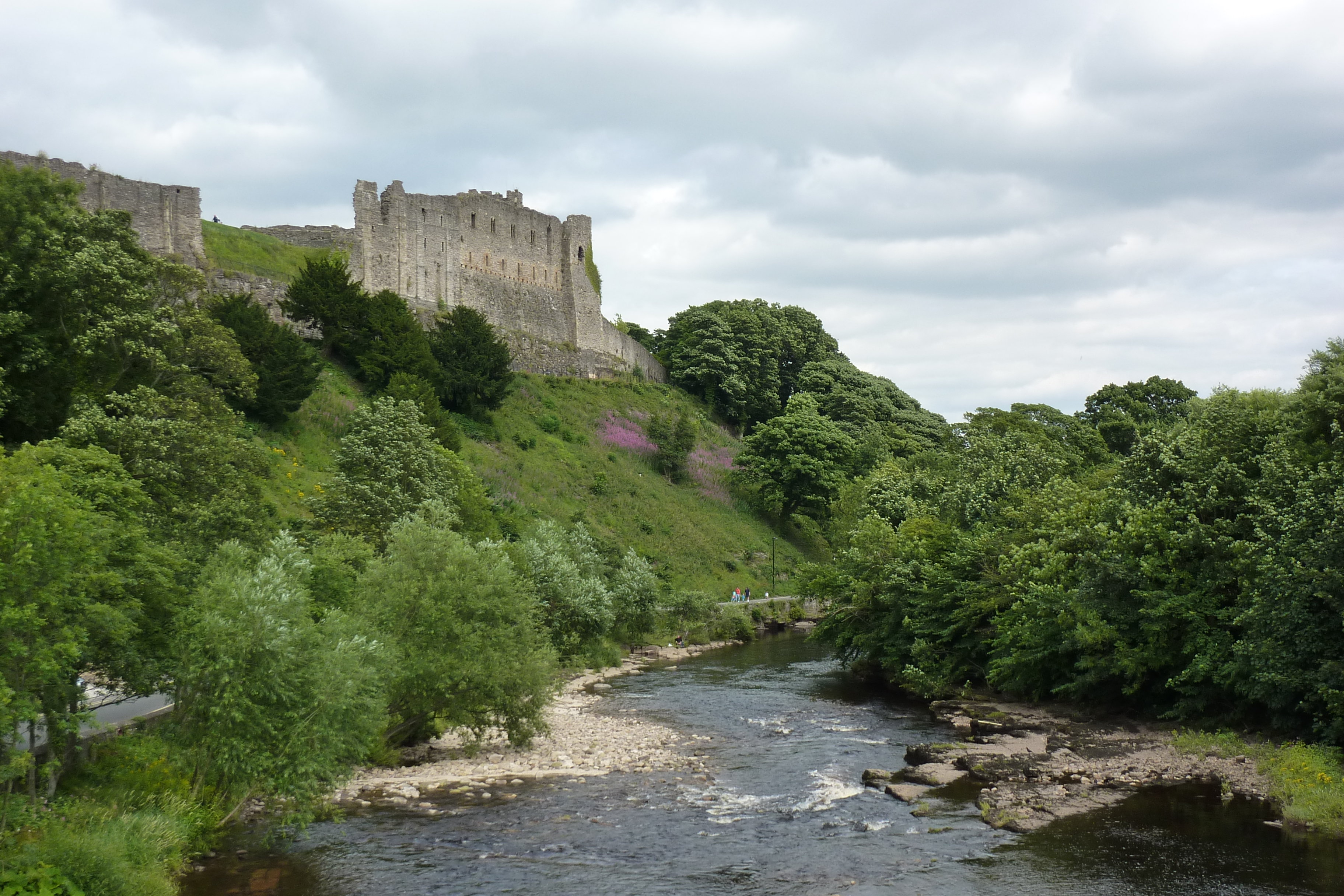
Richmond Castle
According to local legend, King Arthur and his knights sleep in a cave beneath Richmond Castle, waiting to be summoned in England's hour of greatest need. A potter named Thompson supposedly discovered them once and fled when they began to stir. Whether or not Arthur sleeps below, the castle above the River Swale is very much awake to history. Built by Alan Rufus of Brittany beginning in 1071 -- making him one of the richest men in the medieval world -- Richmond Castle is the best-preserved early Norman fortress in England, and its walls contain a more recent story of conscience and resistance that the Normans could never have anticipated.
The Harrying and the Hill
Richmond Castle was born from conquest and punishment. In 1069, William the Conqueror crushed a rebellion in York and launched the Harrying of the North, a campaign of deliberate devastation that depopulated large areas of northern England for a generation. He then distributed the confiscated lands among his most loyal followers. Alan Rufus, a Breton nobleman, received the borough of Richmond and began building his castle on a commanding hill above the River Swale. His holdings -- known as the Honour of Richmond -- spanned parts of eight counties and constituted one of the most extensive Norman estates in England. The Domesday Book of 1086 records 'a castlery' at Richmond. The original name, Riche Mount, meant simply 'the strong hill.'
The Castle's Bones
Richmond's layout is unusual: a triangular main enclosure dictated by the shape of the hilltop, with a keep at the northern corner overlooking the Swale. The original 11th-century gate arch survives in the basement of the 12th-century keep, which was built directly in front of it by Alan Rufus's great-nephew Conan. The keep rises over 100 feet, its walls thick enough to have outlasted nearly a millennium of weather and warfare. An outer enclosure extends to the east. By the end of the 14th century, the castle had fallen out of military use, and a 1538 survey found it partly ruinous. But paintings by Turner and the rise of 18th-century tourism prompted repairs to the keep, and the castle's fundamental structure -- walls, keep, courtyards -- survived largely intact.
The Richmond Sixteen
The castle's cell block holds 2,300 examples of graffiti left by prisoners from the mid-19th century to the 1970s. The most significant were the Richmond Sixteen -- conscientious objectors imprisoned at the castle during the First World War. These men refused to fight on grounds of conscience and were subjected to harsh treatment for their beliefs. Their graffiti -- names, dates, political statements, expressions of defiance -- survives on the cell walls as a record of resistance. In an age when questioning military service was considered cowardice or treason, the Sixteen chose imprisonment over compromise. Their presence in a Norman military fortress creates a layered irony: a castle built to project the power of conquest became, centuries later, a prison for those who rejected the very principle of armed force.
The Strong Hill Today
Richmond Castle is a Grade I listed building and scheduled monument, managed by English Heritage. The view from the keep encompasses the town of Richmond below -- a town that grew up around and because of the castle -- and the River Swale curving through its valley. The castle's triangular plan, unusual among English fortresses, gives the site a distinctive character, as does the survival of Scotland's Hall, one of the oldest domestic buildings in England, within the main enclosure. The legend of Arthur sleeping below adds a mythic dimension to what is already a site of considerable historical gravity. From Norman conquest to Arthurian legend, from medieval military might to First World War conscientious objection, Richmond Castle contains more layers of English history than most places dare to accumulate.
From the Air
Located at 54.40°N, 1.74°W on a hill above the River Swale in Richmond, North Yorkshire. The castle's keep and triangular enclosure are distinctive from the air, with the town clustered around the fortress. Nearest airport: Teesside International (EGNV) approximately 15 nm east. The Swale valley extends to the west into the Yorkshire Dales.