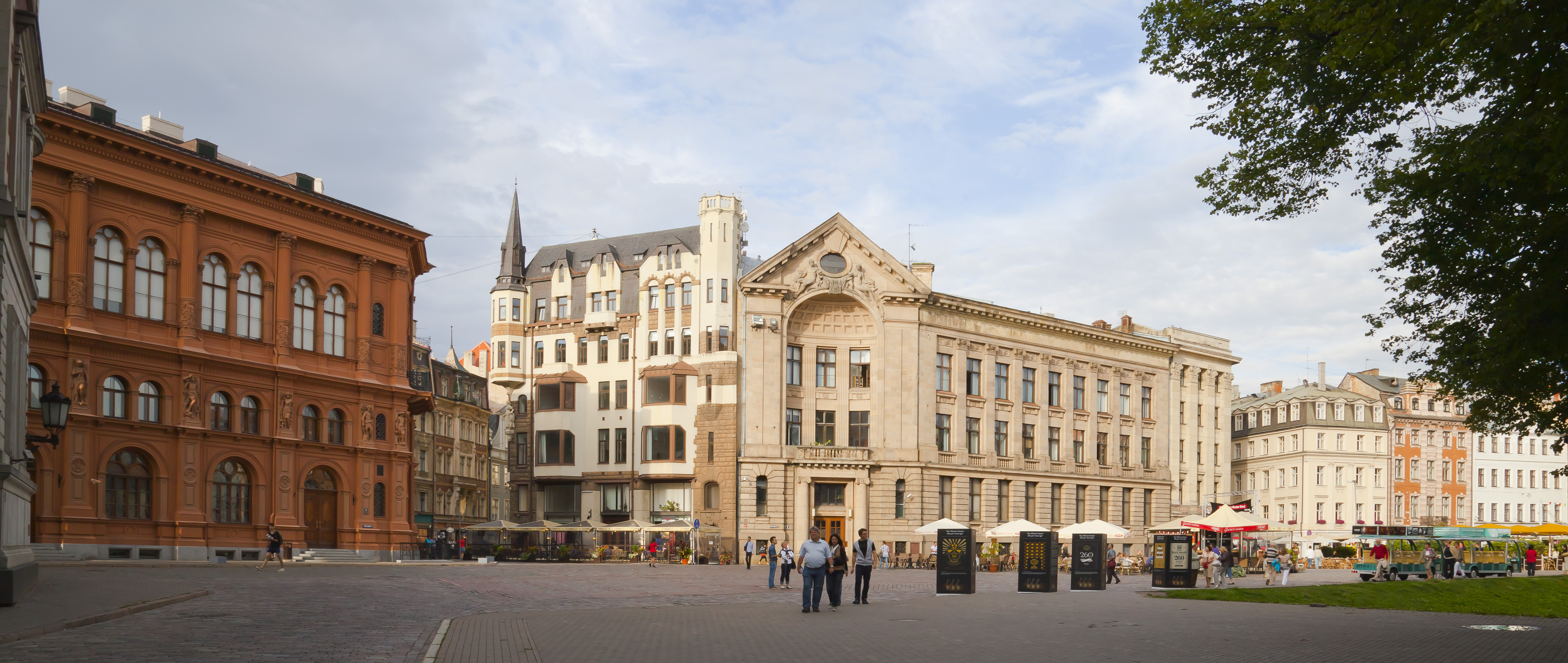
Riga Cathedral
During World War II, the Latvian composer Lūcija Garūta sat at the keyboard of the Riga Cathedral organ and recorded a cantata. The microphones picked up something other than music. They captured the sound of artillery falling on the city outside — the dull thumps of battle bleeding into Garūta's chords. The tape survived. So did the organ, all 6,718 pipes of it, built in 1882 by the Walcker firm of Ludwigsburg in Germany. So did the cathedral itself, a building consecrated in 1211, which Latvians call the Dome — though the word is a pleonasm, since Dom is just German for cathedral.
Bishop Albert's Church
Riga itself was effectively founded by Albert of Riga — a German bishop from Lower Saxony who arrived in 1201 with a fleet of crusaders and established the city as the base for the conversion (and conquest) of the surrounding pagan Livonian peoples. Albert needed a cathedral, and in 1211 he laid the foundations near the bank of the Daugava River. What he built became, and remains, the largest medieval church in the Baltic states. The brick Gothic structure has been modified many times in eight centuries — the tower especially has gone through several iterations — but the core medieval form is still recognizable. The cathedral is one of the most photographed landmarks in Latvia. Like all the oldest churches of Riga, it carries a famous weathercock at the top of its tower, watching the wind shift over the Daugava. A 1547 woodcut shows three Riga church towers dominating the city skyline: St. James's, the Cathedral, and St. Peter's. They still do.
Lutheran, Catholic, Lutheran Again
The Reformation came to Riga in the 1520s, and the cathedral became Lutheran. It has remained the seat of the Archbishop of the Evangelical Lutheran Church of Latvia ever since — with two complications. After Latvia's independence, a 1923 referendum forced the Lutheran Church to share the cathedral with the Roman Catholic Church. The Catholic minority had pushed for access to one of the country's most important sacred spaces, and the popular vote granted it. The arrangement lasted only eight years. In 1931 a second referendum reversed the decision, returning the building entirely to the Lutherans. Riga had repeatedly been a contested space between religious traditions, going back to Albert's original violent conversion of the local Livs and Letts, but the 20th-century version played out at the ballot box rather than with armies.
The Walcker Organ
The instrument that dominates the cathedral was built between 1882 and 1883 by Walcker Orgelbau, the renowned organ builder of Ludwigsburg in Baden-Württemberg. It was inaugurated on 31 January 1884. The specifications are extraordinary: four manuals and one pedalboard, 116 voices, 124 stops, 144 ranks, 6,718 pipes, eighteen combinations, and a General Crescendo. It is one of the largest and finest 19th-century organs in Europe, and from the moment it was installed it drew musicians and listeners from across the continent. Lūcija Garūta — composer, pianist, and one of Latvia's most important 20th-century musical figures — composed her cantata Dievs, Tava zeme deg! ("God, Your Earth Is Burning!") in 1943-1944, during the German occupation. The recording made on the cathedral organ as the Soviet artillery closed on Riga is one of the most haunting documents of the war's musical history. The organ kept playing while the city burned around it.
Concert Hall, Cathedral Again
Religious services were prohibited during the Soviet occupation of Latvia, which the cathedral counted from 1939 (the Molotov-Ribbentrop Pact) to 1989. The building was repurposed as a concert hall — a use that may have actually helped preserve it, since the great organ remained in active service and the building had to be maintained for performances. The Museum of the History of Riga and Navigation occupied the southern wing throughout the Soviet period, which it continues to do. In 1991, with Latvian independence restored, the cathedral was reopened for religious services and resumed its role as the Lutheran archbishop's seat. Restoration has continued. In 2011 the copper roofing above the nave was replaced. In 2015 the tower exterior was re-plated and its wooden support structure renewed. The Riga Dom Cathedral Boys Choir, an ensemble of international standing, records and tours from this base. The doors on Herder Square open daily to a building that has accumulated 815 years of music, prayer, and witness.
From the Air
Riga Cathedral stands at 56.95°N, 24.10°E, in the medieval heart of Old Riga on the right bank of the Daugava River. From altitude the cathedral is identifiable by its distinctive tower with the famous weathercock — one of three iconic Riga skyline spires alongside St. James's Cathedral and St. Peter's Church. Cathedral Square (Doma laukums) opens off the north wall. EVRA (Riga International Airport) is 10 km southwest. EETN (Tallinn) lies 280 km north across the Gulf of Riga and Gulf of Finland. ULLI (St. Petersburg Pulkovo) sits 490 km northeast. Best viewed at 2,000 to 5,000 ft on approach to or departure from EVRA. In good visibility the three medieval spires of central Riga form an unmistakable cluster against the Daugava.