Rikers Island
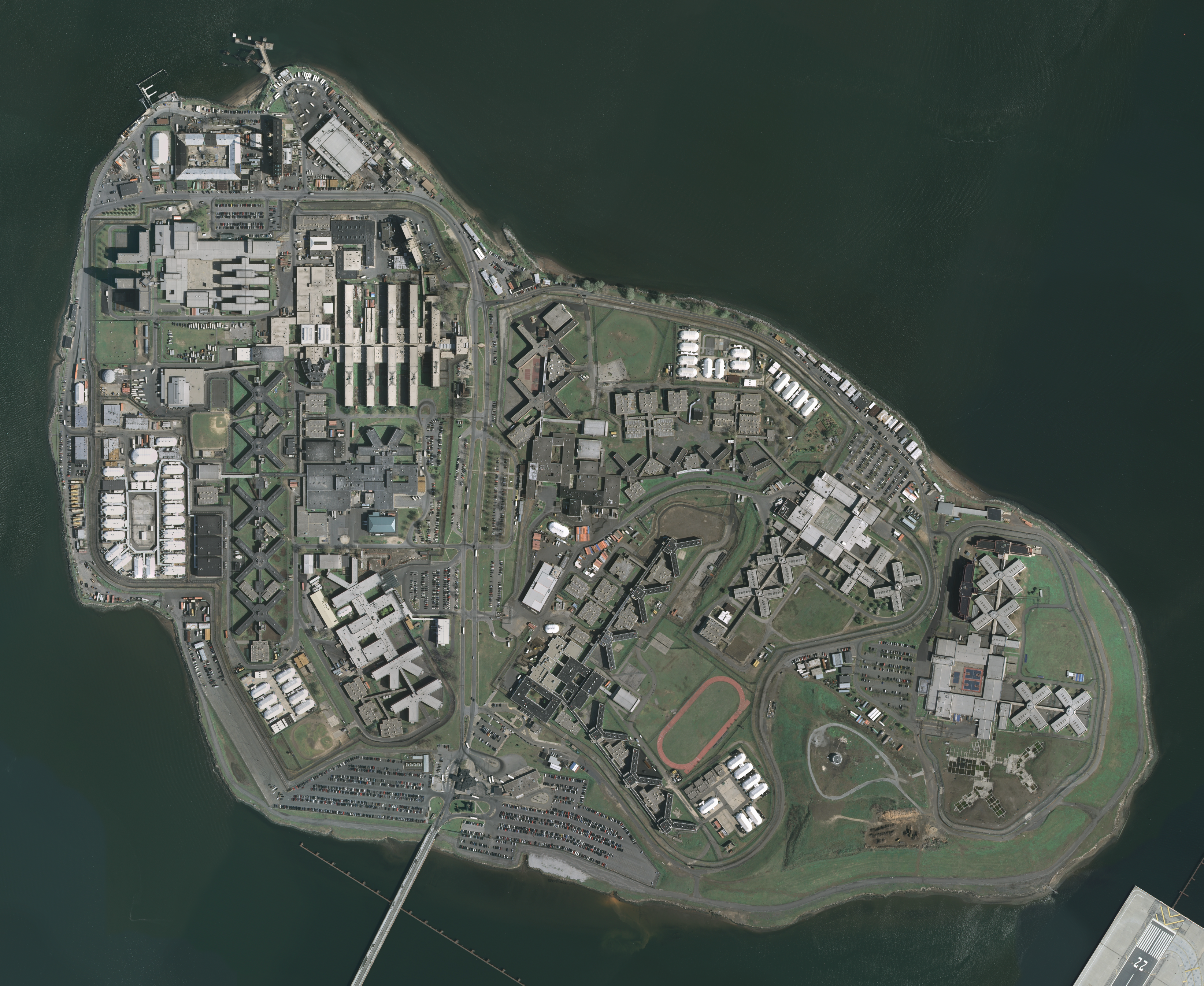
From the air, Rikers Island looks almost pastoral, a flat expanse of green wedged into the East River between the Bronx and Queens, with LaGuardia Airport's runways shimmering just across the water. The illusion dissolves on approach. Ten jail facilities sprawl across 413 acres of reclaimed land, housing an average of ten thousand people on any given day, the vast majority of whom have not been convicted of anything. They are waiting, sometimes for years, for their cases to be heard. Rikers is not a prison in the traditional sense. It is a holding pen, and it has become one of the most troubled correctional institutions in the United States.
Built on Ashes
The island takes its name from Abraham Rycken, a Dutch settler who claimed it in 1664. For centuries it remained a small, unremarkable landmass of fewer than one hundred acres. The city acquired it in the late nineteenth century, and what happened next set the tone for everything that followed. When New York was banned from dumping garbage in the ocean in 1922, much of it ended up on Rikers. The island already had twelve mountains of refuse, some rising forty to one hundred thirty feet. Convict labor hauled in boatloads of coal ash for landfill. Spontaneous phosphorescent fires flickered across the garbage mounds at night, even in winter snow. One warden described the scene as looking like a forest of Christmas trees, little lights blooming across the hillside. By 1943, the landfill had expanded the island from ninety acres to over four hundred. Two hundred acres were stripped away again to help build North Beach Airport, later renamed LaGuardia. Rikers was, quite literally, built on what the city threw away.
A City Within a City
The first jail opened on Rikers in 1932, replacing the overburdened facility on Welfare Island, now Roosevelt Island. By the twenty-first century, the complex had grown into a sprawling operation with a budget exceeding $860 million a year, a staff of nine thousand officers and fifteen hundred civilians, and roughly one hundred thousand admissions annually. The cost of detaining a single person for one year reached $556,539 by 2021, a figure that staggers even in a city accustomed to staggering numbers. Eighty-five percent of the people held there are pretrial defendants, either unable to make bail or remanded by a judge. They endure the same conditions as those serving sentences, often worse, because the uncertainty of waiting compounds every hardship. The only way onto or off the island is a single bridge from Queens, a physical isolation that reinforces the psychological kind.
Cycles of Violence
Rikers' reputation for brutality is not anecdotal; it is documented in court rulings, federal investigations, and the accounts of the people who have survived it. In August 2012, inmate Jason Echevarria, who suffered from bipolar disorder and was housed in a mental health unit, swallowed a packet of powdered detergent after sewage leaked into the cells. When a correctional officer reported his condition, the supervising captain said not to bother him unless there was a dead body. Echevarria received no medical attention and was found dead the next morning. The medical examiner ruled it homicide by neglect. In June 2019, Layleen Xtravaganza Cubilette-Polanco, a twenty-seven-year-old Afro-Latina transgender woman, died in solitary confinement after staff left her alone for forty-seven minutes, violating the fifteen-minute check requirement. Video footage showed officers knocking on her cell door, finding her unresponsive, and laughing. In 2021, fifteen people died on Rikers as conditions deteriorated during the COVID-19 pandemic, driven by viral outbreaks, chronic staffing shortages, and escalating mental health crises among detainees.
The Long Goodbye
The decision to close Rikers Island, announced by New York City in 2019, represents one of the most ambitious correctional reform efforts in American history. The plan calls for replacing the island complex with four smaller, borough-based jails designed to keep detainees closer to their families and courts. The timeline has faced delays, skepticism, and fierce community opposition in the neighborhoods selected for the new facilities. Advocates who have fought for decades to shut Rikers argue that the island's geographic isolation, its origins as a garbage dump, and its entrenched culture of violence make reform impossible within its existing walls. Critics counter that building new jails does not address the systemic problems that created Rikers in the first place. Meanwhile, conditions on the island continue to deteriorate. The facility that was supposed to be temporary when it opened in 1932 has outlasted every promise to fix or replace it.
What the River Holds
Rikers Island sits in the East River like an accusation. Its flat silhouette, visible from planes descending into LaGuardia and from the elevated trains crossing the Bronx, is familiar to millions of New Yorkers who have never set foot on it. For those who have, the island looms differently. The people detained there include some who became famous, like Tupac Shakur and Harvey Weinstein, but the overwhelming majority are ordinary New Yorkers caught in a system where poverty determines how long you wait for justice. The island that Abraham Rycken claimed in 1664 has become a symbol of everything a city can build and everything it can neglect, a place where the gap between what New York aspires to be and what it tolerates is measured in concrete, razor wire, and the lives of people whose names rarely make the news.
From the Air
Located at 40.7907N, 73.8810W in the East River between the Bronx and Queens. Best viewed from 2,000-3,000 feet AGL. The island is immediately south of LaGuardia Airport (KLGA), separated by a narrow channel. Its flat, rectangular shape and institutional buildings are unmistakable. The Rikers Island Bridge connects to Queens on the south side. Nearby airports: KLGA (LaGuardia) adjacent to the north, KJFK (JFK) 8nm southeast.