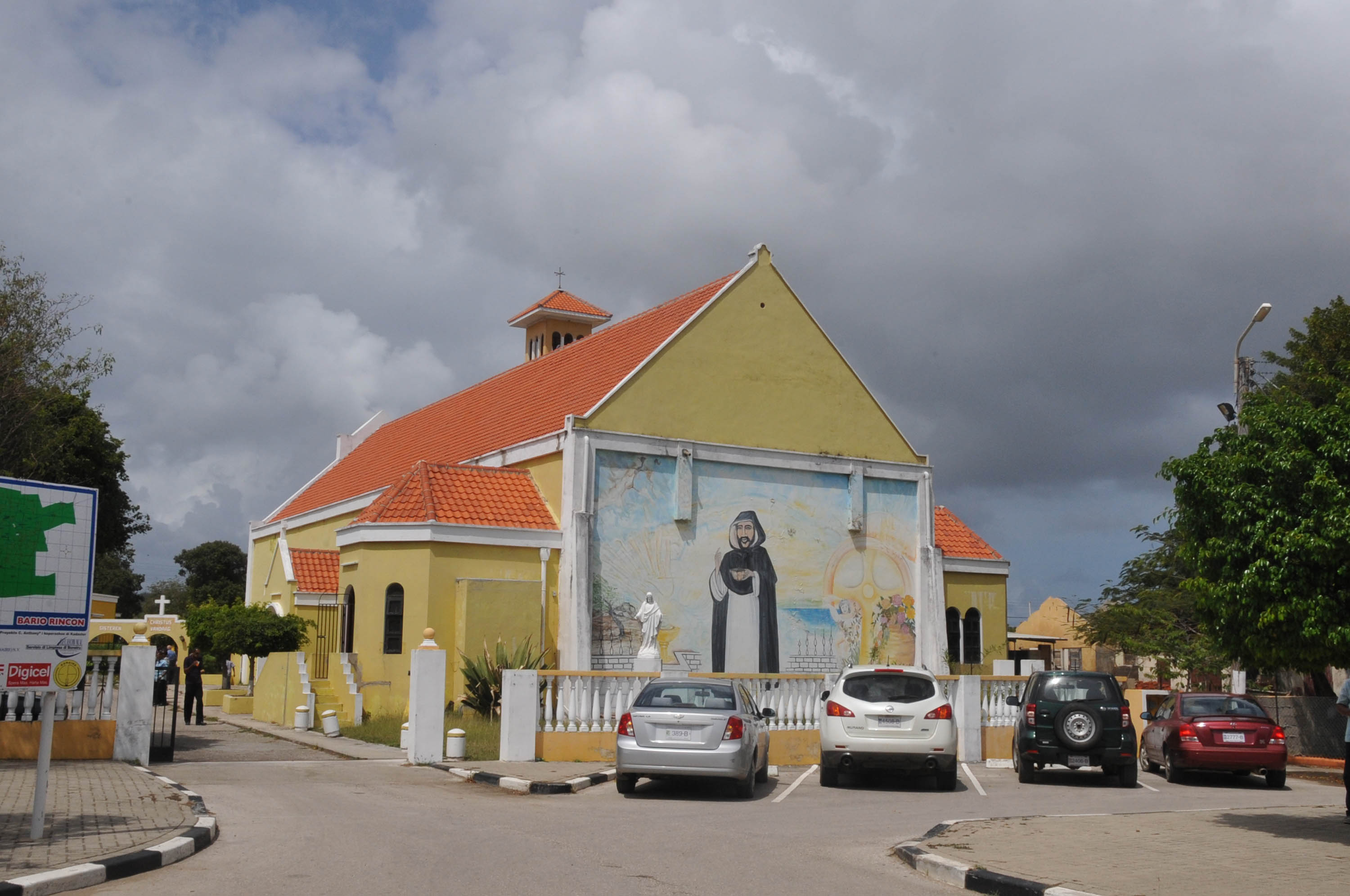
Rincon, Bonaire
The Spanish chose this valley for a simple reason: you cannot see it from the sea. When they established Rincon in 1527, piracy was not a theoretical risk -- it was the defining fact of Caribbean life. So rather than build on the coast, they tucked their settlement into an inland basin on the northern end of Bonaire, ringed by hills that blocked the view from any approaching ship. Fresh water ran through the valley, crops could grow, and the town could exist in something close to peace. Five centuries later, Rincon remains Bonaire's hidden heart -- the oldest settlement in the Dutch Caribbean, a place where the culture runs deeper than in the capital down the coast, and where a single April festival can fill the streets with six times the town's own population.
Hidden by Design
Rincon's geography was its founding strategy. The hills that surround the valley created a natural screen against the pirate ships that raided Caribbean settlements with devastating regularity in the sixteenth century. The Spanish did not need walls or a fort -- the terrain did the work. Fresh water was available for irrigation, and the soil supported agriculture in ways that Bonaire's arid coastal strips could not. For nearly three centuries, Rincon served as the island's primary settlement while the coast remained exposed and largely unbuilt. It was not until the Dutch established Fort Oranje in 1639 and the waterfront settlement of Playa grew around it that Kralendijk began to rival Rincon. Even then, Rincon retained its role as the cultural and agricultural center. The Magasina di Rei, dating to 1824 and one of the oldest surviving buildings on the island, served as a government storehouse. The Kas Krioyo Rincon, an authentic Bonairean house, is the oldest dwelling in town. These structures survive because Rincon was never a target -- hidden towns do not attract the kind of destruction that makes ruins.
The Sound of the Horn
On April 30, 1989, Rincon adopted its own flag. The design tells the town's story through color and symbol: blue and white for the sky and sea, green for the forested hills, a red R at the center. But the most distinctive element is a horn -- the same horn that was once blown to guide lost travelers home through the surrounding hills. In a landscape without road signs or electric lights, the horn's call carried over the ridgelines, reaching people who had wandered off the paths and could not find their way back. That image -- a community calling its people home -- became the founding metaphor for Dia di Rincon, the festival that Francisco "Broertje" Janga conceived that same year. Janga, a writer from Rincon, envisioned an annual celebration of the town's identity as Bonaire's oldest and most culturally rooted community. The first Dia di Rincon was held on April 30, 1989, and it has grown every year since. By 2019, more than 12,000 people attended -- in a town whose permanent population hovers around 1,875.
Simadan and the Harvest Memory
The cultural traditions that Dia di Rincon celebrates are rooted in agriculture, which once defined life in this valley. The most important is Simadan, the harvest festival marking the end of the growing season. Simadan is older than any of Rincon's surviving buildings, a tradition carried forward through centuries of colonial rule, enslavement, emancipation, and modernization. The festival blends African, Indigenous, and European influences into something distinctly Bonairean -- music, dance, and communal celebration tied to the rhythm of planting and reaping. The Bari Festival, influenced by waltz, mazurka, polka, and local rhythms, reflects the layered cultural inheritance of a place colonized by Spain, governed by the Dutch, briefly held by the British, and always shaped by the African and Indigenous people who did most of the actual work. Dia di San Juan adds another thread. These are not museum-piece reenactments. Every first Saturday of the month, a market fills the town center, and a smaller version runs weekly. Rincon's culture is lived, not preserved under glass.
A Valley That Shaped a Nation
Rincon has produced figures whose influence reached far beyond this valley. Miguel Pourier, born in 1938, grew up here before becoming Prime Minister of the Netherlands Antilles, leading the government of an island chain from the same island where the oldest settlement began as a pirate-proof hideout. The St. Louis Bertrand Church anchors the town's spiritual life, a parish that has witnessed the community's evolution from Spanish colonial outpost to Dutch special municipality. Rincon's football teams, Real Rincon and Vespo, compete in the island's leagues with the intensity that small towns everywhere bring to local sport. What makes Rincon remarkable is not any single landmark or achievement but the persistence of a community that has maintained its identity for five centuries. The village called 1000 Steps, part of Rincon's district, takes its name from the steep limestone stairway descending to the coast -- a physical reminder that reaching the sea from this inland town has always required effort. Rincon was built to be apart from the coast, and that separateness became its character.
From the Air
Rincon is located at 12.24N, 68.33W in an inland valley on the northern end of Bonaire. From altitude, the town is identifiable as a small settlement nestled in a basin surrounded by low hills -- distinct from the coastal development around Kralendijk to the south. The hills that hide Rincon from sea view are clearly visible from above. Washington Slagbaai National Park borders Rincon to the northwest. The nearest airport is Flamingo International Airport (TNCB/BON) approximately 12 km to the south in Kralendijk. Recommended viewing altitude: 3,000-5,000 ft to appreciate the valley setting and the contrast between the hidden inland town and the exposed coastline. Conditions are typically clear with easterly trade winds.