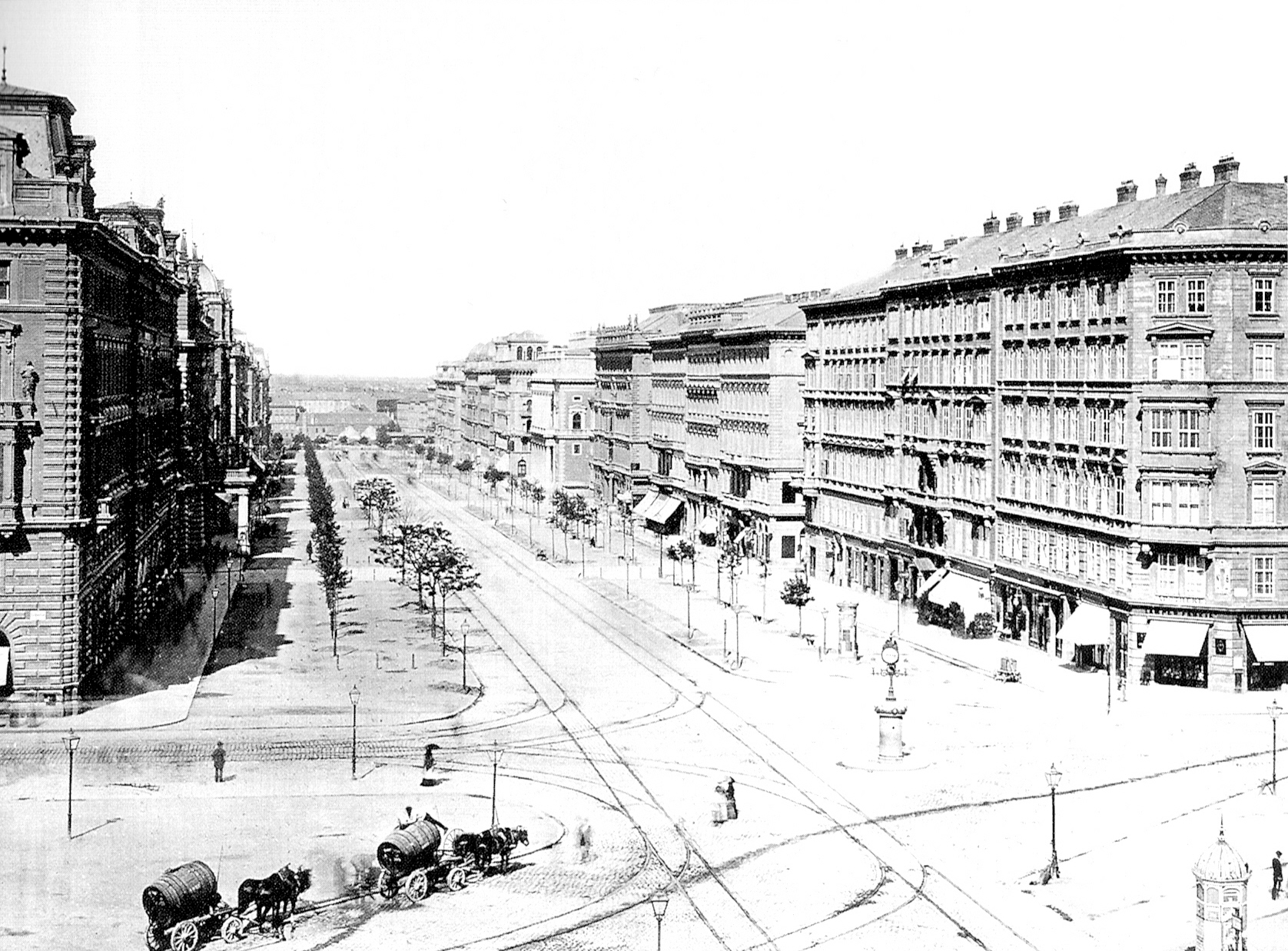
Ringstrasse
The walls that saved Vienna from the Ottomans were paid for by an English king's ransom. In the 1190s, Duke Leopold V used the fortune extracted for the release of Richard the Lionheart - captured near Vienna on his return from the Third Crusade - to fund fortifications around the city. Those walls held through the Ottoman siege of 1529 and the Thirty Years' War. By the mid-19th century, they served no military purpose but still constrained a growing capital, separating the inner city from its suburbs with 500 meters of empty glacis where construction was forbidden. In 1857, Emperor Franz Joseph I issued a decree beginning with the words 'Es ist Mein Wille' - 'It is My Will' - ordering the walls demolished and a grand boulevard built in their place. The Ringstrasse that rose over the next half-century became one of the most ambitious urban planning projects in European history.
An Emperor's Will Made Stone
Franz Joseph's 1857 decree did more than order demolition. It specified the dimensions of the new boulevard, designated locations for public buildings, and laid out the functions each structure would serve. The result was not organic growth but a designed cityscape, a curated sequence of institutions arranged around a 5.3-kilometer loop. Aristocrats and industrialists competed to build prestigious Ringstrassen-palais in what became known as the Ringstrassen-stil, a historicist approach that borrowed freely from the past. The first major building, the Heinrichhof designed by Theophil von Hansen, set the tone. By the time the last structure was completed in 1913 - the Ministry of War - the style had already fallen out of fashion. Otto Wagner's Postal Savings Bank, built in 1906 in the Art Nouveau style directly opposite, announced that architecture had moved on. But the Ring as an ensemble had achieved what Franz Joseph intended: a circular declaration of imperial grandeur.
A Museum Every Few Steps
Walk the Ring clockwise from the Urania observatory and the buildings arrive like chapters in a textbook on European architecture. The Museum of Applied Arts in Renaissance style. The Vienna State Opera, whose opening in 1869 was so poorly received that one of its architects committed suicide. The Hofburg, palace of the Habsburgs, sprawling across centuries of additions. The twin Kunsthistorisches and Naturhistorisches museums facing each other across Maria-Theresien-Platz, identical in form, a symmetry of art and nature. The neoclassical Parliament with its Pallas Athene fountain, featuring allegorical representations of the Danube, Inn, Elbe, and Vltava rivers. The neo-Gothic Rathaus. The Burgtheater. The University of Vienna. The Votivkirche. Each building speaks a different architectural dialect, but together they form a coherent sentence about what an empire valued: law, culture, education, faith, and the display of all four.
Catastrophe and Protest on the Boulevard
The Ring's worst disaster came on December 8, 1881, when the Ringtheater caught fire during a performance, killing several hundred people in one of the deadliest theater fires in European history. The Suhnhaus - an 'atonement house' - was built on the site, itself later destroyed in World War II and replaced by the Vienna Police Headquarters. The boulevard has also served as Vienna's principal stage for political expression. In July 1927, Social Democrats protesting the acquittal of far-right paramilitaries who had killed two party members marched along the Ring; the demonstration escalated into the July Revolt, one of the most violent episodes in interwar Austrian history. That tradition of protest continues: May Day marches, Pride parades, Fridays for Future climate demonstrations, and anti-government rallies all claim the Ringstrasse as their natural path, circling the seat of power they seek to influence.
The Ring Today
The Ringstrasse operates as a three-lane, one-way road running clockwise, serviced by tram lines 1 and 2. Its two bike lanes are Austria's most-used cycling corridors, though activists note they are frequently interrupted by intersections and occasionally shared with pedestrians in tourist-heavy areas. Nine named sections mark the circuit: Stubenring, Parkring, Schubertring, Karntner Ring, Opernring, Burgring, Dr.-Karl-Renner-Ring, Universitatsring, and Schottenring, most named for the landmark they pass. Parks punctuate the built environment - the Stadtpark with its golden Johann Strauss II statue, the Burggarten behind the Hofburg with its Mozart memorial, the Volksgarten and Rathauspark offering green breathing room between stone monuments. UNESCO designated the historic center, including the Ringstrasse, as a World Heritage Site, though the listing has faced pressure from modern development. The tension between preservation and progress is itself a Viennese tradition - the Ring, after all, was built by tearing down the medieval walls that preceded it.
From the Air
The Ringstrasse traces a distinctive horseshoe shape at 48.205°N, 16.363°E around Vienna's Innere Stadt, clearly visible from altitude as a broad boulevard encircling the historic center. The loop is broken along the northeast where the Franz-Josefs-Kai runs along the Donaukanal. Look for the green rectangles of the Stadtpark, Volksgarten, Burggarten, and Rathauspark interrupting the urban fabric along the Ring. The twin domes of the Kunsthistorisches and Naturhistorisches museums mark the southwestern section. Vienna International Airport (LOWW/VIE) lies 18km to the southeast. St. Stephen's Cathedral spire is the most prominent vertical landmark within the Ring's perimeter.