Ringve Museum
Victoria Bachke fled the Russian Revolution and landed in Trondheim. Christian Anker Bachke had grown up on Ringve Farm, the childhood home of the Danish-Norwegian naval hero Peter Tordenskjold. They married in late 1919, had no children, and poured their considerable energies into assembling a collection of historical musical instruments that eventually numbered around 1,500 pieces. When Victoria opened the collection to the public in 1952, Ringve Museum was born -- Norway's national museum for music, housed in an 18th-century manor on the Lade peninsula with views across the Trondheimsfjord. The instruments she gathered still play. Guides -- often graduate music students -- perform on them during tours, filling period rooms with the sounds these objects were built to make.
A Russian Emigre's Second Life
Victoria Rostin was an artist who escaped the upheaval of 1917 and eventually settled in Norway. Her marriage to Christian Bachke gave her both a home and a mission. Ringve Farm had history -- the first house on the site was built in 1521, and the current buildings date from the 1740s onward -- but the Bachkes gave it a new purpose. Their collection grew beyond instruments to include pictures, recordings, and artifacts associated with the history of music. Over the years, the farm attracted famous visitors: pianist Artur Schnabel, Ignaz Friedman, Percy Grainger, the soprano Kirsten Flagstad, and the artist Edvard Munch all came to Ringve. After Christian's death in 1946, Victoria devoted herself entirely to realizing their shared vision. She opened the museum six years later and directed it until Jon Voigt succeeded her in 1963.
Rooms That Play Themselves
The manor house exhibition is organized not by chronology but by composer. A Mozart room contains a spinet, a clavichord, and an 18th-century house organ beneath a Murano glass chandelier. The Beethoven room holds an 1870 harp piano by Dietz alongside the type of piano the composer favored. The Chopin room displays the pianos he preferred, his death mask, and casts of his hands, along with watercolors by George Sand and a card table and sofa from his Paris home -- inherited by his Norwegian pupil Thomas Tellefsen. Upstairs, rooms are dedicated to the singers Elisabeth Wiborg and Adelina Patti, to Hardanger fiddles, to Edvard Grieg, and to instruments of worship. A final room of curiosities includes a Cecilium, a Norwegian barrel organ, musical toys, and a Janko piano. What distinguishes the tour is sound: the guides do not merely point at instruments behind glass but sit down and play them.
Four Centuries in a Barn
The Barn -- Museet pa Laven -- takes a broader view. One section traces four centuries of Western classical and popular music through objects: a Kirkman harpsichord from 1767, an Erberle viola d'amore from 1755, a five-octave Stein piano from 1783, a soprano saxophone made by Adolphe Sax's son in 1907, early electronic instruments, and a 1948 jukebox. The other section gathers folk instruments from around the world -- a Runebomme, a type of Sami drum; a Tibetan zang-dang horn; a nadomo arched harp from Congo; and Hardanger fiddles from closer to home. The range is deliberate. Music is universal, but its instruments are stubbornly local, shaped by the materials and traditions of particular places. Ringve makes that tension visible and audible.
Fire and Recovery
On August 3, 2015, fire tore through the manor's attic and second floor. The damage was severe -- a "nightmare," as one English-language headline put it. For a museum whose identity was built around irreplaceable historic instruments in period settings, the fire threatened not just the building but the entire concept Victoria Bachke had created. Recovery has been ongoing, a process of restoring both structure and collection. The fire added Ringve to the long list of Norwegian cultural institutions that have contended with flame -- Nidaros Cathedral burned five times -- and underscored the fragility of wooden buildings in a country that has relied on timber for a thousand years.
The Garden That Surrounds the Music
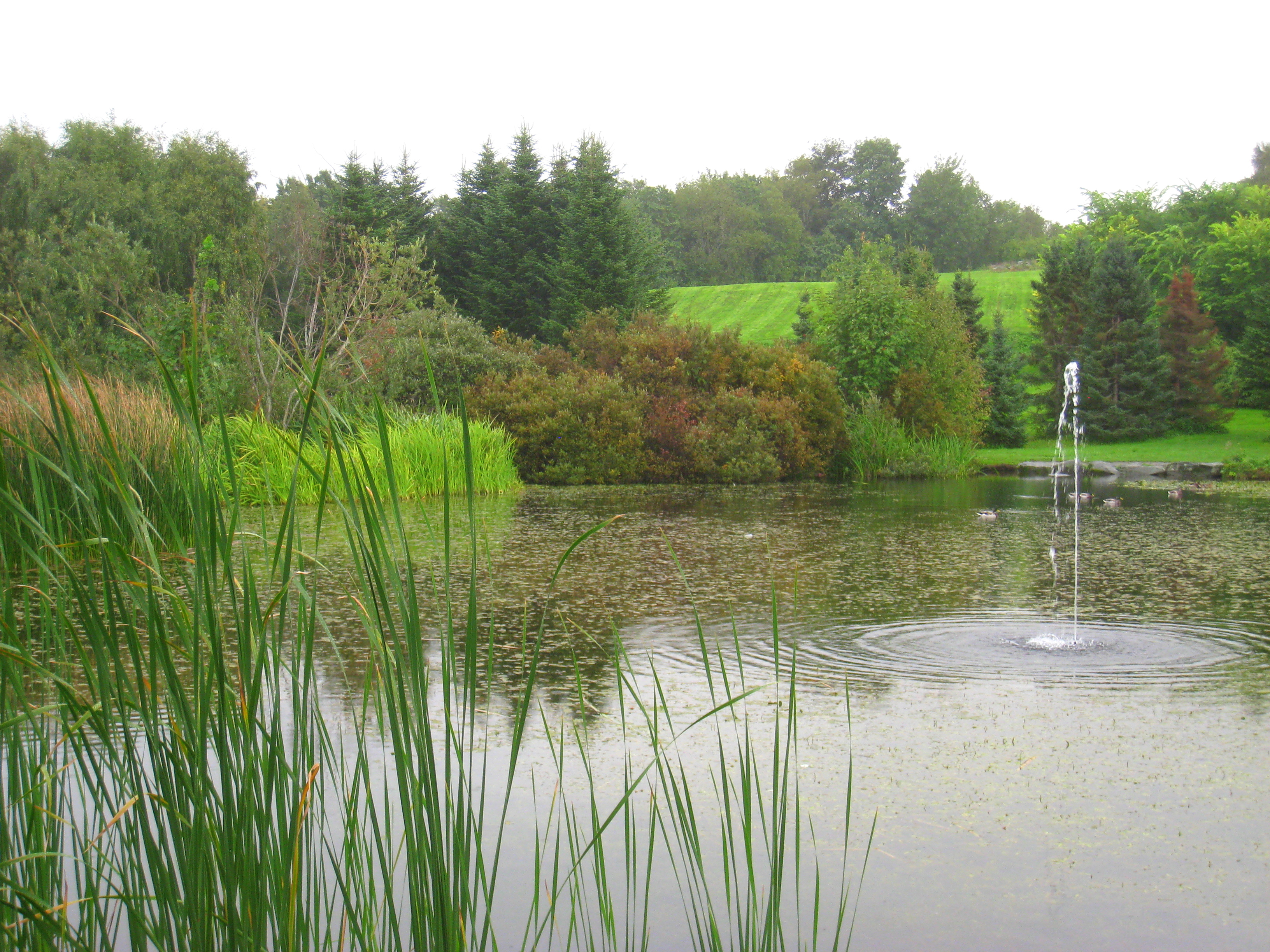
Ringve sits within 32 acres of botanical gardens run by NTNU, established in 1973. The gardens include an arboretum of Northern Hemisphere species arranged around a lake, a Renaissance herbal garden, a floral maze presenting perennial plants in systematic order, and the historical English garden from the 1800s that fronts the manor house. The setting matters. Ringve is not a music museum that happens to have a garden; the garden and the museum form a single experience, one where sound and landscape merge. On the Lade peninsula, with the Trondheimsfjord stretching beyond the trees, the combination of 18th-century architecture, living plants, and centuries-old instruments creates something singular -- a place where culture and nature have been cultivated side by side since long before the word "museum" was attached to it.
From the Air
Ringve Museum is located at 63.448°N, 10.456°E on the Lade peninsula northeast of central Trondheim. The historic manor house and surrounding botanical gardens are visible from the air, with the Trondheimsfjord to the north and east providing a striking backdrop. Recommended viewing altitude: 2,000-3,000 feet to see the gardens, manor house, and barn exhibition building in context. Nearest airport: Trondheim Airport Vaernes (ENVA), approximately 28 km east. The Lade peninsula itself is a recognizable landform jutting into the fjord.