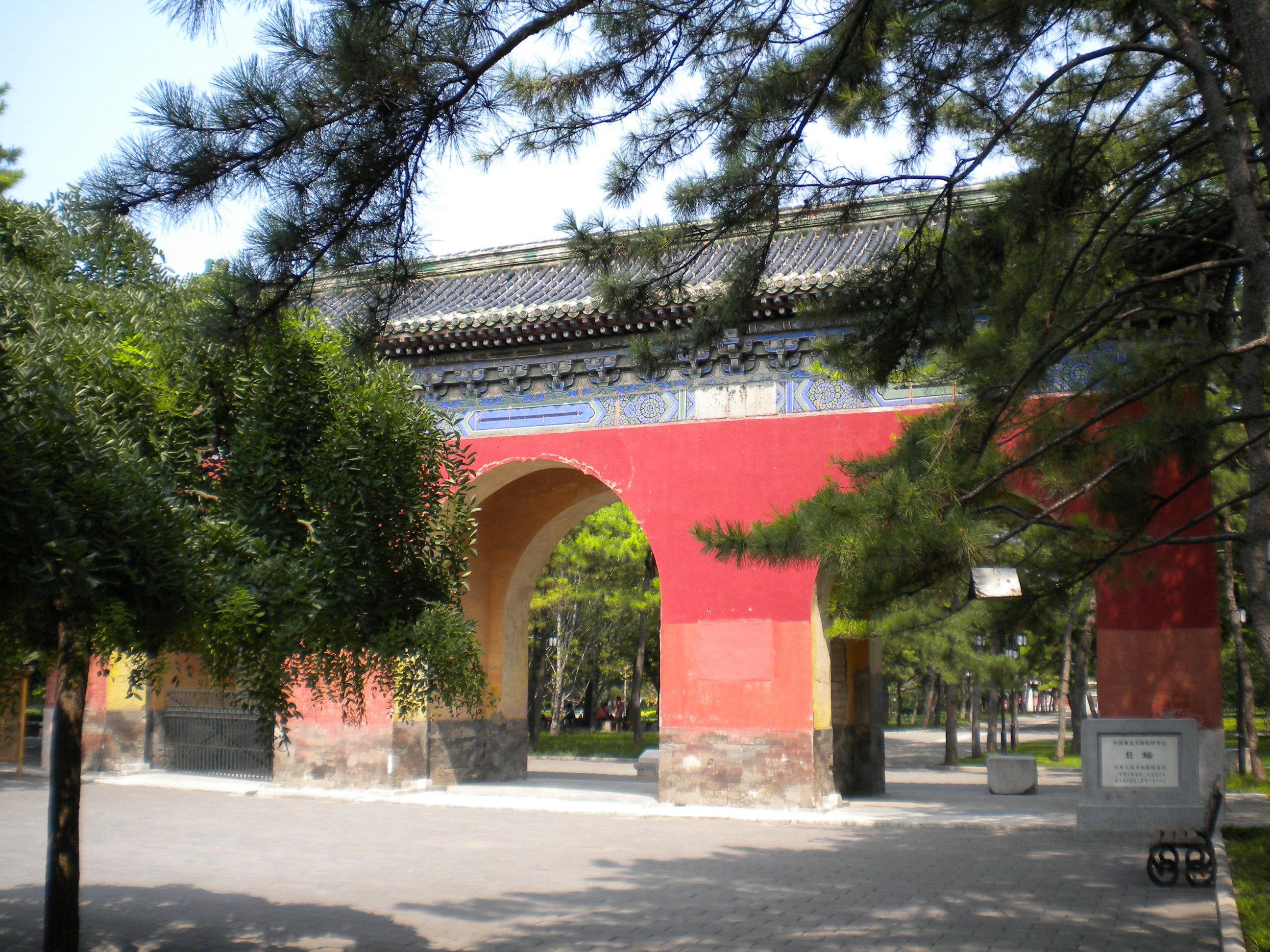
Ritan Park
Every morning, before the embassies open and the diplomatic traffic begins, elderly Beijingers practice tai chi among the trees of Ritan Park. They move through forms perfected over centuries on ground that was consecrated for an even older ritual: the emperor's annual sacrifice to the sun. The park sits at the intersection of two Beijings -- the imperial city of altars and ceremonies, and the modern capital of embassies and commerce -- and it holds both comfortably.
The Altar of the Sun
In 1530, during the late Ming dynasty, an altar was constructed here for the emperor's ritual sacrifice to the sun. The original structure was a rectangular white-stone platform covered with red glaze, with four stairways of nine steps each aligned to the cardinal directions. The altar measured roughly 18 meters on each side and stood about 2 meters high. Upon entering the grounds, the emperor would pass through the Heavenly West Gate and proceed along the Sacred Way to the sun altar -- a processional route designed to transition the ruler from the earthly realm to the cosmic. The temple was destroyed and rebuilt, reopening in 1556, and continued to serve its ceremonial function for centuries until it was abandoned after the fall of the Qing dynasty in 1911.
From Sacred Ground to Public Park
After decades of neglect, the site was renamed Ritan Park in 1949 and reopened to the public in 1951. The transformation from imperial altar to public green space mirrored the broader reshaping of Beijing under the People's Republic. In the 1970s, as foreign embassies relocated to the surrounding Chaoyang District, the park found itself at the center of a new diplomatic quarter -- an accidental echo of its original purpose as a place where power met ceremony. The 1980s brought further changes: the park was restored and expanded southward with the addition of the Quchi Shengchun garden, and a Sun Mural was installed to commemorate Deng Xiaoping's reform and opening-up policies.
Beijing's Quietest Corner
Ritan -- literally "Altar of the Sun" -- is one of Beijing's four directional altars. To the west sits the Temple of the Moon in Fuchengmen, creating a symmetrical pair that once reflected the cosmological order the emperor was expected to maintain. Today, extensive gardens surround the restored altar, and a small lake offers a pocket of calm amid one of the city's most international neighborhoods. A Sino-Japanese Friendship Monument stands somewhere in the greenery, though it is notoriously difficult to find and poorly marked. The park is free and open around the clock, with restaurants and snack vendors operating within its borders -- a place where the rhythms of daily life play out on ground that once witnessed the most solemn rituals in the Chinese imperial calendar.
From the Air
Located at 39.914N, 116.438E in Chaoyang District, within Beijing's embassy district. The park's green space is visible as an oasis amid the surrounding commercial and diplomatic buildings. The Temple of the Moon sits directly opposite, to the west across the city center. Nearby airports: Beijing Capital International (ZBAA) 22 km NE, Beijing Daxing International (ZBAD) 48 km S. Best viewed at 2,000-4,000 ft.