Roanoke Colony
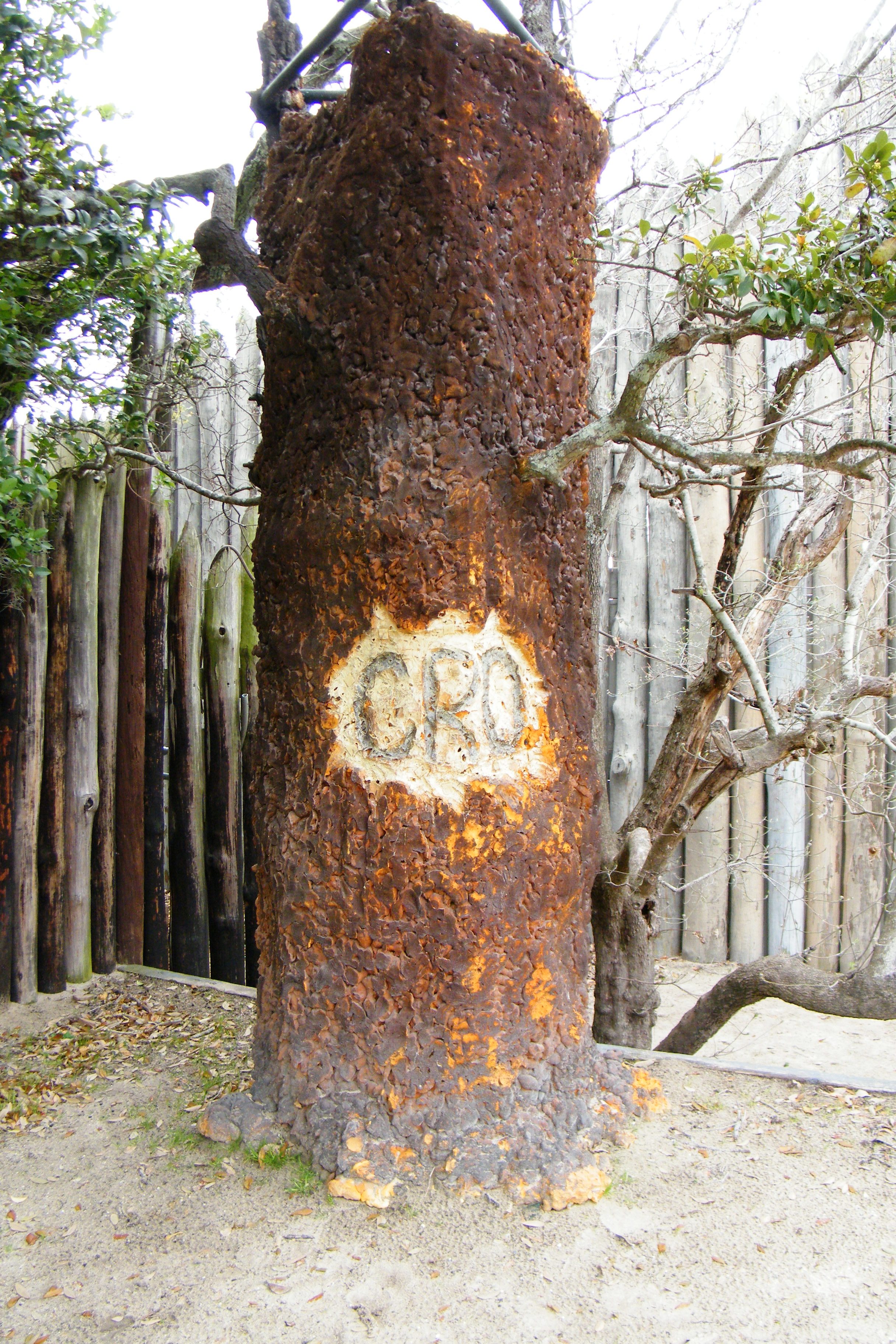
On the morning of August 18, 1590, John White stepped ashore on Roanoke Island for the first time in three years. It was his granddaughter Virginia Dare's third birthday. He found fresh footprints in the sand, the letters "CRO" carved into a tree, and the word "CROATOAN" cut into a post at the entrance of a new palisade. The houses inside had been dismantled. The boats were gone. His three personal trunks had been dug up and looted. Of the 115 men, women, and children he had left here in 1587 -- including his daughter Eleanor and the infant Virginia, the first English child born in the Americas -- there was no sign. White was certain they had relocated peacefully to nearby Croatoan Island. He never got the chance to follow them. A snapped anchor cable and rising seas forced his ship back to England, and he never returned to the New World.
Raleigh's Gamble
The story begins with a charter and a deadline. In March 1584, Queen Elizabeth granted Sir Walter Raleigh the right to colonize lands not claimed by other Christian kingdoms, with the stipulation that he establish a colony by 1591 or forfeit the claim. Raleigh could not go himself -- the Queen forbade him to leave her side -- so he sent surrogates. An initial scouting expedition in 1584 under Philip Amadas and Arthur Barlowe returned with glowing reports of Roanoke Island's strategic position and the hospitality of the local Secotan people, along with two Native Americans: Wanchese, a Secotan, and Manteo, a Croatan. Elizabeth was so pleased she knighted Raleigh and proclaimed the territory "Virginia" in her own honor. The stage was set for England's first foothold in North America.
The Soldiers' Colony
The first attempt, in 1585, was a military outpost of roughly 107 men under Governor Ralph Lane. It was troubled from the start. Sir Richard Grenville's flagship Tiger struck a shoal entering the Outer Banks, ruining most of the food supplies. The colony became dependent on the Secotan for corn, venison, and fish, and relations deteriorated as that dependence grew heavier. When the influential Secotan leader Granganimeo died, his brother Wingina -- now calling himself Pemisapan, meaning "one who watches" -- turned against the English. He evacuated his people from the island and destroyed the fishing weirs. Lane responded with a preemptive strike: on June 1, 1586, he and twenty-five men attacked a Secotan council meeting at Dasamongueponke. Pemisapan was shot, chased into the woods, and beheaded. His head was impaled outside the fort. Days later, when Sir Francis Drake's fleet appeared off the Outer Banks, Lane convinced his starving men to abandon the colony and sail home.
The Families Arrive
Despite this bloody failure, Raleigh tried again. The 1587 colony was different in every way that mattered: instead of soldiers, it comprised middle-class London families, including women and children, seeking to become landed gentry in the New World. John White was appointed governor, and the plan was to bypass Roanoke entirely and establish the "Cittie of Raleigh" on Chesapeake Bay. But the ship's pilot, Simon Fernandes, had other ideas. When the colonists stopped at Roanoke to check on fifteen men Grenville had left behind, Fernandes refused to take them any farther. They found the earlier garrison gone -- just human bones and overgrown houses. Stranded, the colonists settled in. On August 18, 1587, White's daughter Eleanor gave birth to Virginia Dare, the first English child born in the Americas. Nine days later, the colonists persuaded a reluctant White to return to England for supplies. He expected to come back within months.
Three Years of Silence
White's return was blocked at every turn. The Spanish Armada was mobilizing, and Queen Elizabeth embargoed all seaworthy ships for England's defense. White managed to secure two small vessels in April 1588, but their captains went privateering instead of heading for Roanoke and were attacked by French pirates near Morocco, losing the colonists' supplies. The defeat of the Armada brought no relief -- England maintained its shipping ban to organize a Counter Armada against Spain. It was not until 1590 that White secured passage on a privateering expedition, and even then, the ships spent months raiding the Caribbean before finally heading north. By the time White reached Roanoke Island on August 18, 1590, his colonists had been on their own for three years through what climate researchers would later identify as the worst drought in 800 years.
The Mystery That Endures
Over four centuries of investigation have produced theories but no certainty. The Jamestown colonists heard reports in 1607 that the Roanoke settlers had been massacred by the Powhatan chief Wahunsenacawh, yet John Smith also encountered stories of men in European clothing living in villages beyond Powhatan territory. Explorer John Lawson visited Hatteras Island in 1701 and met the Hatteras people, who told him several of their ancestors had been white and showed him gray-eyed children. Archaeological digs on Hatteras Island have uncovered European artifacts -- part of a sword, a gun fragment, an olive jar -- mixed with Native American materials. In 2020, excavations found hammerscale, the tiny metal flakes produced by iron forging, in soil dated to the late sixteenth century. Climate research confirmed a devastating drought between 1587 and 1589, the worst growing season in an 800-year record. The most widely accepted theory today is that the colonists, unable to sustain themselves, dispersed among friendly tribes -- the Croatan, the Chowanoke, perhaps others -- and were gradually absorbed. The present-day Lumbee tribe of North Carolina identifies as descendants of both the Croatan and the Lost Colonists. The word "CROATOAN" was not a cry for help. It was a forwarding address.
From the Air
Roanoke Island is located at 35.94N, 75.71W, visible from the air as a distinct landmass between Croatan Sound and Roanoke Sound within the Outer Banks system. Fort Raleigh National Historic Site preserves the colony location on the island's north end. Best viewed from 3,000-8,000 feet where the island, surrounding sounds, and barrier islands are all visible. Dare County Regional Airport (KMQI) is on the island in Manteo. First Flight Airport (KFFA) at Kill Devil Hills is nearby. Croatoan Island (modern Hatteras Island) stretches south along the Outer Banks and is visible as the long, narrow barrier island curving southwest.