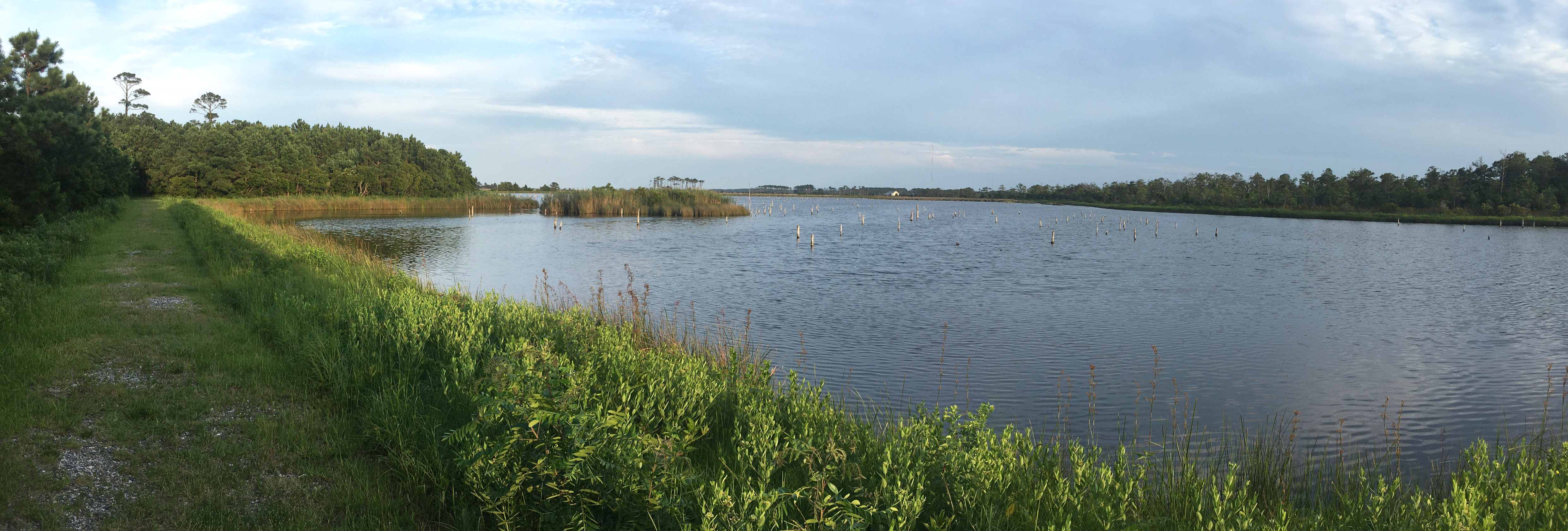
Roanoke Island Lost Colony
In 1587, 117 English men, women, and children established a colony on Roanoke Island off the coast of present-day North Carolina. Among them was Virginia Dare, the first English child born in the Americas. Their leader, John White, sailed back to England for supplies, only to be delayed for three years by the Spanish Armada. When he finally returned in 1590, the colonists had vanished. No bodies. No graves. No signs of struggle. The only clues were the word 'CROATOAN' carved on a post and 'CRO' carved on a nearby tree - apparently references to a nearby island and its Native American inhabitants. White wanted to investigate but storms forced him to abandon the search. The Lost Colony of Roanoke has remained America's oldest unsolved mystery, inspiring theories ranging from massacre to assimilation to removal to places unknown. What happened to those 117 souls? After more than four centuries, we still don't know.
The Colony
Roanoke was England's second attempt to establish a colony in the New World. The first, in 1585, had failed after conflicts with local Native Americans and supply problems. Sir Walter Raleigh, who held the charter to Virginia, tried again in 1587 with a different approach: families rather than soldiers, a planned settlement rather than a military outpost. Governor John White, an artist who had visited Roanoke before and whose maps and drawings provide our best visual record of the Algonquian peoples, led the expedition. The colonists included his pregnant daughter Eleanor, who gave birth to Virginia Dare on August 18, 1587. Almost immediately, the colony faced difficulties. Relations with the local Secotan and Croatoan peoples were complicated by the violence of the previous expedition. Supplies ran short. White reluctantly agreed to return to England for help, leaving behind his daughter, granddaughter, and 115 others.
The Delay
White arrived in England in November 1587, expecting to return with supplies within months. He never anticipated being stranded for three years. England was preparing for war with Spain, and Queen Elizabeth I prohibited any ships from leaving - every vessel was needed for defense. The Spanish Armada attacked in 1588; its defeat gave England naval supremacy but did nothing for the stranded colonists. White managed to arrange two small vessels in 1588, but they were attacked by pirates and forced to return. It was not until August 1590 that he finally returned to Roanoke, sailing with a privateering expedition that stopped at the island almost as an afterthought. What he found was silence.
CROATOAN
The settlement was abandoned, the houses dismantled, and the palisade around the compound removed - signs of planned departure rather than sudden attack. Before leaving, White had arranged a signal: if the colonists had to leave, they would carve their destination on a tree. If they were in danger, they would add a Maltese cross. What White found was 'CROATOAN' carved on a post and 'CRO' on a tree, with no cross. Croatoan Island - now Hatteras Island - was fifty miles south, home to a friendly tribe who had sheltered previous English visitors. The logical conclusion was that the colonists had relocated there. But storms prevented White from sailing to Croatoan. He never returned to America, dying in obscurity without learning his family's fate.
The Theories
Four centuries of investigation have produced multiple theories. The colonists may have assimilated with the Croatoan or other tribes, their descendants noted by later explorers who described gray-eyed Natives speaking English words. They may have moved inland, with some researchers pointing to the Lumbee tribe, who showed European features and knew English before recorded contact. They may have tried to sail home and been lost at sea. They may have been killed by drought, disease, or hostile tribes - core samples show the late 1580s brought the worst drought in eight hundred years. Archaeological excavations have found scattered artifacts but no definitive proof of any theory. A 2012 reanalysis of White's maps revealed hidden symbols suggesting the colonists planned to move inland to a specific location, prompting new searches that continue today.
Visiting Roanoke Island
Fort Raleigh National Historic Site on Roanoke Island preserves the area where the colony was established. The earthwork fort, reconstructed based on archaeological evidence, provides a sense of the colonists' desperate situation. The visitor center explains the colony's history through exhibits and artifacts. Nearby, the Elizabethan Gardens offer a memorial garden in the style of sixteenth-century England. Each summer since 1937, 'The Lost Colony,' America's longest-running outdoor drama, has told the story in an amphitheater overlooking Roanoke Sound. The play takes considerable dramatic license but captures the mystery's emotional power. Roanoke Island lies within the Outer Banks of North Carolina, connected by bridge to the mainland. Manteo, the island's main town, offers lodging and dining. The Wright Brothers National Memorial is nearby. Norfolk International Airport (ORF) is 80 miles north. The mystery of the Lost Colony remains unsolved, waiting perhaps for some future excavation to reveal where 117 people went and why they never came back.
From the Air
Located at 35.87°N, 75.67°W on Roanoke Island in the Outer Banks of North Carolina. From altitude, Roanoke Island appears as a small island between the Albemarle and Pamlico Sounds, connected to the mainland by bridges. The Outer Banks barrier islands extend north and south. Fort Raleigh National Historic Site is visible on the north end of the island.