Robert E. Galer
Robert Galer was shot down three times and kept flying. Born in Seattle on October 24, 1913, the University of Washington student was better known on campus as a basketball All-American than as a future combat pilot. But by the summer of 1942, Major Galer was leading Marine Fighting Squadron 224 over the jungles and waters of Guadalcanal, where the desperate early months of the Pacific War were being fought one island at a time. In just weeks of combat with the Cactus Air Force, he was credited with eleven confirmed aerial victories and earned both the Medal of Honor and the rare British Distinguished Flying Cross for the same acts of heroism. His superiors eventually grounded him, not as punishment but because the Marines could not afford to lose a Medal of Honor recipient. He had already proven three times over that he was willing to go down with his aircraft.
From the Basketball Court to Pearl Harbor
Galer grew up in Seattle and attended the University of Washington, where he pledged the Alpha Upsilon chapter of Phi Kappa Sigma and distinguished himself on the basketball court as an All-American. His path to military aviation began before the war reached American shores. By January 1941, he was stationed in Hawaii, promoted to captain by March. On December 7, 1941, Galer was serving at Marine Corps Air Station Ewa on Oahu with Marine Fighting Squadron 211 when the Japanese attacked Pearl Harbor. The strike destroyed or damaged nearly every aircraft on the field. Galer survived the attack and within months was given a command that would define his life.
Eleven Kills Over Guadalcanal
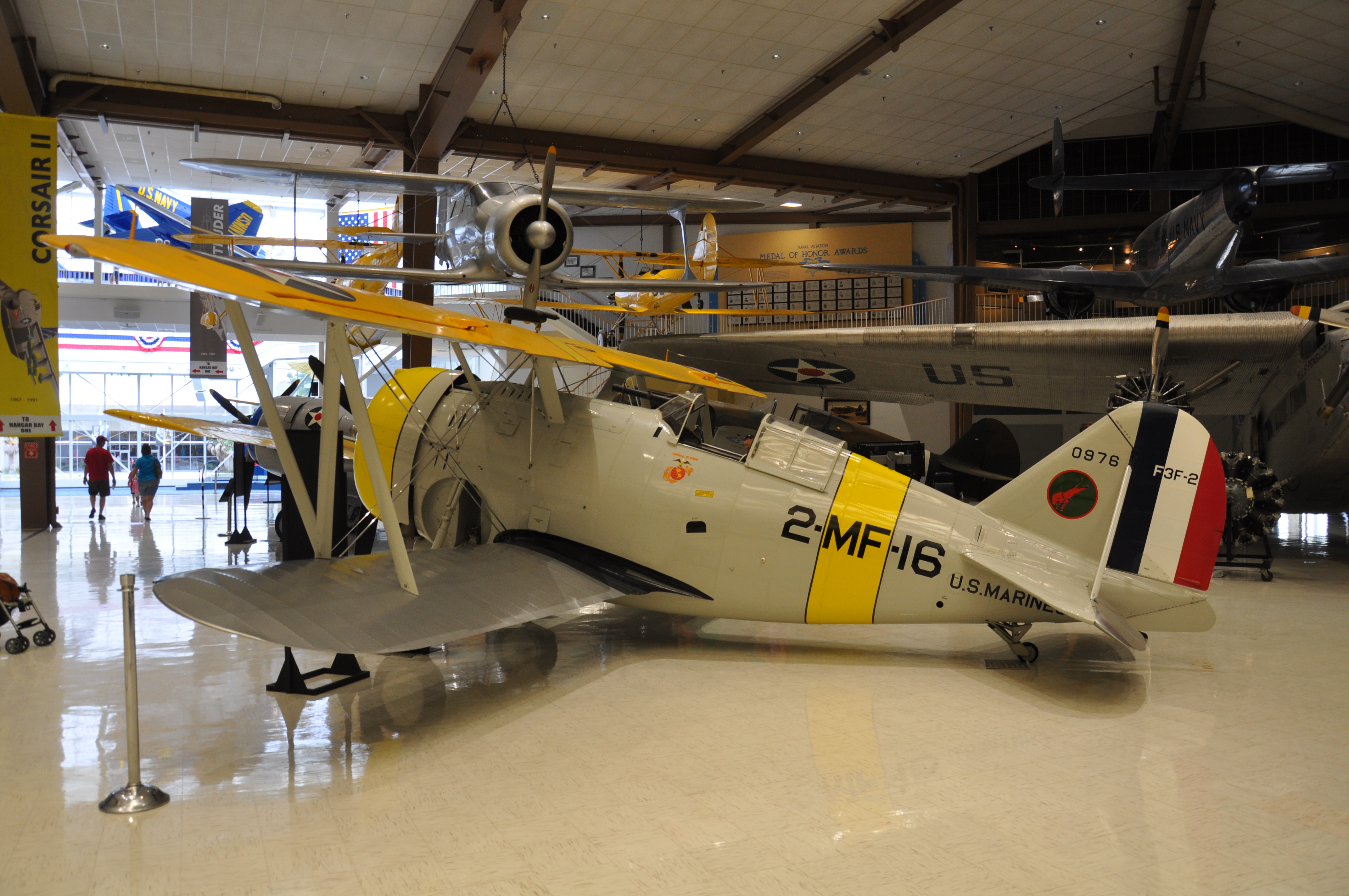
In May 1942, Galer assumed command of VMF-224. On August 30, he led the squadron to Henderson Field on Guadalcanal, joining the improvised collection of Marine, Navy, and Army Air Force pilots known as the Cactus Air Force. Conditions were brutal: the airstrip was a muddy, cratered target under near-constant Japanese bombardment, and the pilots flew against superior numbers with limited fuel and spare parts. Galer thrived in the chaos. Flying his Grumman Wildcat against Japanese bombers and fighters, he racked up eleven confirmed kills. He was shot down three times during the campaign, each time surviving to climb back into another cockpit. On March 24, 1943, President Franklin D. Roosevelt presented Galer with the Medal of Honor at the White House. After the ceremony, Galer was sent to Marine Corps Air Station Miramar as an assistant operations officer and grounded. The reasoning was straightforward: a Medal of Honor recipient was too valuable a symbol to risk losing in combat.
A Second War and a Quiet Retirement
Galer's military career did not end with World War II. He returned to active service during the Korean War, commanding Marine Aircraft Group 12. After Korea, he cycled through senior staff positions, studying at the Air War College at Maxwell Air Force Base and earning a master's degree in engineering administration from George Washington University. His final military posting was as acting director of the Guided Missiles Division in the Navy's Bureau of Aeronautics, a role that placed a combat ace at the forefront of the missile age. He retired on July 31, 1957, and was advanced to brigadier general for exceptionally meritorious service. In civilian life, Galer served as a vice president at the conglomerate Ling-Temco-Vought and later worked as an executive with Bright and Company. He died on June 27, 2005, at the age of 91.
The Memorial That Almost Wasn't
Galer's connection to the University of Washington resurfaced in an unexpected way after his death. In 2006, the student senate debated a resolution to honor UW alumni who had received the Medal of Honor. The initial proposal, focused on fellow UW alumnus and Marine ace Gregory "Pappy" Boyington, was defeated after some senators questioned whether military figures were the kind of people the university should memorialize. The controversy drew national attention. A revised resolution, broadened to honor all eight UW alumni who earned the Medal of Honor, passed by a vote of 64 to 14 on April 4, 2006. The privately funded memorial was completed in time for a Veterans Day dedication in November 2009, placed at the south end of Memorial Way between Parrington and Kane Halls. It honors Galer alongside Boyington, Deming Bronson, Bruce Crandall, John Hawk, Robert Leisy, William Nakamura, and Archie Van Winkle. The inscription reads: "Ordinary individuals facing extraordinary circumstances with courage and selflessness answer the call and change the course of destiny."
From the Air
Robert E. Galer's story is rooted in Seattle, centered at approximately 47.657N, 122.310W near the University of Washington campus. The UW Medal of Honor memorial sits at the south end of Memorial Way, north of Red Square, visible as part of the university's central campus along the western shore of Lake Washington's Union Bay. The campus is identifiable from the air by Husky Stadium on the waterfront and the distinctive Drumheller Fountain axis. Nearest airports: Boeing Field (KBFI) 6nm south, Kenmore Air Harbor (S60) 5nm north, Renton Municipal (KRNT) 9nm southeast. Best viewed at 2,000-3,000 feet approaching from the east over Lake Washington, where the full UW campus and Montlake neighborhood are spread below.