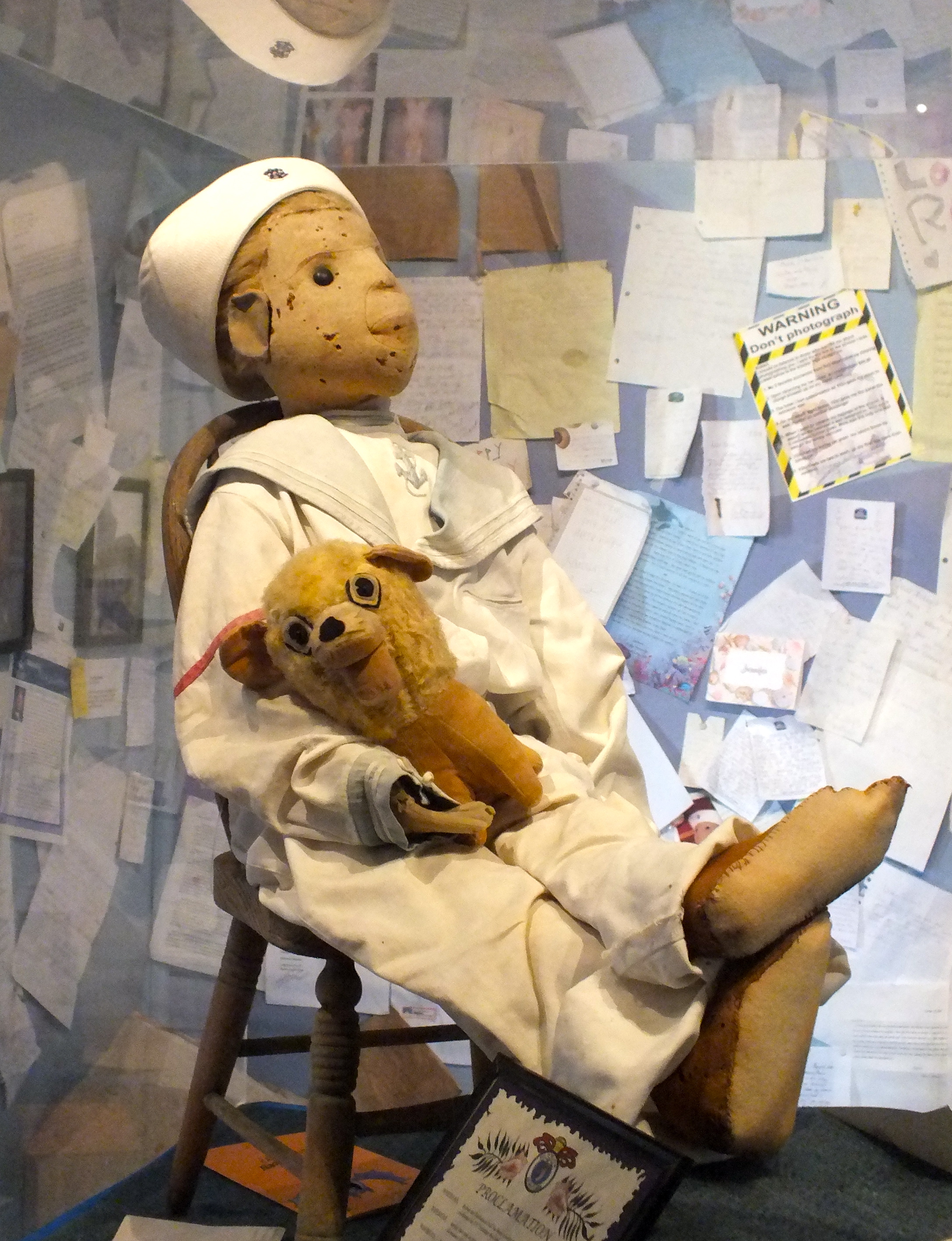
Robert the Doll
In the East Martello Museum in Key West, Florida, a child-sized doll sits in a glass case, clutching a stuffed lion, wearing a sailor suit, and allegedly ruining lives. Robert the Doll was given to Robert Eugene Otto in 1904, either as a gift or a curse from a family servant. Strange things happened immediately: furniture moved, voices came from an empty room, Robert blamed everything on the doll ('Robert did it'). The doll remained in the family's Key West house for decades, terrifying visitors and allegedly tormenting subsequent owners. Today, Robert resides in the museum, where he receives letters of apology from visitors who photographed him without permission and subsequently suffered misfortune. The museum's walls are covered with these letters. Robert, whatever his origins, has become Key West's most famous resident.
The Origins
Robert Eugene Otto was born in 1900 to a wealthy Key West family. In 1904, according to legend, a Haitian servant who practiced voodoo gave the boy a doll - either as a gift or as revenge for mistreatment by the family. The doll was homemade, stuffed with excelsior (wood shavings), dressed in a sailor suit Robert had worn as a toddler, and roughly human in size. Young Robert named the doll after himself and became inseparable from it. The servant's alleged curse: the doll would be Robert's friend, and Robert would never have another. Whether any of this is true is unknowable; the legend began decades later.
The Stories
According to family accounts, strange things happened around Robert from the beginning. Furniture moved in the night. Giggling came from Robert's room when he was alone. The boy blamed the doll for any mischief. Servants claimed the doll moved when they weren't looking. Guests reported seeing the doll's expression change. Robert grew up, became an artist, married, and kept the doll. His wife allegedly hated it; Robert allegedly gave the doll its own room. After Robert Eugene's death in 1974, the house was sold and the doll remained - the new owners found it in the attic and were soon experiencing their own disturbances.
The Museum
In 1994, Robert was donated to the East Martello Museum, a Key West institution housed in a Civil War-era fort. The doll became the museum's star attraction. Visitors noticed something odd: people who photographed Robert without asking his permission first seemed to experience bad luck afterward. The practice of asking permission began - visitors address the doll directly, request permission to photograph, and wait for some sign of acknowledgment. Those who fail to do so sometimes write to the museum later, apologizing to Robert and describing their misfortunes. The museum displays these letters, which now number in the thousands.
The Letters
The letters to Robert are remarkable documents of belief. People describe car accidents, job losses, relationship failures, and health problems that they attribute to photographing the doll without permission. They beg Robert's forgiveness. They promise never to be so disrespectful again. The letters come from around the world, from people who seemed rational enough to travel to Key West but irrational enough to believe a doll caused their misfortunes. Or are they? The letters represent something deep about human psychology - the need to explain misfortune, to find agency behind randomness. Robert provides that agency.
Visiting Robert
Robert the Doll is displayed at the East Martello Museum at 3501 South Roosevelt Boulevard in Key West, Florida. The museum is open daily; admission includes Robert and the rest of the fort's collections. When photographing Robert, the tradition is to ask his permission first and wait for a response (even if you don't believe). Robert's case includes some of the apology letters. The museum shop sells Robert merchandise. Key West is accessible by car (US 1), air (Key West International Airport), and boat. The Artist House, where Robert lived with the Otto family, is at 534 Eaton Street and now operates as a bed and breakfast. Ghost tours often include both locations.
From the Air
Located at 24.55°N, 81.75°W on Key West, Florida, the southernmost point of the continental United States. From altitude, Key West appears as the final island in the Florida Keys chain, connected to the mainland by the Overseas Highway's bridges. The East Martello Museum is on the eastern (Atlantic) side of the island, its fort structure visible. Key West International Airport is adjacent. Old Town, where Robert originally lived, is on the western end. The island's small size and isolation are evident from above - this is the end of the road, literally and figuratively.