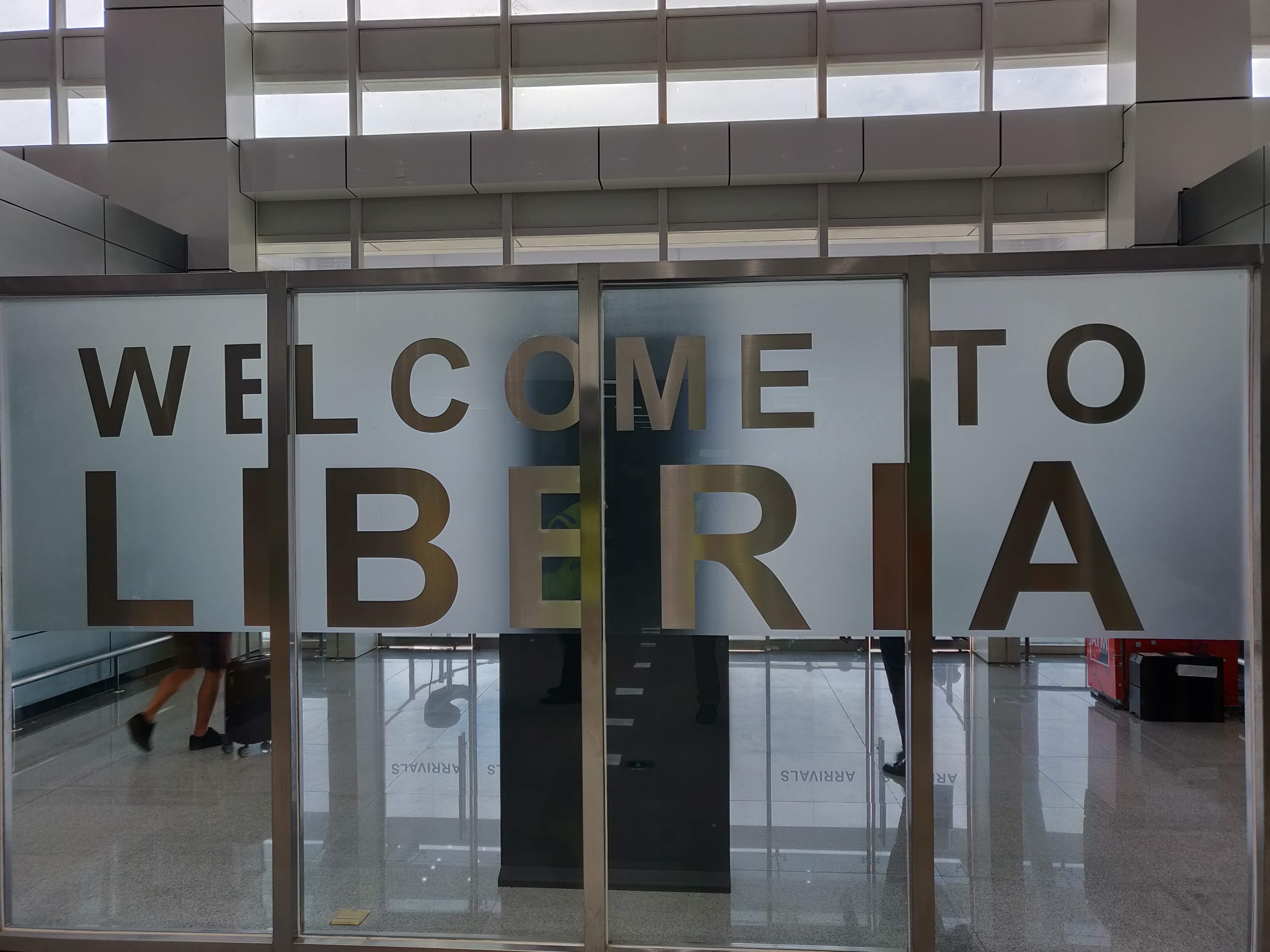
Roberts International Airport
The runway came first, before the country was ready for it. In 1942, Liberia signed a defense pact with the United States, and American military engineers carved an airstrip out of the Margibi County bush long enough for B-47 Stratojet bombers to refuel on their way across the Atlantic. For years it was the longest runway in Africa, an eleven-thousand-foot corridor of concrete that would outlast the war that built it, the airline that made it famous, and the civil conflicts that nearly destroyed everything around it. Named for Joseph Jenkins Roberts, Liberia's first president, Roberts International Airport has spent eight decades as a mirror of the country's fortunes: soaring when Liberia prospered, gutted when it didn't, and rebuilt each time from whatever was left.
When Pan Am Ran the Show
From the end of World War II until 1985, Pan American World Airways operated Roberts Field under contract with Liberia's Ministry of Transport. It was an extraordinary arrangement: a sovereign nation's primary airport managed by a foreign airline. But it worked, at least for Pan Am's purposes. Monrovia became a critical link in the airline's African network, a refueling stop between Accra and Dakar on routes that continued to Europe and New York. By the late 1970s, Robertsfield was Pan Am's principal African hub. Nonstop Boeing 747 service from JFK connected passengers to Dakar, Accra, Abidjan, Lagos, Conakry, Nairobi, and even Johannesburg. Virtually every Pan Am passenger headed for Africa passed through this single runway in the Liberian interior. European carriers followed: British Caledonian with 707s, KLM with DC-8s, Swissair and Sabena with DC-10s. SAS flew weekly from Copenhagen via Dusseldorf and onward to South America. For two decades, Robertsfield punched far above its weight.
A Runway for the Space Age
The same dimensions that served Cold War bombers caught NASA's attention decades later. Roberts International was designated an emergency landing site for the Space Shuttle program, one of a network of runways around the globe where the orbiter could set down if an abort was called during launch. The shuttle never landed there, but the listing speaks to the airport's singular physical asset: that enormous runway, built to military specifications in a country that today has only two airports with paved surfaces. Franklin D. Roosevelt himself visited Roberts Field in January 1943, sharing lunch with Liberian President Edwin J. Barclay. From World War II anti-submarine patrols by South African Vickers Wellington bombers to Cold War strategic refueling to the possibility of a spacecraft emergency, the runway has attracted missions far beyond what its remote location might suggest.
Civil War and the Long Way Back
The Second Liberian Civil War gutted the terminal. The original building, already aging, took direct shelling during attacks in 2003 and sat burnt out and vacant for years afterward. When peace returned and Ellen Johnson Sirleaf was inaugurated in January 2006, commercial service crept back slowly. Royal Air Maroc arrived in 2007, Virgin Nigeria in 2008. The real milestone came in September 2010, when Delta Air Lines launched weekly service between Atlanta and Monrovia, marking the return of a U.S. carrier for the first time since Pan Am's departure. By 2012, Delta was operating Boeing 767s three times a week from JFK, and Robertsfield briefly had the feel of a connecting hub again, with four airlines flying the Accra route daily. Then the bottom fell out. Commodity prices collapsed in 2013 and 2014, Air France pulled its Paris flight, and Delta ceased Monrovia service in August 2014 citing weak demand. Within weeks, the Ebola outbreak forced most remaining airlines to suspend operations.
Terminal Reborn
The airport that emerged from the Ebola years was not the one that entered them. A renovation project launched in 2018 overhauled nearly every aspect of the facility: the tarmac apron expanded from 57,000 to 85,000 square meters, new fire-fighting equipment and safety systems were installed, and the battered runway was resurfaced at a cost of thirty million dollars. The centerpiece was a new two-story passenger terminal, built for fifty million dollars with financing from China's Export-Import Bank, that salvaged the shell of the original war-damaged building. President George Weah rededicated the facility on July 24, 2019. For the first time in Robertsfield's history, passengers walked down jet bridges to board their planes. The terminal was designed to handle 320,000 passengers a year, a number that would have seemed ambitious even before the pandemic. But ambition is baked into the airport's DNA. A runway built for bombers, operated by a legendary airline, listed for spacecraft, destroyed by war, and rebuilt with international financing tells you something about what this place keeps betting on.
From the Air
Roberts International Airport (ICAO: GLRB, IATA: ROB) is located at 6.234N, 10.362W near Harbel in Margibi County, approximately 56 km (35 mi) southeast of central Monrovia. Single runway 04/22, 11,000 ft (3,353 m) paved. The runway and terminal complex are clearly visible from altitude. Served by Brussels Airlines (to Brussels), Royal Air Maroc (to Casablanca), Kenya Airways (to Nairobi via Accra), and regional West African carriers. Spriggs Payne Airport (GLSP) is the secondary airport closer to Monrovia city center. Tropical climate; IFR approaches available via VOR. Caution: limited alternate airports in the region.