Rochester: The Kodak City Where Photography's Capital Lost Its Film
Rochester was a company town for a company that no longer exists. Eastman Kodak at its peak employed 60,000 people in Rochester; the yellow box was everywhere; 'Kodak moment' entered the language. When digital photography destroyed the film business, it destroyed Rochester's economy. Kodak's bankruptcy in 2012 was the culmination of a decade of decline, the end of a company that once seemed eternal. The city of 210,000 has been rebuilding since, leveraging the optics expertise that Kodak created, but the trauma is recent and the recovery incomplete. Rochester is what happens when a city bets everything on one industry and that industry vanishes - a cautionary tale playing out in grand architecture and reduced circumstances.
The Kodak
George Eastman founded Kodak in 1888 and democratized photography - 'You press the button, we do the rest' made cameras accessible to everyone. The company grew into a global giant, the yellow box recognized worldwide, the film processing creating recurring revenue that made shareholders rich. Eastman shared the wealth: he donated to the University of Rochester, founded the Eastman School of Music, built the Eastman Theatre. Rochester prospered on Kodak employment and Kodak philanthropy. The digital transition that killed Kodak was visible for years before the company responded; the response was too little, too late. Kodak still exists in diminished form; the Rochester it built doesn't.
The Eastman
George Eastman's philanthropy shaped Rochester more than his business. The University of Rochester owes its growth to Eastman gifts. The Eastman School of Music, part of the university, is among the world's most prestigious. The Eastman Theatre hosts the Rochester Philharmonic in Italianate grandeur. The George Eastman Museum, in Eastman's former mansion, holds the world's largest collection of photographs and cameras. Eastman gave away $100 million before his death in 1932 - the equivalent of over $2 billion today. The institutions he funded persist; they're more stable than the company he founded.
The Abolition
Rochester was an abolitionist stronghold before the Civil War - Frederick Douglass published his North Star newspaper here from 1847 to 1860, and his home is now a historic site. Susan B. Anthony lived here, was arrested here for voting in 1872, and is buried in Mount Hope Cemetery. Harriet Tubman passed through on the Underground Railroad. The abolitionist heritage gives Rochester a history distinct from its industrial identity - a reminder that the city existed before Kodak and mattered for reasons beyond commerce. The Douglass and Anthony legacies are now tourist assets; the moral courage they represent is heritage worth claiming.
The Falls
The Genesee Falls, in the heart of Rochester, powered the city's early industries - flour mills lined the gorge before Kodak made film the dominant product. High Falls drops 96 feet through a gorge now surrounded by industrial ruins repurposed as restaurants and apartments. The gorge that powered 19th-century manufacturing became 20th-century liability (polluted, neglected) and 21st-century opportunity (cleaned up, redeveloped). The High Falls entertainment district represents Rochester's attempt to find purpose beyond Kodak - using the natural feature that first attracted industry for a post-industrial economy.
Visiting Rochester
Rochester is served by Frederick Douglass Greater Rochester International Airport (ROC). The George Eastman Museum is essential - the history of photography displayed in Eastman's mansion and gardens. The Strong National Museum of Play is America's only museum dedicated to play, with significant collections of toys and games. The Frederick Douglass house and Susan B. Anthony house provide abolitionist context. High Falls offers the gorge views and dining. The University of Rochester campus rewards exploration; the Eastman School concerts are often excellent. The Finger Lakes wine region begins 30 minutes south. Weather is similar to Buffalo: prepare for winter.
From the Air
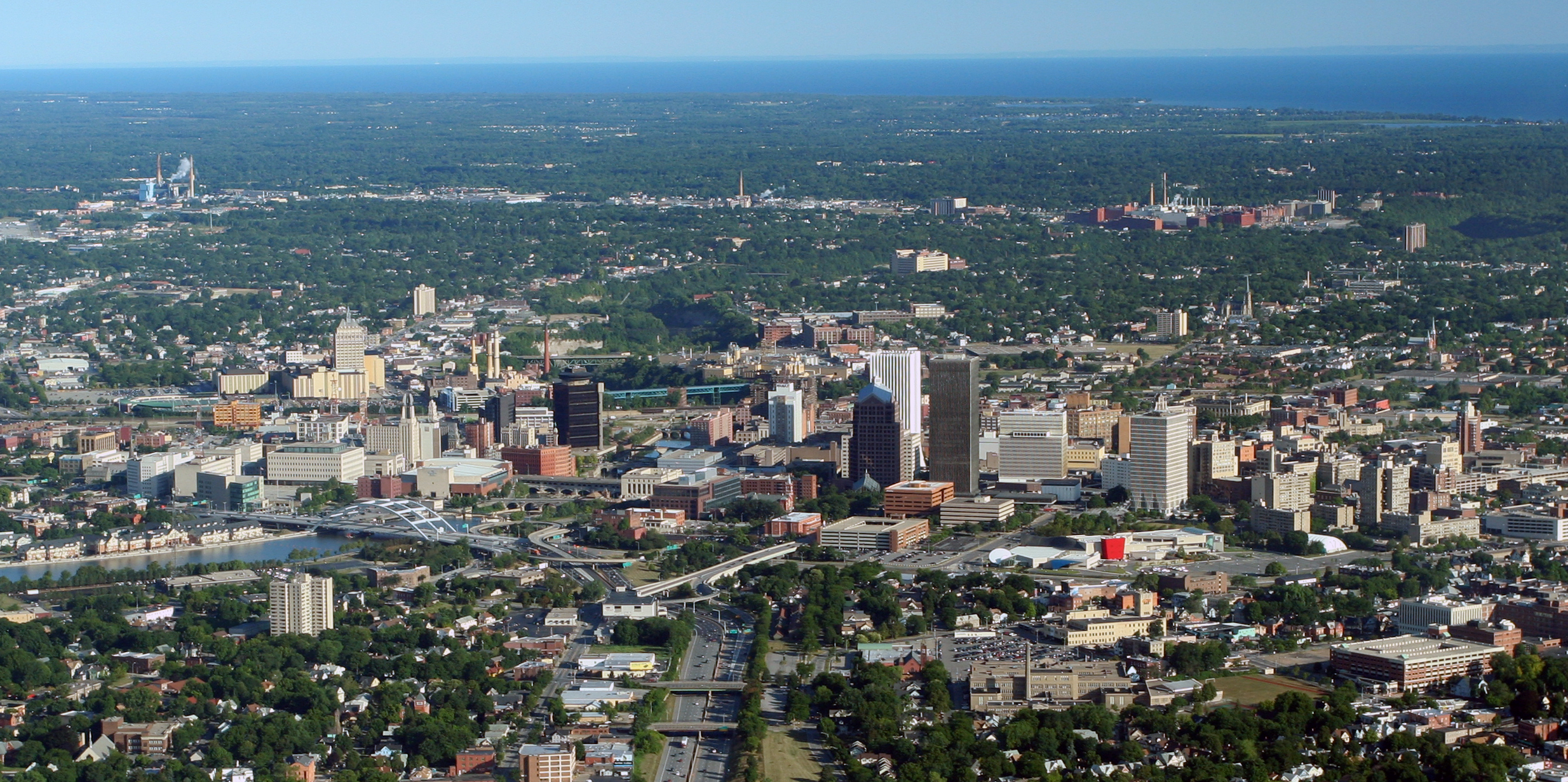
Located at 43.16°N, 77.61°W along the Genesee River in Western New York. From altitude, Rochester appears as urban development where the river cuts through - the Genesee Gorge visible, the university campus identifiable, the sprawl extending in suburban pattern. The Finger Lakes are visible to the south. What appears from altitude as a mid-sized Great Lakes city is the city that Kodak built - where George Eastman democratized photography, where Frederick Douglass published his newspaper, and where the transition from analog to digital collapsed an economy.