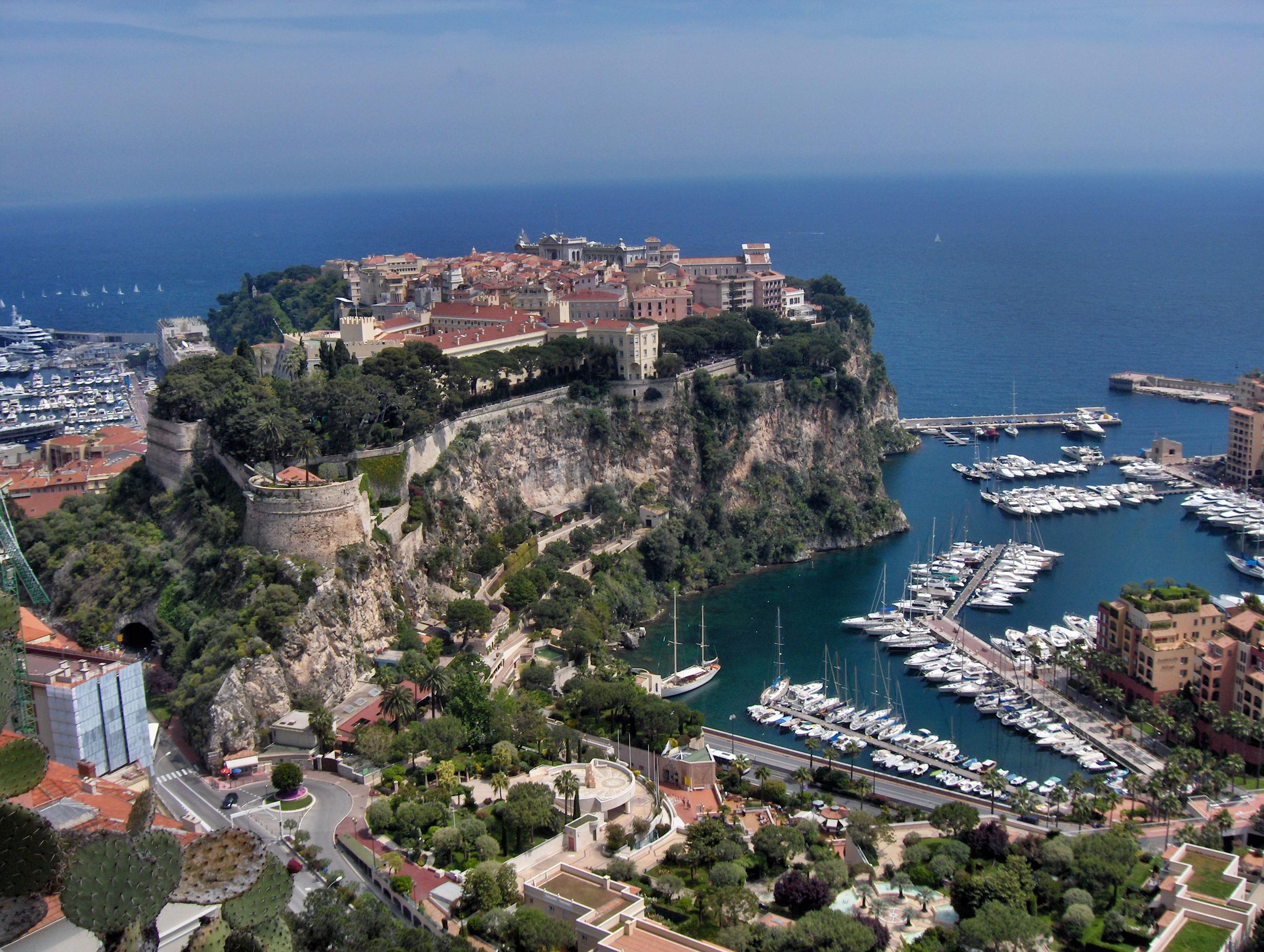
Rock of Monaco
Long before the Grimaldis, before the Genoese, before even the ancient Greeks gave this headland the name Monoikos, someone sheltered here. The Rock of Monaco -- a 62-meter limestone monolith jutting into the Mediterranean -- has drawn human habitation since prehistoric times, not because it was comfortable but because it was defensible. Whoever held the Rock controlled the harbor below and the coastline on either side. That simple geographic fact has shaped seven centuries of dynastic history and produced one of the strangest sovereign states on Earth.
Ancient Foothold
The ancient Massilian colony called this place Monoikos, a name connected to the Ligurian tribes who controlled the coast before Greek colonists arrived. The Rock offered what Ligurian settlements needed: elevation, visibility, and natural defenses on three sides. Archaeological evidence confirms that the promontory served as a shelter for populations far predating any recorded history. The name itself is debated -- some connect it to the Greek word for "solitary" or to a temple of Hercules Monoikos -- but the strategic appeal of the site required no explanation. It was a natural fortress.
The Monk with a Sword
The Rock's most consequential night came in January 1297, when Francois Grimaldi, a Guelf partisan in the factional wars that tore through medieval Italy, disguised himself as a Franciscan friar and approached the Genoese fortress that crowned the promontory. Admitted through the gates, he drew his concealed weapon and opened the way for his soldiers. The Grimaldis have held the Rock ever since, ruling first as feudal lords under various protectors and eventually as sovereign princes. The dynasty's coat of arms still depicts two sword-bearing monks -- not saints, but soldiers in disguise -- commemorating the founding act that was part audacity, part desperation.
The Old Quarter Today
The Rock is now the heart of Monaco-Ville, the oldest of Monaco's four quarters. Its narrow streets hold the Prince's Palace, the Cathedral of Our Lady Immaculate where Grimaldi princes are buried, and the Oceanographic Museum, which rises from the cliff face on the seaward side. Tourists climb to the Rock to watch the Changing of the Guard at the palace, wander through the Old Town's lanes, and look down at Port Hercules on one side and the harbor of Fontvieille on the other. The views compress Monaco's improbable geography into a single glance: a sovereign nation barely two square kilometers in area, squeezed between the mountains and the sea, anchored to a limestone monolith that someone decided, thousands of years ago, was worth fighting for.
Bedrock of a Nation
Monaco has expanded through land reclamation, built upward with high-rises, and transformed itself from a bankrupt principality into a tax haven and tourist destination. But the Rock remains the fixed point around which everything else orbits. It is the reason Monaco exists where it does, the reason the Grimaldis chose this particular stretch of coast, and the reason the principality survived centuries of pressure from France, Spain, and Sardinia. The harbor would have been useless without the Rock to defend it. The palace would have been indefensible without the Rock to elevate it. Strip away the casinos, the Grand Prix, the yachts, and the high-rises, and Monaco is still what it has always been: a rock with a view, and a family that refuses to leave it.
From the Air
Located at 43.73N, 7.42E. The Rock is the most prominent natural feature of Monaco, a flat-topped promontory jutting into the Mediterranean between Port Hercules and Fontvieille. Nice Cote d'Azur Airport (LFMN) is 12 km west. Monaco Heliport (LNMC) at the harbor base. Best viewed at 1,500-3,000 ft from the south or southeast, where the Rock's dramatic cliff face and the buildings crowning it are fully visible.