Rockhaven Sanitarium Historic District
Agnes Richards had worked in state-run institutions in Nebraska, Iowa, and at Patton State Hospital in San Bernardino, and she had seen what happened to women who entered them. Physical abuse, torture, starvation, the systematic reduction of patients to the legal and emotional status of criminals. In 1923, having saved enough money and found the right piece of land in the Crescenta Valley, she did something about it. She opened Rockhaven Sanitarium at 2713 Honolulu Avenue in Montrose — a private psychiatric facility for women, built on entirely different principles.
A Different Kind of Institution
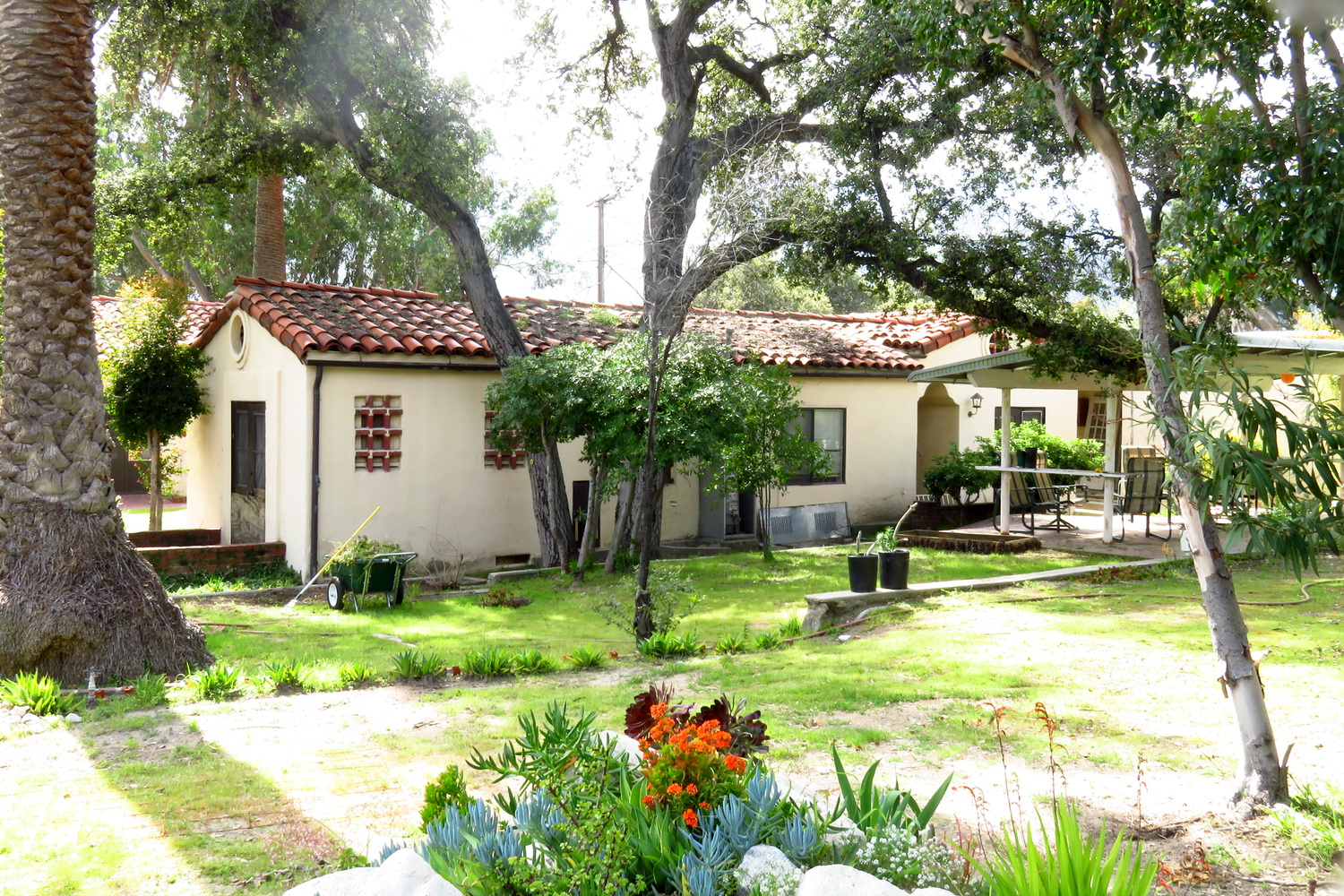
Where state hospitals offered confinement, Rockhaven offered air and light. Richards drew on the Cottage Plan philosophy of asylum architecture — individual buildings set within landscaped gardens, designed to feel more like a home than a hospital. She acquired five Craftsman-style buildings over time, hired Prescott and Brothers to add Spanish Colonial Revival structures, and had some existing buildings physically lifted and rotated on their foundations to invite sunlight into the rooms. Outside, large oak trees and citrus groves surrounded flowering walkways. Patios and courtyards extended the interior living quarters into the garden. The air, as one description put it, was 'fresh and fragrant.' For women who had survived the state asylums, the contrast was not subtle.
The Screen Actors' Sanitarium
Rockhaven became known informally as the 'Screen Actors' Sanitarium' — partly because of its proximity to the Hollywood studios, partly because of its reputation for discretion and genuine care. Billie Burke, best remembered as Glinda the Good Witch in The Wizard of Oz, was a long-term resident. Peggy Fears, a Ziegfeld Follies star turned real estate financier, died at Rockhaven in August 1994. Josephine Dillon, the acting teacher and first wife of Clark Gable, died there on November 11, 1971, having been cared for through a long illness. Mary Florence Egan, leader of the all-female jazz band the Hollywood Redheads, spent her final years there. The institution had always served women of middle and upper-middle class who could afford residency, but Richards extended care regardless of race or belief.
Closure and the Fight to Preserve
Agnes Richards ran Rockhaven until 1967, when she passed the institution to her granddaughter Patricia Traviss. Under Traviss the focus shifted toward caring for elderly women with dementia. The 1971 San Fernando Earthquake damaged the buildings significantly. In 2001, Traviss sold the property to a hospital corporation, which operated it as the Ararat Home of Los Angeles. When demolition threatened, the Friends of Rockhaven — a community preservation group — stepped in. They successfully nominated the site to the National Register of Historic Places, where it was listed in June 2016 over the explicit objection of the city of Glendale, which had been considering selling the land to a developer. In 2021, California State Senator Anthony Portantino secured $8 million in state funds to convert the site into the Rockhaven Mental Health History Museum — one of only three surviving women's hospitals of its era.
From the Air
Located at 34.211°N, 118.238°W in the Crescenta Valley, between Glendale and La Crescenta-Montrose. The cluster of Spanish Colonial and Craftsman buildings is visible from low altitude on flights along the foothills of the San Gabriel Mountains. Bob Hope Airport (KBUR) lies approximately 8 miles to the southwest. The terrain rises steeply into the mountains to the north.