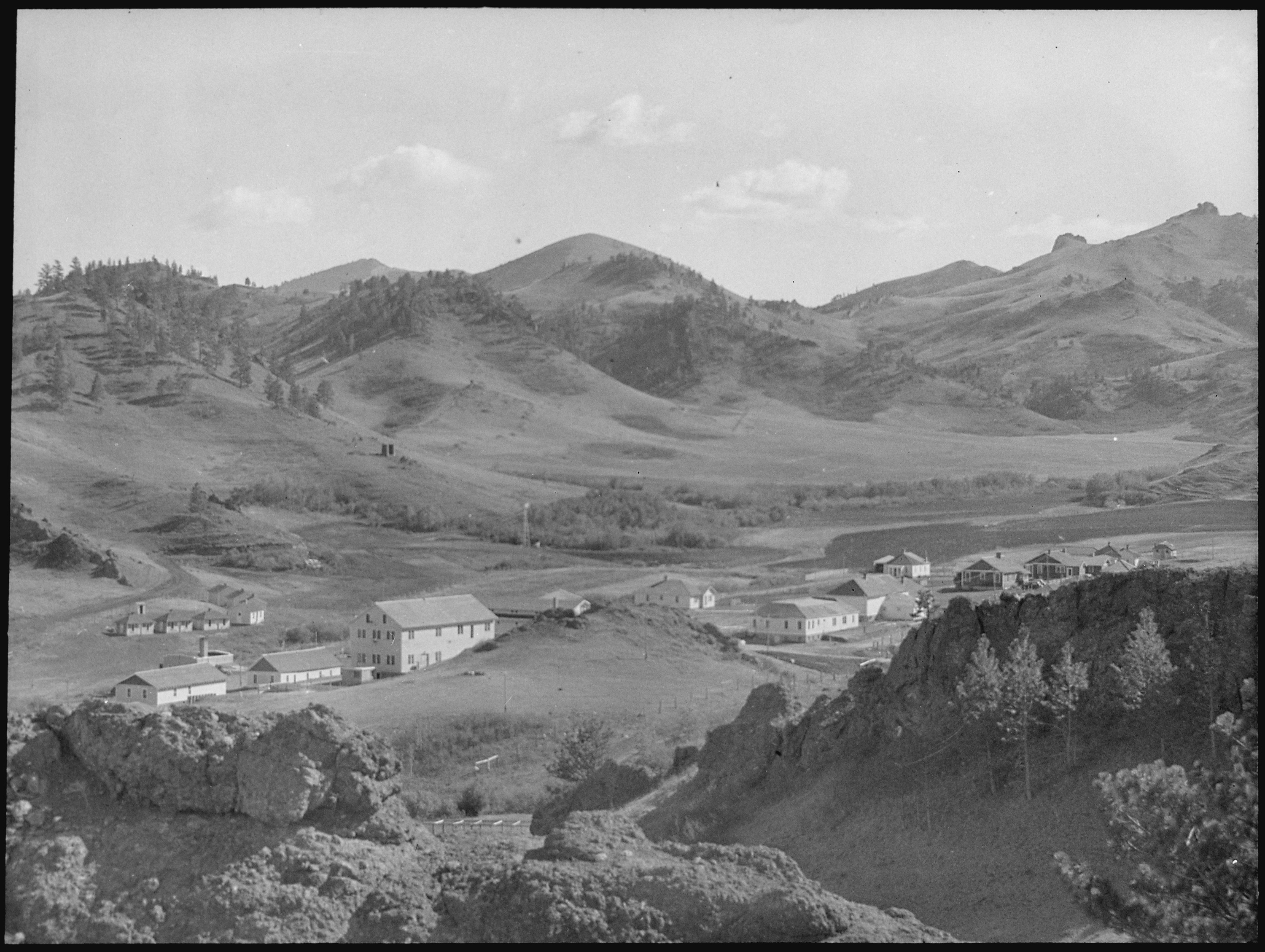
Rocky Boy's Indian Reservation
The name was a mistranslation. Ahsiniiwin, the Chippewa chief who spent decades fighting for a homeland for his landless people, was known as Stone Child, not Rocky Boy. But the English error stuck, and when Congress finally established this reservation on September 7, 1916, they named it for a man who had died just months earlier, never seeing the home he had worked so long to secure. Today, in the Bear Paw Mountains of north-central Montana, the Chippewa Cree Tribe carries forward a story marked by exile, persistence, and the complicated aftermath of indigenous displacement.
The Chief Who Never Saw Home
Rocky Boy, or Ahsiniiwin, spent years negotiating for land. Born around 1852, possibly in Chippewa Falls, Wisconsin, he became a popular leader among both the Chippewa and European Americans in early 1900s Montana. He supervised his band's census in 1908, certified by the Interior Department. He worked with supporters like writer Frank Bird Linderman and artist Charles M. Russell to pressure Congress. He wrote to Interior Secretary Franklin Lane and President Woodrow Wilson. He secured Executive Orders setting aside land for Chippewa reservations. And on April 18, 1916, at Fort Assiniboine, Rocky Boy died. Congress established the reservation five months later. Some oral traditions say he was poisoned by rival Cree anxious to settle on the new land. His last letter mentioned the pressure to add Cree to his rolls, a decision he left to his people.
Refugees and the Homeless
The reservation was established for landless Chippewa who had been forced out of Minnesota. But almost immediately, others arrived. Chief Little Bear brought about 200 Cree from Canada, refugees from the 1885 North-West Rebellion. Little Bear had been accused of involvement in the Frog Lake Massacre, where nine people died. His band fled to Montana, faced deportation proceedings, and eventually found haven at Fort Assiniboine alongside the Chippewa. By the time Congress acted, nearly 600 Chippewa and Cree were living on the old military reservation. The act establishing Rocky Boy allowed for 'such other homeless Indians' as the Secretary of Interior saw fit. The Cree came to outnumber the Chippewa on land created for the Chippewa band.
Bear Paw Country
The reservation occupies Montana's smallest reservation land area, nestled in the Bear Paw Mountains in Hill and Chouteau counties, about 40 miles from the Canadian border. Climate varies sharply between the plains around Box Elder and the mountain communities. Chinook winds sweep across the open country in winter, bringing sudden warmth but also damaging gusts. The mountains receive more snow. Summer highs reach the mid-80s on the plains, with July the warmest month. Nine settlements dot the reservation, most in the mountains: Agency, Azure, Boneau, Box Elder, Parker School, Rocky Boy West, Saint Pierre, and Sangrey. The 2010 census counted 3,323 residents, a 24 percent increase from 2000.
Buffalo Return to Chippewa Cree Land
In 2021, for cultural and food sovereignty purposes, the tribe established a buffalo pasture about a mile from Box Elder. The Confederated Salish and Kootenai Tribes donated five bison; American Prairie donated six more. In 2022, American Prairie transferred ten additional animals to strengthen the herd. The Lewis and Clark Expedition had reported the largest buffalo herds they encountered in the region between present-day Great Falls and north of where the reservation now sits. The return of bison represents more than food security. It reconnects the Chippewa Cree to a landscape and way of life that existed before displacement, before reservations, before the complicated history that brought two distinct peoples together on this land.
Self-Governance and Continuing Struggles
The tribe operates its own educational system, including Rocky Boy public schools and Stone Child College. The Northern Winz Casino, opened in 2007, serves as a significant employer on the reservation. Annual tribal revenue reaches $52 million. But tensions remain between the original Chippewa descendants and the Cree who came to dominate reservation demographics and politics. The Chippewa, outnumbered on their own reservation by a reported 10:1 ratio, continue pressing for representation. Traditional ceremonies persist: the Sun Dance in early July, the annual Pow-Wow in early August. Some Chippewa practice their traditions at Hill 57 outside Great Falls, maintaining connection to spiritual practices even while displacement continues to shape their community.
From the Air
Located at 48.28N, 109.9W in north-central Montana's Bear Paw Mountains. The reservation sits in Hill and Chouteau counties, approximately 40 miles south of the Canadian border. Box Elder marks the plains portion; mountain communities cluster in the Bear Paws. Nearest airports include KHVR (Havre City-County) to the north and KGFA (Great Falls International) to the south. The transition from open prairie to forested mountain country is visible from altitude.