Rohingya Genocide
They have been called the world's most persecuted minority. The Rohingya people of western Myanmar's Rakhine State speak their own language, practice their own faith, and trace their roots in the region back centuries. Yet since 1982, Myanmar's government has refused them citizenship, classifying them as illegal immigrants from Bangladesh. That legal erasure laid the groundwork for something far worse. In August 2017, the Myanmar military launched what the United Nations called "a textbook example of ethnic cleansing," driving more than 700,000 Rohingya across the border into Bangladesh in the largest human exodus in Asia since the Vietnam War.
Stripped of Everything
The persecution predates the headlines by decades. Since at least the 1970s, the Rohingya have faced systematic restrictions that confined them to a kind of open-air prison within their own country. They cannot travel without official permission, cannot pursue higher education, and were at one point required to pledge they would have no more than two children. Rohingya men routinely give up one day a week to forced labor on military projects and one night a week to sentry duty. Much of their arable land has been seized by the military and redistributed to Buddhist settlers from other parts of Myanmar. The 1982 Burmese nationality law formalized what was already practiced: the Rohingya were not citizens. They were, in the eyes of their own government, nobody.
The August Reckoning
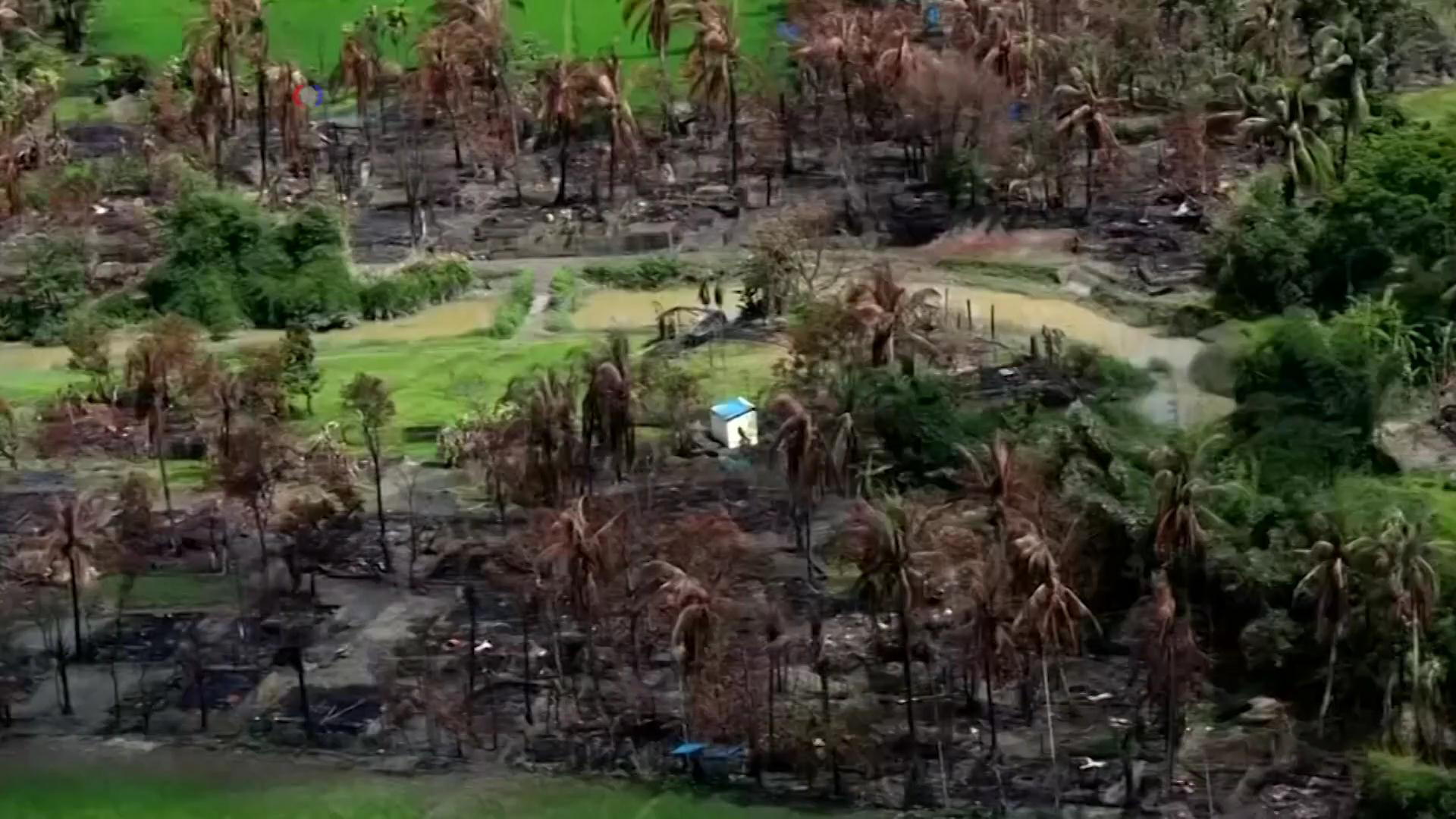
On August 25, 2017, the Arakan Rohingya Salvation Army attacked several Myanmar border posts. The military's response was catastrophic and indiscriminate. Within the first week, at least 130 Rohingya were killed in what the army called "clearance operations." By the end of the first month, an estimated 6,700 Rohingya lay dead, including 730 children. Soldiers opened fire with mortar shells and machine guns on families fleeing toward Bangladesh, and bodies washed ashore from boats that capsized in the Naf River. A 2018 study estimated that at least 25,000 Rohingya were killed, 18,000 women and girls were subjected to gang rape, 116,000 people were beaten, and 36,000 were thrown into fires. Human Rights Watch documented 392 Rohingya villages razed to the ground. The Reuters news agency uncovered the Inn Din massacre, in which ten Rohingya men -- fishermen, shopkeepers, students, a teacher -- were executed by soldiers and local militia. The two Reuters journalists who reported the story were arrested and imprisoned.
Refuge Without Rest
The scale of displacement is staggering. Over a million Rohingya now live in refugee camps around Cox's Bazar, Bangladesh, in one of the world's most densely populated refugee settlements. The tentative repatriation deal signed between Myanmar and Bangladesh in November 2017 has produced little result; conditions in Rakhine State remain unsafe, and the Rohingya themselves fear returning to a country that never recognized them as its own. Bangladesh, one of the world's most crowded nations, has borne an enormous burden. By August 2025, Bangladesh's chief adviser declared the country could no longer allocate additional resources for 1.3 million Rohingya refugees and urged the international community to develop a practical roadmap for their return. On the eighth anniversary of the exodus, tens of thousands of Rohingya held protests in the camps, carrying banners reading "No more refugee life" and "Stop Genocide."
A Wound That Keeps Opening
The violence has not ended. Since 2024, a new threat has emerged: the Arakan Army, an ethnic Rakhine insurgent group fighting Myanmar's military junta, has itself been accused of committing war crimes against the Rohingya. Reports describe drone and artillery strikes on civilians in Maungdaw, forced displacement, arbitrary detentions, and financial penalties imposed on Rohingya for basic movements like traveling to a local market. In August 2024, an Arakan Army attack in Maungdaw Township killed 221 Rohingya civilians. Caught between the military junta and the Arakan Army, blockaded by both Myanmar's trade restrictions and Bangladesh's border patrols, the Rohingya of Rakhine State face starvation, skyrocketing costs for food and medicine, and no clear path to safety. In January 2020, the International Court of Justice ordered Myanmar to prevent genocidal violence against the Rohingya and preserve evidence of past attacks. The court's words have yet to change anything on the ground.
What Justice Looks Like
The pursuit of accountability continues, haltingly. In 2018, the UN High Commissioner for Human Rights declared that Myanmar's military generals should be tried for genocide. A Permanent Peoples' Tribunal found Myanmar guilty of genocide against both the Rohingya and Kachin minorities. On the ground, ordinary Rohingya have done their own documenting. The Arakan Rohingya Society for Peace and Human Rights, founded by slain activist Mohibullah, went door to door through the Cox's Bazar camps collecting testimony from over 3,000 witnesses -- cataloguing who was killed, who was raped, whose home was burned. Aung San Suu Kyi, Myanmar's Nobel Peace Prize laureate and de facto head of government during the worst of the violence, was widely condemned for her silence. She denied the allegations, blocked independent investigations, and appeared before the International Court of Justice to defend the military's actions. The Rohingya remain stateless, scattered, and waiting.
From the Air
Centered on Rakhine State at approximately 19.5N, 94.0E. The coastal lowlands along the Bay of Bengal are visible from cruising altitude, with the Naf River forming the border with Bangladesh to the northwest. The nearest major airport is Sittwe Airport (VYSW). Cox's Bazar, Bangladesh, where the refugee camps are concentrated, lies to the northwest across the river. The terrain is flat coastal plain giving way to low hills inland. Weather is dominated by monsoon patterns from June through October.