Roman Catholic Archdiocese of São Salvador da Bahia
On February 25, 1551, Pope Julius III signed a bull creating a new diocese on a coast most Europeans had never heard of. The territory was nominally the entire Portuguese colony of Brazil, and it was carved out of the Metropolitan Archdiocese of Funchal, in distant Madeira. The first bishop, Pedro Fernandes Sardinha, arrived at Salvador the following year and found a two-year-old colonial capital still surrounded by forest. He would be dead within five years - shipwrecked in 1556 on the coast north of here, killed by the Caeté people in circumstances that would enter church history as a warning and Brazilian history as something more complicated. The diocese he founded, however, outlasted him by nearly five centuries, and its archbishop still carries the title Primate of Brazil.
Primacy and Founding
Salvador's claim to be the senior Catholic see of Brazil is not symbolic. The diocese was the first erected in the Americas south of the Caribbean, and when the Holy See elevated it to metropolitan archdiocese on November 16, 1676, its archbishop automatically assumed the title Primate of Brazil - the honorific head of the Brazilian Catholic Church. That honor has never moved. Even after the colonial capital shifted south to Rio de Janeiro in 1763, even after São Paulo grew to dwarf Salvador in population and wealth, the primatial seat stayed where it had always been. The current archbishop, Sérgio da Rocha, took office in March 2020 and was named a cardinal by Pope Francis in 2016. He oversees an archdiocese of more than a hundred parishes with roughly 9,000 Catholics per priest - a ratio that speaks both to Brazil's enduring Catholic demographics and to the perennial shortage of clergy that has shaped pastoral practice here for generations.
Cathedrals of Stone and Time
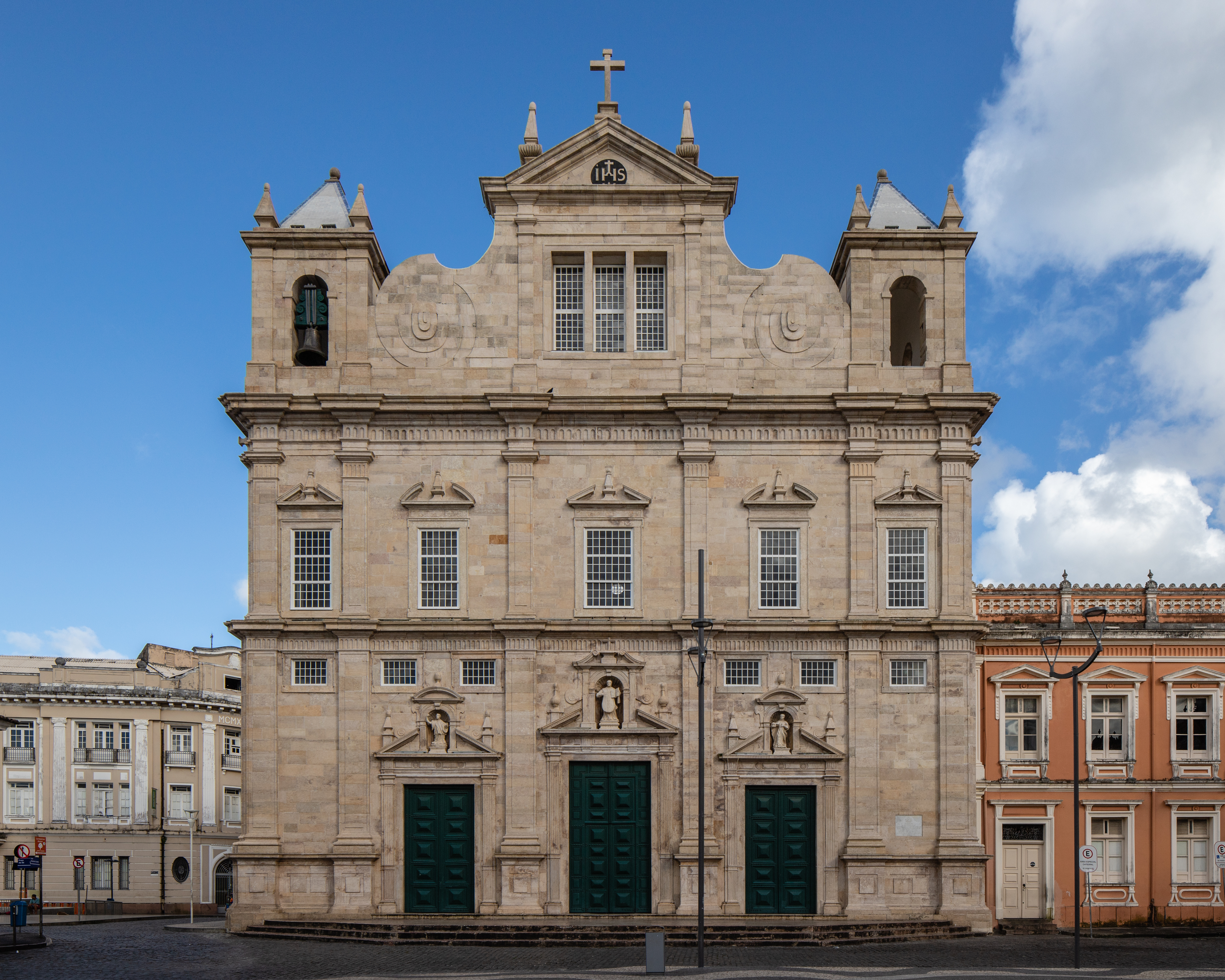
The archdiocese stewards an extraordinary collection of sacred architecture in Pelourinho, Salvador's World Heritage quarter. The Cathedral of Salvador - Sé Basílica Primacial da Transfiguração do Senhor - is the primatial seat itself, a seventeenth-century Jesuit church turned cathedral whose austere stone facade opens into a nave of carved jacaranda and gold leaf. The Basilica of St. Sebastian belongs to the first Benedictine monastery founded in the New World, its choir stalls worn smooth by four centuries of chanting monks. The Basilica of Our Lord of Bonfim - built in the 1700s on a low hill above the port - is the devotional center for both Catholic Salvadorans and Candomblé practitioners, who identify its patron with the orixá Oxalá. The Basilica of the Immaculate Conception, known to locals as Conceição da Praia, opens directly onto the waterfront where visiting pilgrims have stepped off ships for three hundred years.
Bishops and Their Burdens
The list of archbishops reads like a chronicle of Brazil itself. Sebastião Monteiro da Vide convened the Primeira Constituição da Bahia in 1707, a code of canon law that governed Catholic practice across colonial Brazil for two centuries. Romualdo de Seixas held the see during the First Empire; Manoel Joaquim da Silveira carried the title Count of São Salvador at a time when archbishops of the primatial see were ennobled. Augusto Álvaro da Silva, archbishop from 1924 to 1968, guided the diocese through the dismantling of imperial patronage and the chaotic mid-century of Brazilian politics; he was made a cardinal in 1953. Lucas Moreira Neves served from 1987 to 1998, went on to Rome as Prefect of the Congregation for Bishops, and was widely discussed as a papal candidate. Beyond these names, generations of parish priests, nuns, and lay workers have actually carried out the daily work - baptisms, funerals, Mass, the hospitals and schools and social projects that make an archdiocese more than a diocesan cartulary.
Shared Stones, Shared Faith
To stand in the atrium of the Igreja do Bonfim on a Friday in January and watch the Lavagem - hundreds of Bahian women in layered white dresses and turbans, carrying flowers and vessels of scented water, processing up the hill and washing the church steps with their hands - is to see Catholic liturgy and Candomblé ritual braided together in a way neither institution fully endorses but both have learned to live with. The archdiocese has not always welcomed this coexistence; the history of Afro-Brazilian religion in Bahia includes police raids, bans, and destroyed terreiros. The relationship now is cautious and respectful. The suffragan dioceses under Salvador's metropolitan authority include Alagoinhas, Amargosa, Camaçari, Cruz das Almas, Eunápolis, Ilhéus, Itabuna, and Teixeira de Freitas-Caravelas - a reminder that the primatial see still functions as an administrative center, not merely a ceremonial one, for Catholic life across much of Bahia.
From the Air
The Cathedral of Salvador and the archdiocesan offices sit in the Cidade Alta of Salvador at approximately 12.98°S, 38.52°W, on the bluff above the harbor in the Pelourinho World Heritage quarter. Salvador Bahia Airport (ICAO: SBSV, IATA: SSA) is about 28 km north of the historic city center. From 4,000-6,000 feet the cathedral's location on the ridge-top is unmistakable: a cluster of baroque bell towers stands out against the lower-city waterfront directly below. The Basilica of Bonfim is visible on a small hill a few kilometers northeast along the bay shore. Easterly trade winds prevail; afternoon cumulus and short rain showers are common year-round, with the wetter months running April through July.